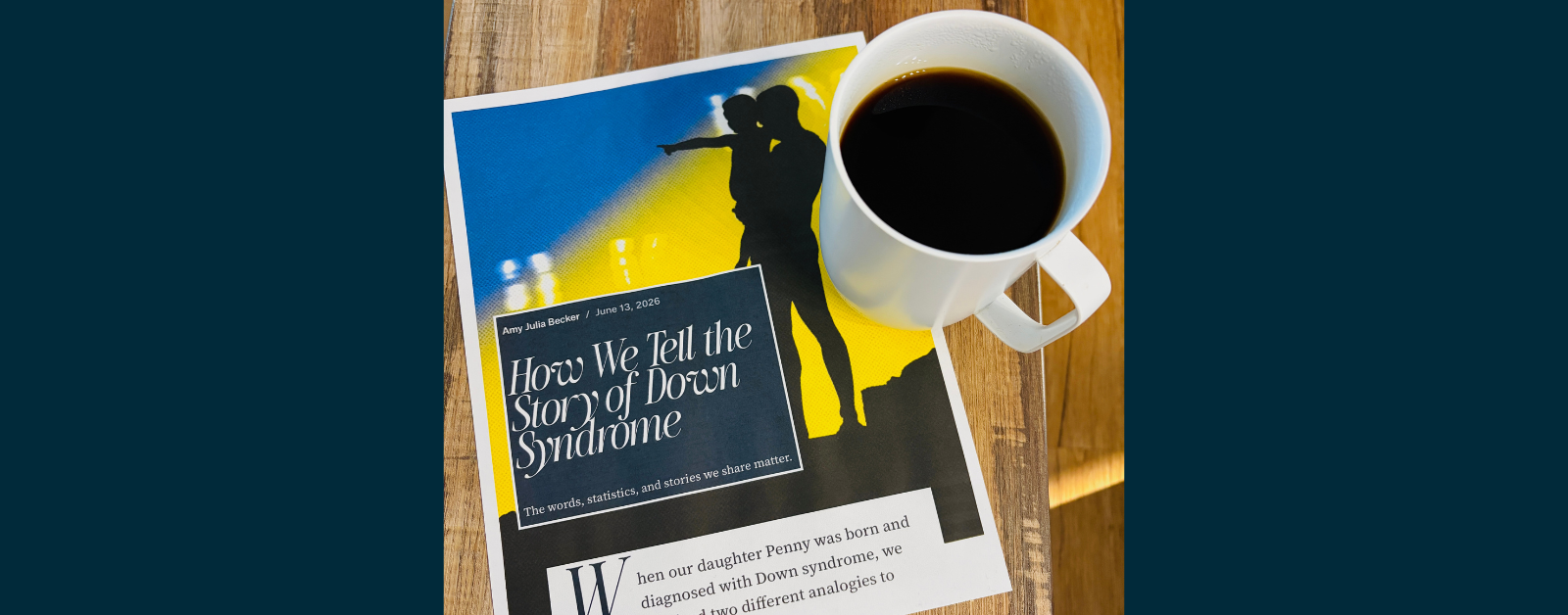
Recently, Jesse Ridgway, a YouTube influencer, announced in a lengthy social media post that his wife had terminated her pregnancy at 20 weeks due to a diagnosis of trisomy 21, also known as Down syndrome. The post spread quickly and widely on social media channels.
The way we tell the story of Down syndrome both reflects who we are as a society and shapes who we are becoming. Is Down syndrome a tragedy, a burden, a set of medical problems that defy correction? Or is Down syndrome a life-changing, challenging, heart-opening, vulnerable genetic condition? The answer to these questions doesn’t only affect women’s decisions about pregnancy. The answer also affects the way doctors convey prenatal information, the tests insurance companies pay for, the funds available for early intervention and special education, and governmental support.
Jesse Ridgway’s post about he and his wife’s personal decision to end their pregnancy resulted in a story of Down syndrome as tragedy broadcast to millions. But neither Down syndrome as inspiration nor Down syndrome as tragedy accurately conveys the lived experiences of people with Down syndrome or their families.
The real lives of people with Down syndrome tell a different story: the story of our humanity as limited, vulnerable, gifted, and beloved. We are humans who need one another and give of ourselves to one another, humans who cannot avoid suffering but who can decide to move toward one another in love…
Keep Reading:
How We Tell the Story of Down Syndrome • The Dispatch
SUBSCRIBE to my Substack newsletter: amyjuliabecker.substack.com
JOIN the conversation on Instagram: @amyjuliabecker
LISTEN to my podcasts: amyjuliabecker.com/shows/
CONNECT on YouTube: Amy Julia Becker on YouTube
Amy Julia Becker desires to challenge assumptions about the good life, proclaim the inherent belovedness of every human being, and help us envision and build a world of belonging where everyone matters. Amy Julia invites people to reimagine the good life through her writing and speaking on disability, faith, and culture. She is the author of several books, including To Be Made Well, White Picket Fences, Small Talk, and A Good and Perfect Gift. She is a guest opinion writer for national publications and hosts two podcasts: Take the Next Step and Reimagining the Good Life. Becker is a graduate of Princeton University and Princeton Theological Seminary (MDiv). She is a member of the Disability Ministry Network and the Alliance for Disability Justice and Ethics in Reproductive Genetics. She lives with her husband and their three children in western Connecticut.