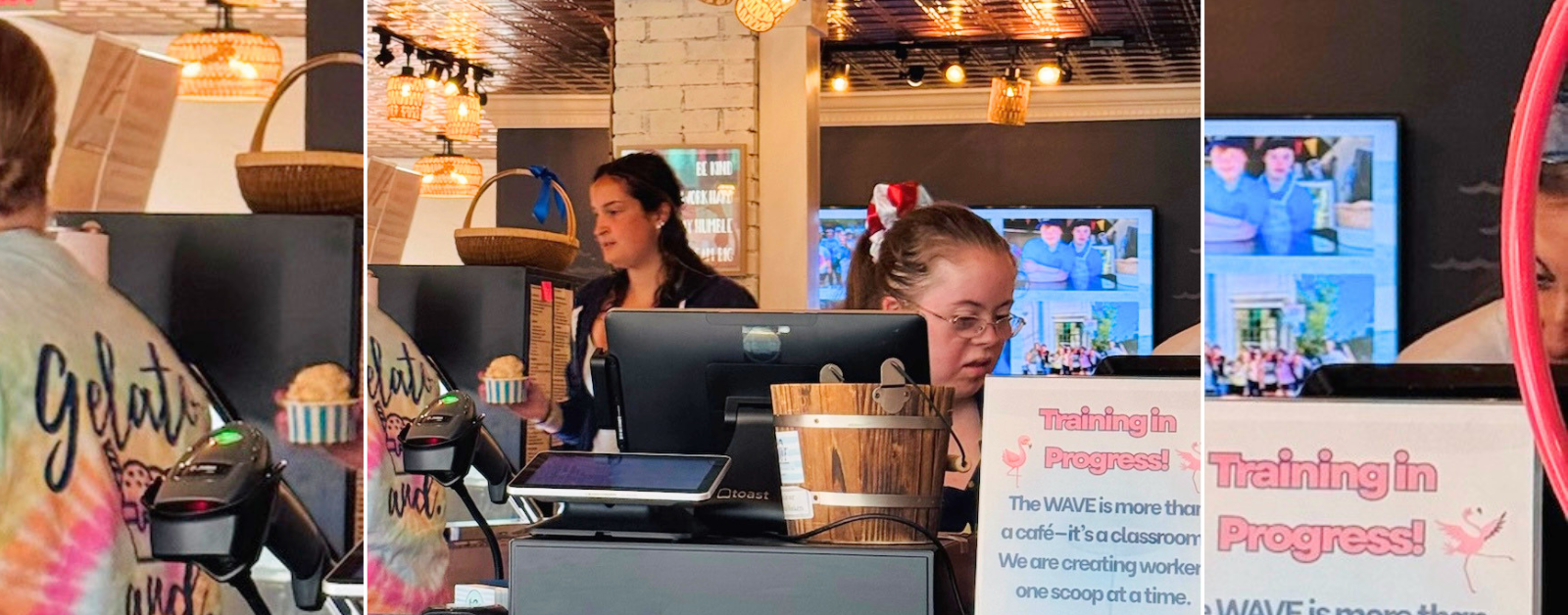
I never expected to walk into an ice cream shop and see Penny, our daughter who has Down syndrome, sitting behind the register, putting in orders. But there she was—on day two of her training/interview for a new job at The Wave, a local ice cream shop—doing her job. She wore a black apron, with her eyes intent on the screen that holds the different sizes, toppings, and choice of cone or cup. “She’s a natural,” the owner said. “We’d love to have her work here.”
We spend our summers in Madison, Connecticut. Last summer, we noticed this new shop that intentionally employs adults with disabilities in a neighboring town. We happily became customers, and I wondered whether it might be a place where Penny could work, someday.
Only 23% of adults with intellectual disabilities are employed. Penny has had some work experience, but for the past three summers, she hasn’t been able to find a job. The state of Connecticut has lost funding for programs that support this type of employment in recent years, and there aren’t many places that will hire a young adult with Down syndrome.
Penny reached out online to The Wave back in May, but then she forgot to respond (and neglected to tell me) when they invited her in for an interview. Thankfully, we bumped into their food truck at the Special Olympics track meet, and she was able to introduce herself to the owner, apologize for her lack of response, and explain that she was still interested. She will start with her first two-hour shift this week.
We are thrilled for her, and that’s certainly part of why I’m writing down this story. But this experience has also prompted me to think about what it took for this store to exist.
Back in the 1980s, when I came here to visit my grandparents in the summer, we ate at a restaurant called the Hob Knob, which employed adults with intellectual disabilities. The local Stop n’ Shop and Big Y both always had someone with Down syndrome or another disability at work. I learned later that a local non-profit—SARAH—supported individuals with IDD in a variety of ways with programming and work opportunities and supportive living arrangements. More non-profits and opportunities have developed in this area since then.
And then I learned from the owners of The Wave that they’ve created their own app so that it is easy for Penny and other workers to count change when people pay in cash. They don’t see intellectual disability as a reason not to employ someone like Penny, who cannot consistently do the math to figure out correct change and dispense the proper coins. Instead, they created the support necessary for her to work the register, even on her second day in training.
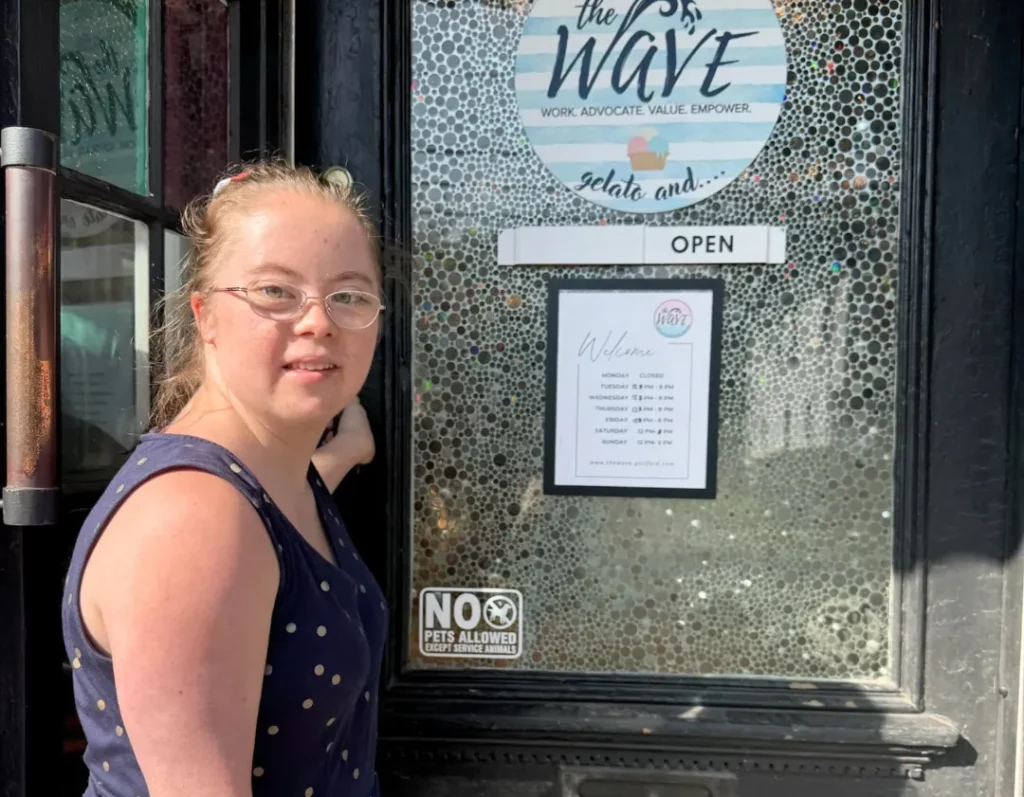
This ice cream store where Penny—and dozens of others—now has a job exists only because generations of people have established a network of support and have created an imagination for people with disabilities contributing to their community. I’m excited for Penny, but also for all the other communities where this type of network and imagination exists and brings an ethos of generosity and care to us all. (Over on today’s post on Instagram, I shared some videos of Penny talking about what it’s like to get a new job!)
SUBSCRIBE to my Substack newsletter: amyjuliabecker.substack.com
JOIN the conversation on Instagram: @amyjuliabecker
LISTEN to my podcasts: amyjuliabecker.com/shows/
CONNECT on YouTube: Amy Julia Becker on YouTube
Amy Julia Becker desires to challenge assumptions about the good life, proclaim the inherent belovedness of every human being, and help us envision and build a world of belonging where everyone matters. Amy Julia invites people to reimagine the good life through her writing and speaking on disability, faith, and culture. She is the author of several books, including To Be Made Well, White Picket Fences, Small Talk, and A Good and Perfect Gift. She is a guest opinion writer for national publications and hosts two podcasts: Take the Next Step and Reimagining the Good Life. Becker is a graduate of Princeton University and Princeton Theological Seminary (MDiv). She is a member of the Disability Ministry Network and the Alliance for Disability Justice and Ethics in Reproductive Genetics. She lives with her husband and their three children in western Connecticut.
This Post Has One Comment
Pingback: The Necessary Untethering: Learning to Let Go as Our Children Grow Up - Amy Julia Becker