Books, essays, podcast episodes, and more that I think are worth your time, plus recent cultural news that I’m paying attention to in the month of February…

SHOWS
The Pitt
I’ve been noticing how The Pitt portrays people with disabilities. As with most everything else, they do a good job. (keep reading)

BOOKS
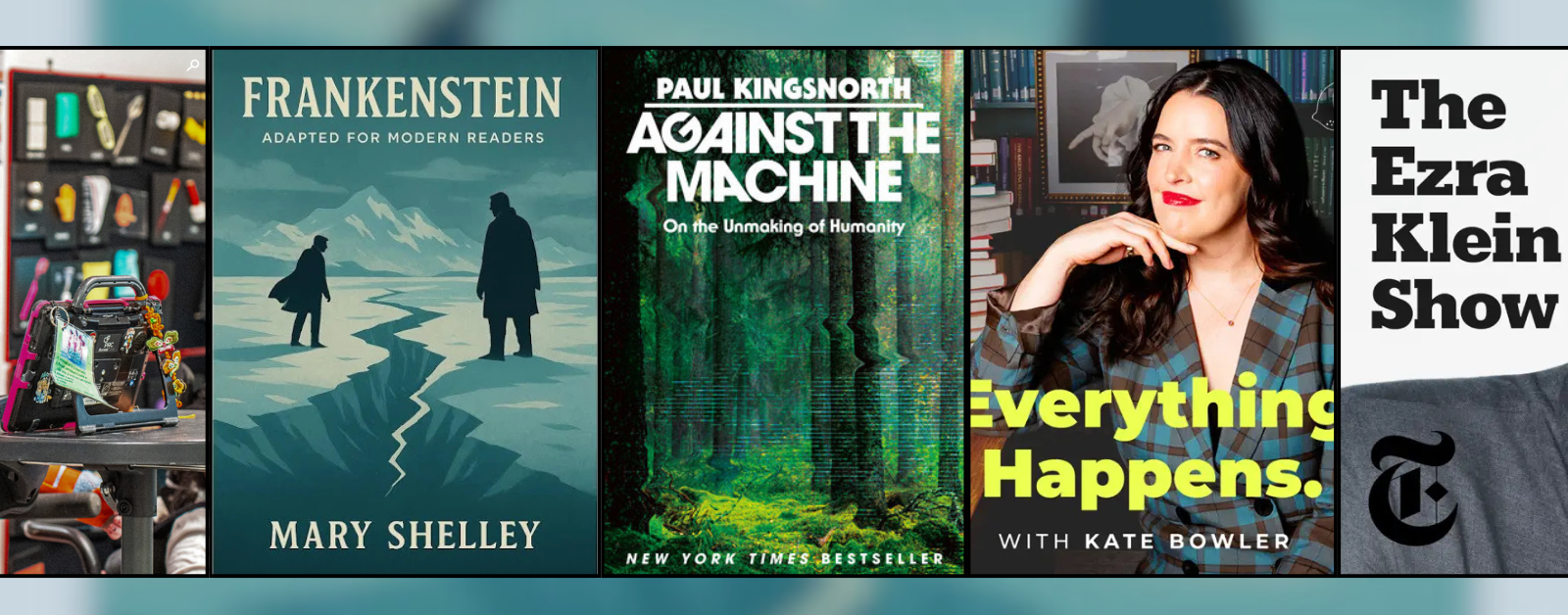
Frankenstein by Mary Shelley.
I finished reading Frankenstein, by Mary Shelley, in anticipation of seeing the show. I haven’t seen the new film version, but I’m interested in it now in light of the questions it raises about what happens when humans try to create and manipulate life. In this moment of artificial intelligence behaving in more and more “human” ways, stories like Frankenstein are a warning against the type of hubris we consistently display as we rush forward into new technological advances, paying attention only to the prospect of progress, heedless of the potential destruction that might follow.
Against the Machine by Paul Kingsnorth.
On a somewhat similar note, I recently finished Against the Machine by Paul Kingsnorth. It’s also a warning against our digital age and the ways we are getting caught up in “the machine” of capitalism and material progress. Kingsnorth is perhaps slightly more hopeful than Frankenstein in that he ultimately encourages us to slow down, love well, and connect to our local people and place rather than submitting to the siren’s call of AI and tech platforms that pull us out of this real world and into abstraction. (And if you aren’t going to read Kingsnorth, it’s worth at least listening to him reflect with Russell Moore or Bari Weiss about his ideas.)
Platforms to Pillars by Mark Sayers.
I really appreciated Mark Sayers’ insights into our current cultural moment. He identifies the difference between building a platform to promote ourselves and becoming pillars who can stand alongside other pillars to support others, work together, and create space. He exhorts us to become pillars by creatively rebuilding our society through what will often (mostly) be hidden, small, unnoticed acts of loving care in our broken world.
Theo of Golden by Allen Levi.
I recommend Theo of Golden. I resisted reading this one for a long time because I had heard it was sentimental and overwritten. There’s truth to those comments, but the power of the story rises above the critiques and gives us a picture of living in love among local people and places.

PODCAST EPISODES
Anne Lamott on Love, Shame, and Being Human.
Anne Lamott is my hero. No one else combines humor, honesty, and hope like she does. {Listen here.}
“Is Your Social Life Missing Something? This Is For You.”
This episode of the Ezra Klein show is both practical and profound in reminding us why it matters so much that we find ways to gather together. For anyone who is longing for more time with others, this conversation will both help you make it happen and make you want it even more.
“The Dignity of Dependence”
And this whole episode of The Holy Post is worth your time, but especially the final 40 minutes of conversation between Leah Libresco Sargeant and Kaitlyn Schiess about the way the world assumes women are simply defective versions of men (which also leads to why we all would benefit from asking for help and relying on each other more).
ARTICLES/NEWS/ESSAYS
You Have To Be Human
Such good thoughts here from Freya India on why actually being human—messy, limited, beautiful, relational, real—matters more than ever.
School Unlocks Learning For Kids With Profound Disabilities
Here’s a beautiful example of a school with a culture that assumes capability and connection. And, within it, an example of how that type of culture leads to flourishing for families:
Because he’s unable to speak, Omoloju’s parents, teachers and friends assess his mood through other means, including his laughter, which arrives with ease and frequency at iHOPE. It’s a welcome contrast to what came before it at a different school, when a sudden eruption of tears would prompt a call to his mother, who would rush down to the campus, often too late to glean what upset him.
Research: Does Spiritual Life Reduce Substance Abuse?
“According to 55 studies, spirituality may mean lower rates of substance use.” I found this article so interesting because the aspect of spirituality that made the most difference in helping people struggling with substance abuse was regular attendance at a religious gathering. In other words, personal spiritual time does not make as much of a difference as gathering with other people, and I assume the content of the gathering can also make a difference.
Get my favorites delivered to your inbox each week.
Subscribe here.
More Favorites and AJB Recommends
If you use a link from here to purchase something I recommend, it sometimes earns me a small commission, which enables me to continue the work I do here. So thank you! (As an Amazon Associate, I earn from qualifying purchases.)
SUBSCRIBE to my Substack newsletter: amyjuliabecker.substack.com
JOIN the conversation on Instagram: @amyjuliabecker
LISTEN to my podcasts: amyjuliabecker.com/shows/
CONNECT on YouTube: Amy Julia Becker on YouTube