When I was in college, I spent a summer studying for the GRE—the Graduate Record Examinations—in anticipation of applying for PhD programs. I had visions of becoming a professor of English literature. I never pursued that route, but five years later I did enter an MDiv program at Princeton Seminary, where I was reminded of how much I enjoy school. I love learning. I love reading books. I love debating big ideas and wrestling with abstract theological and philosophical topics. I love random pieces of information.
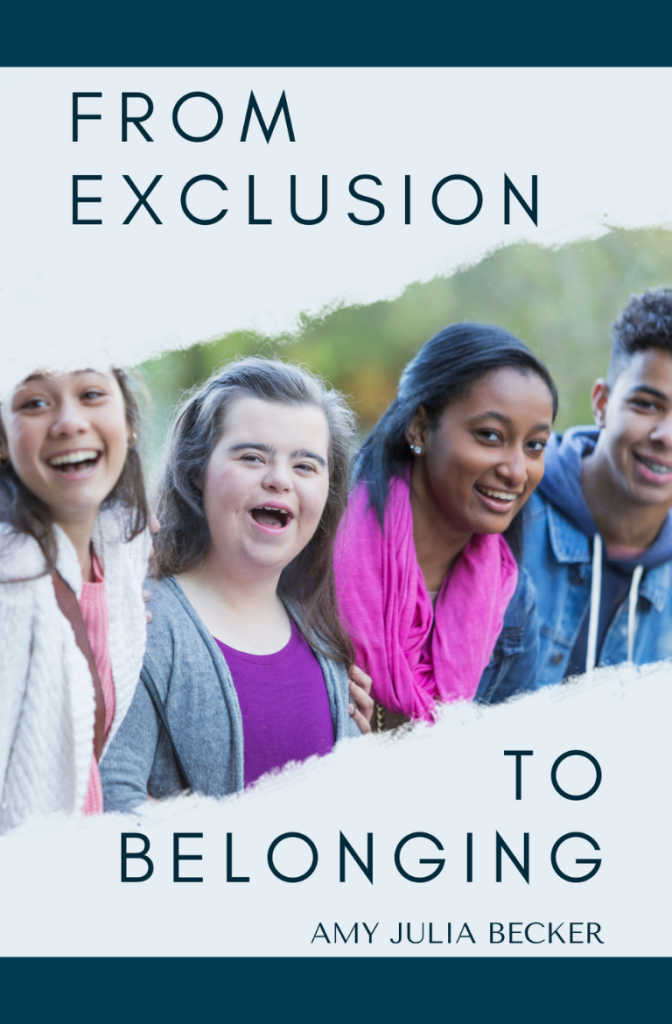
So when we were given a daughter with an intellectual disability, it felt like a loss. I worried that Penny and I would never be able to connect or enjoy each other. I thought we wouldn’t have anything in common. And it also felt like an affront to my identify. I thought that being someone with significant intellectual ability was superior to being someone with an intellectual disability. I thought intellectual ability mattered more than anything else about being human.
I was wrong.
Some of my misplaced ideas about the value of intellectual ability arose from personal experience, but I also inherited those ideas from our culture. Our culture tells us that people matter only if and when they are smart. We inhabit a value system that ranks people according to intelligence, over and over again.
To cite a few prominent examples, President Trump routinely denigrates Democratic leaders by saying they are “low IQ people.” He doesn’t have test scores in front of him when he makes these remarks. He seems to believe that he can evaluate another person’s intellectual abilities based on casual observation of their behavior. He also seems to believe that calling someone a “low IQ person” is a way to lower their status in the eyes of the American people. High intelligence equals someone worthy of attention, honor, and votes. Low intelligence equals someone worthy of shame, disregard, and rejection.
Sam Altman, the leader of OpenAI, made a similar assessment of human value when he said:
“People talk about how much energy it takes to train an AI model – but it also takes a lot of energy to train a human… It takes about 20 years of life – and all the food you consume during that time – before you become smart.”
Altman’s point had to do with energy consumption, and it betrays all sorts of reasons to be concerned with the way Altman understands humanity. But it also implies that if you don’t “become smart” at around age 20, the energy poured into your life has been futile, wasted. In other words, the human worth supporting with food and energy and care, is the one who will have intellectually measurable outputs.
In contrast, I read a beautiful and poignant essay by Veronika Kabas in Plough about a hospital that provides palliative care for newborns. Many of these babies have intellectual disabilities. None of them will live long enough to become “smart” by Sam Altman’s standards. And yet the care and dignity they are offered speaks to a different measure of their worth in this world. They are not measured by intelligence or performance. They are instead received as beloved. They do not need to prove themselves. They are not more or less valuable than any other baby. But they are distinctly significant in and of themselves, and in and as they relate in their tiny, frail bodies and spirits to the ones who love them.
Now that Penny is twenty, I know that many of my ideas about Down syndrome and intelligence and intellectual ability were wrong. As it happens, she loves books and reading, like her mom. But we also have plenty of ways to connect that don’t have to do with a classroom. Intelligence isn’t simply a matter of articulating arguments or memorizing facts. There’s also wisdom, and Penny has wisdom in areas where I’m still learning. She doesn’t hold grudges. She is able to be present with people when I would rather give up.
I also now know that intelligence never was the measure of our relationship as a mother and daughter, nor should it be the measure of anyone else I encounter.
We live in an age where the ability to score high points on standardized tests gives prestige and power. We live in an age where intellectual disability can seem shameful. We live in an age of Artificial Intelligence. But we can resist these false messages about where our identity and worth come from. We resist by returning to the truth that our humanity is not composed of our intelligence or productivity. Our humanity emerges from our intrinsic belovedness. Our humanity arises as we receive love and give love in return.
SUBSCRIBE to my Substack newsletter: amyjuliabecker.substack.com
JOIN the conversation on Instagram: @amyjuliabecker
LISTEN to my podcasts: amyjuliabecker.com/shows/
CONNECT on YouTube: Amy Julia Becker on YouTube