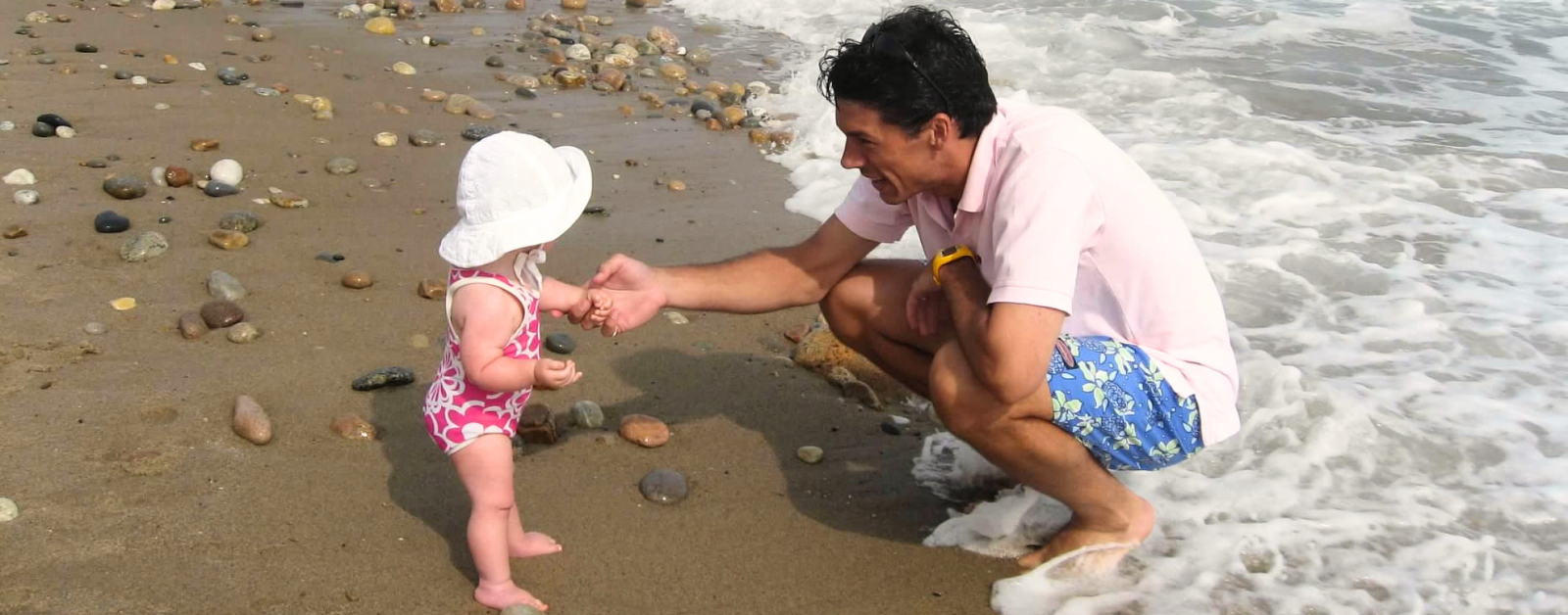
When our daughter was diagnosed with Down syndrome, I realized that I had the words “Down syndrome baby” in my head. I remember thinking, “I don’t like that language. It doesn’t seem right.” As I learned more about person-first language, I began saying that Penny was a baby with Down syndrome.
Language around disability is complex. Some people prefer identity-first language and want to be known as autistic, Deaf, or disabled. Those preferences are important and deserve respect. But for me, in those early days with Penny, changing my words helped me recognize that before anything else, I was holding my daughter, with her own personality, gifts, needs, and future.
Professor Christina Cipriano says, “The way that we talk about disability becomes how we understand disability.” Chris and I talked about the research around political language and disability. Here are some insights:
1. Political rhetoric about disability has become more dehumanizing.
Through the Disability Discourse Matters project, Chris and the team at Yale track how political leaders of both parties talk about disability (including using the R-word). While they expected to find mostly deficit-based language, they were surprised by the volume of explicitly dehumanizing rhetoric.
2. The language we use about disability shapes how people are valued.
Chris points out that discourse is never “just words.” The way disability is described—whether as an asset or a deficit—influences policies, funding, educational opportunities, and the ways people with disabilities are treated in society. When disability is viewed as a valued part of human diversity, people are seen as contributors rather than burdens.
3. Disability calls us to embrace a different vision of human flourishing.
Rather than seeing disability as a disadvantage, Chris encourages people to view it as a different vantage point for understanding the world. She urges families and communities to pursue “joy and justice” for people with disabilities and resist complacency, recognizing that silence in the face of harmful rhetoric and policies allows those systems to persist.
There’s more in our conversation: The R-Word and the Language of Disability
SUBSCRIBE to my Substack newsletter: amyjuliabecker.substack.com
JOIN the conversation on Instagram: @amyjuliabecker
LISTEN to my podcasts: amyjuliabecker.com/shows/
CONNECT on YouTube: Amy Julia Becker on YouTube
Amy Julia Becker desires to challenge assumptions about the good life, proclaim the inherent belovedness of every human being, and help us envision and build a world of belonging where everyone matters. Amy Julia invites people to reimagine the good life through her writing and speaking on disability, faith, and culture. She is the author of To Be Made Well, White Picket Fences, Small Talk, and A Good and Perfect Gift. She is a guest opinion writer for national publications and hosts two podcasts: Take the Next Step and Reimagining the Good Life. Becker is a graduate of Princeton University and Princeton Theological Seminary (MDiv). She is a member of the Disability Ministry Network and the Alliance for Disability Justice and Ethics in Reproductive Genetics. She lives with her husband and their three children in western Connecticut.