I mentioned last week that I have been thinking about a response to the controversy over YouTuber Jesse Ridgway’s announcement that his wife chose to terminate her pregnancy due to a prenatal diagnosis of Down syndrome. I had a chance to write for The Dispatch not so much about the decision Ridgway and his wife made, but about the stories that shape the decisions we make:
“A diagnosis of trisomy 21 might seem like a straightforward set of facts. But every diagnosis—and every indication of a potential diagnosis—is its own story, told within a network of medical information, families and communities, and social supports and messaging. The way we tell the story of Down syndrome—the language we use, the statistics we present, and the anecdotes we share—shapes the choices we make, individually and collectively, to reject or receive the lives of people with Down syndrome among us…
“The real lives of people with Down syndrome tell a different story: the story of our humanity as limited, vulnerable, gifted, and beloved. We are humans who need one another and give of ourselves to one another, humans who cannot avoid suffering but who can decide to move toward one another in love. We need to tell the true, full, and complex story of Down syndrome. If we learn how to do so, we will also tell the full story of our humanity.”
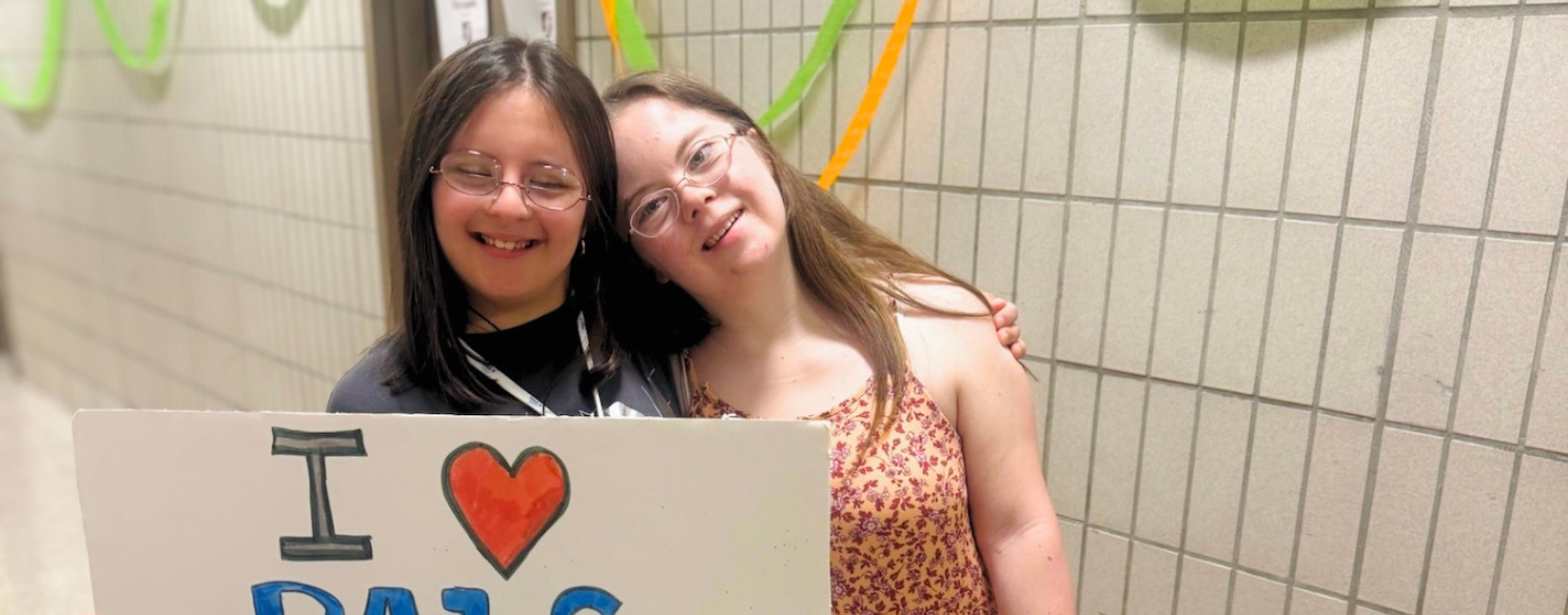
At the end of the essay, I mention The Congratulations Project at Camp PALS, where young adults with Down syndrome write letters to congratulate new parents on their babies with Down syndrome. As it happens, I also dropped Penny off at PALS this week, where she will once again participate in writing moms and dads and telling a story of life with Down syndrome that includes friendship and joy as well as struggle and hardship. (Here’s a letter that Penny wrote several years ago to new parents.)
My favorite moment of dropoff was when Penny’s partner from last year at camp made the welcome line pause. She wanted to change the music and make sure Taylor Swift was playing as Penny walked through a tunnel of celebration (watch here!).
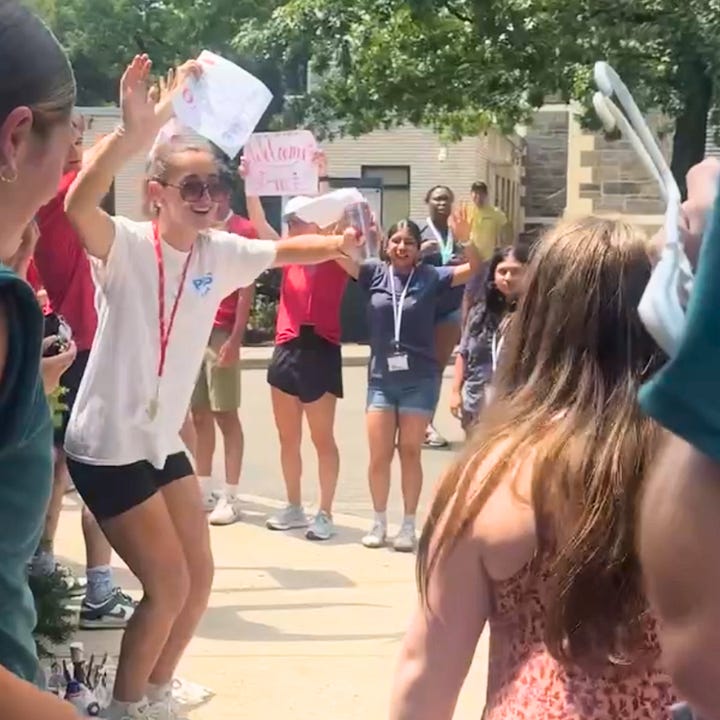
Even that little moment contributes to a story of care and connection and belonging. We all can play a part in making sure our culture as a whole knows the true story of disability, whether that’s through big decisions around prenatal testing or little moments like changing the song in a welcome line.
SUBSCRIBE to my Substack newsletter: amyjuliabecker.substack.com
JOIN the conversation on Instagram: @amyjuliabecker
LISTEN to my podcasts: amyjuliabecker.com/shows/
CONNECT on YouTube: Amy Julia Becker on YouTube
Amy Julia Becker desires to challenge assumptions about the good life, proclaim the inherent belovedness of every human being, and help us envision and build a world of belonging where everyone matters. Amy Julia invites people to reimagine the good life through her writing and speaking on disability, faith, and culture. She is the author of several books, including To Be Made Well, White Picket Fences, Small Talk, and A Good and Perfect Gift. She is a guest opinion writer for national publications and hosts two podcasts: Take the Next Step and Reimagining the Good Life. Becker is a graduate of Princeton University and Princeton Theological Seminary (MDiv). She is a member of the Disability Ministry Network and the Alliance for Disability Justice and Ethics in Reproductive Genetics. She lives with her husband and their three children in western Connecticut.