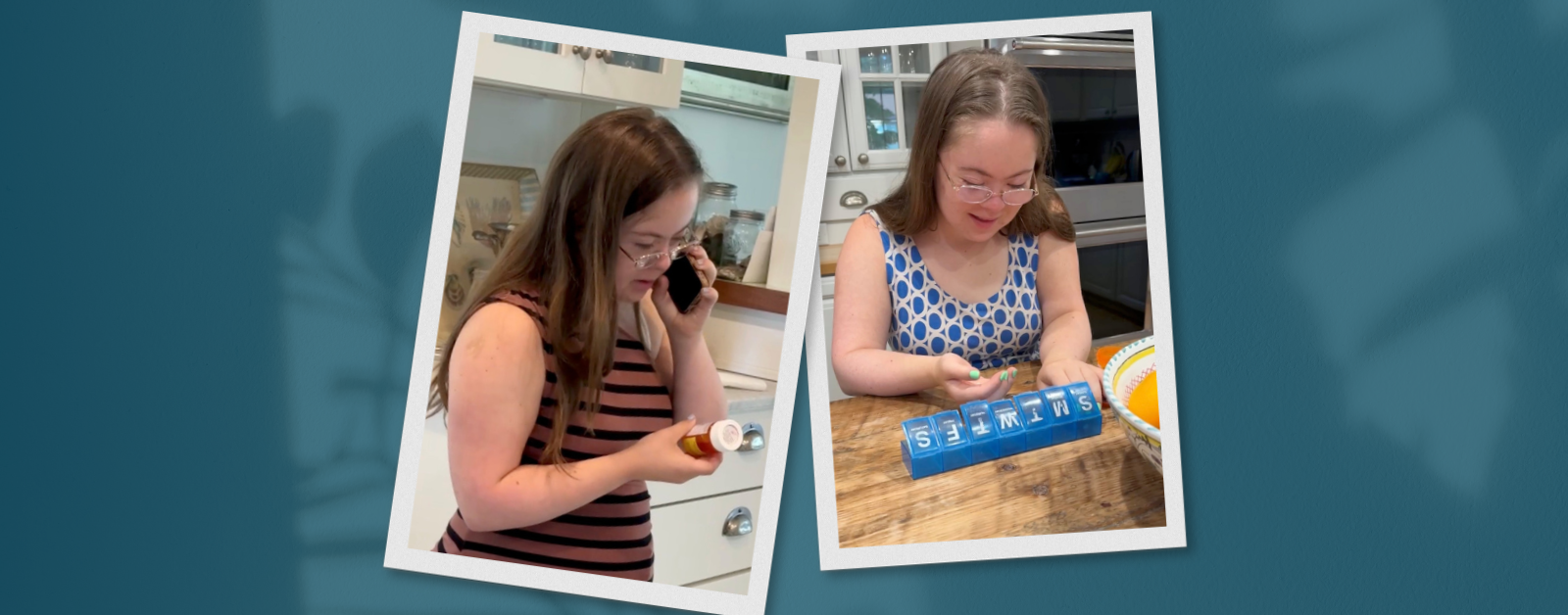
Penny calls in her own prescription refills now. It’s a small detail of our lives together, but it also feels like a symbol of something bigger. Eight years ago, her school introduced us to a person-centered planning process. They encouraged her, and us, to articulate hopes and dreams for the future alongside fears and concerns. We wrote down accomplishments and intentions. It was back then that Penny first said she wanted to grow up, go to college, and live in an apartment with friends. It was back then we were given permission to assume competence and possibility for her.
(Speaking of competence and possibility, we just had a PPT meeting with her team from school and talked about the many ways she has grown in her ability to navigate the world independently. She reminded us all that she is the one who helps me with our television set, including the time I had to Facetime her so she could show me how to turn up the volume using the remote control!)
Those meetings helped us dream big but start small. We started looking for daily activities that Penny could learn to do for herself, like putting her hair in a ponytail, or filling out forms, or taping up a package. Now she can do laundry. She can order an Uber. She can respond to emails with appropriate tone and punctuation (most of the time). All these little moments of increased capability have helped her grow in confidence. They’ve also helped her know when she needs help and how to ask for it. They’ve helped her become more and more ready for those bigger dreams from so long ago.
We still don’t know the details of what lies ahead for Penny. And we know that every child with a disability has a different story, a different set of capabilities and possibilities, a different set of dreams. This week, I got to talk with Sheli Reynolds, one of the founders of the LifeCourse Framework, a set of tools that helps individuals with disability plan for a good future. People like Sheli help us to reframe our narrative around disability while at the same time offering the practical, day-to-day supports we need. I’m so grateful to her and for this conversation. I’d love to hear your thoughts if you have a chance to listen!
SUBSCRIBE to my Substack newsletter: amyjuliabecker.substack.com
JOIN the conversation on Instagram: @amyjuliabecker
LISTEN to my podcasts: amyjuliabecker.com/shows/
CONNECT on YouTube: Amy Julia Becker on YouTube