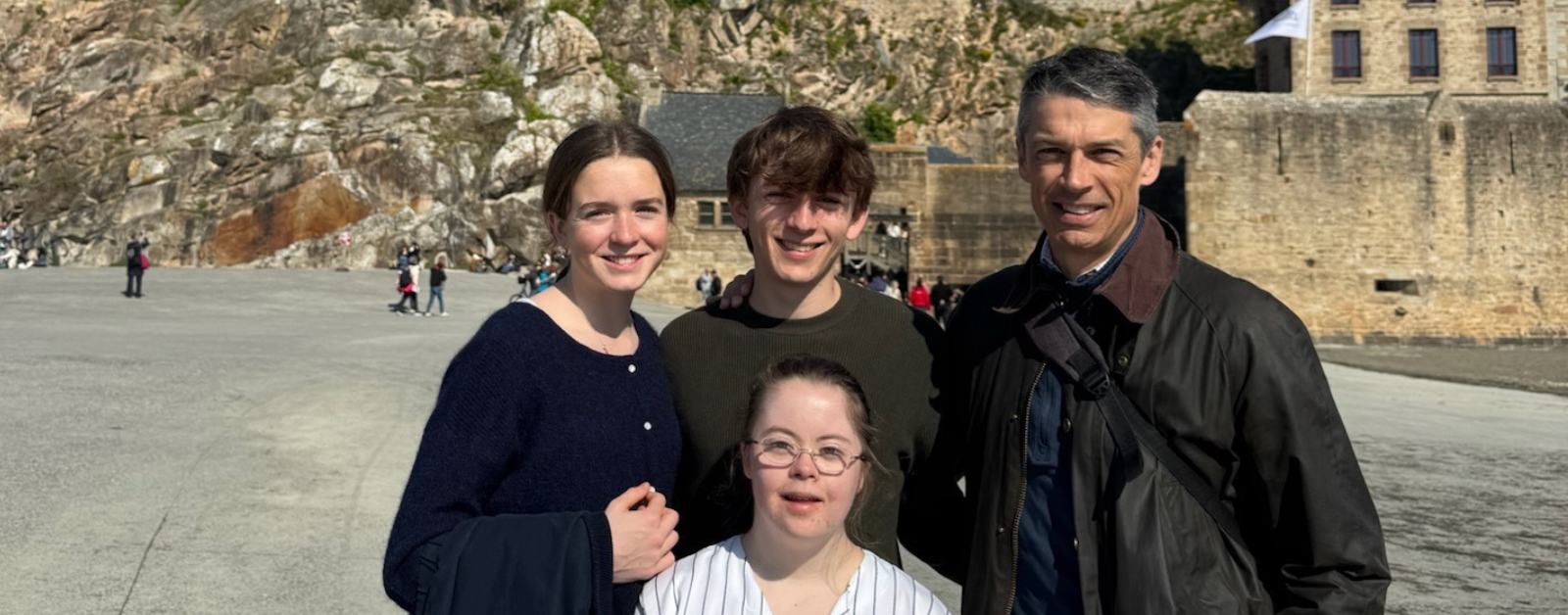
We went out to dinner as a family on Sunday. There was nothing exceptional about it. William told us about his European History class. We marvelled at Marilee’s auditory memory—she can remember pretty much anything she listens to, but has a harder time paying attention when she’s reading words on a page. Penny shared about having friends from school over for a game and movie night. Peter and I sat back and enjoyed the three of them, side by side.
One of the myths that swirls around the disability world is the sense that having a child with a disability negatively affects families. I’ve written before about the persistent, erroneous statement that 80% of marriages with a child with a disability end in divorce. Yet another myth is that having a sibling with a disability is especially hard on their siblings. This sibling experience is often described by the term “glass child”: someone who feels essentially unseen, almost invisible, because a sibling’s needs are more urgent.
In a recent essay for Cognoscenti, Brian Trapp writes about his twin brother, who had cerebral palsy. He comments about those who assume his experience as a sibling was that of a glass child:
“But the more I read, the more I worried that the glass child metaphor was deeply problematic for disabled people, their siblings and their families. Championed by a coterie of therapists and influencers selling workshops to heal your “emotional neglect,” it frames growing up with a disabled sibling as toxic. It pathologizes special needs families. While it’s true that some studies find that special needs siblings may be at an increased risk for anxiety and depression, other studies point to their increased capacity for empathy and resilience. Other research complicates the assumption of “negative” psychological outcomes altogether.”
I read that essay on the heels of interviewing Meghan Burke for my Take the Next Step podcast. Meghan is a professor at Vanderbilt University who researches disability and sibling relationships. Her research also dispels the myth that disability is categorically negative for siblings. (You can listen to what she has to say here.)
There is real hardship associated with disability in families, and that hardship can be experienced by every member of the family, including, but not limited to, the disabled member. But there is also real joy and love and hope and peace within many of our families, and these stories point out our need to highlight the full narrative.
Many of us as parents inherit the message that disability is bad, and sad, and even traumatic for other family members. I’ve wondered whether Penny’s needs might harm her siblings. I’ve worried that I pay too much attention to those needs, that Marilee and William feel perpetually neglected. And there’s something good to those concerns. It is good to want to love our children well, to serve them well, to let them each know that they are treasured, valued, and unconditionally loved.
At the same time, the message that children with disabilities are problematic for families is both oversimplified and untrue. Even more, when we believe the story that disability will harm our families, we are more likely to live into that story. But there is another story we can live into. It’s one my friend Katherine Wolf calls “goodhard.” It’s one that doesn’t dismiss the hardship and struggle and one that welcomes and names the beauty and joy.
SUBSCRIBE to my Substack newsletter: amyjuliabecker.substack.com
JOIN the conversation on Instagram: @amyjuliabecker
LISTEN to my podcasts: amyjuliabecker.com/shows/
CONNECT on YouTube: Amy Julia Becker on YouTube