TAKE THE NEXT STEP PODCAST
E22—Is having a sibling with a disability hard on kids? Researcher Meghan Burke has spent years studying (and living) this question. Her findings might surprise you. In this episode, she joins Amy Julia Becker to share:
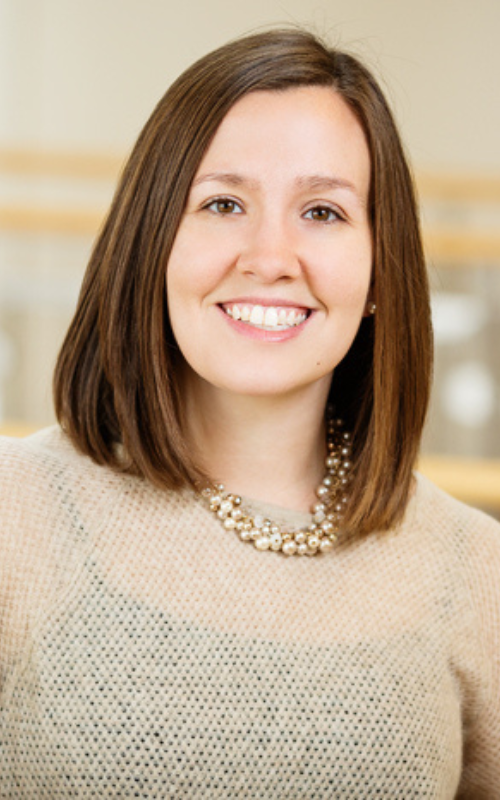
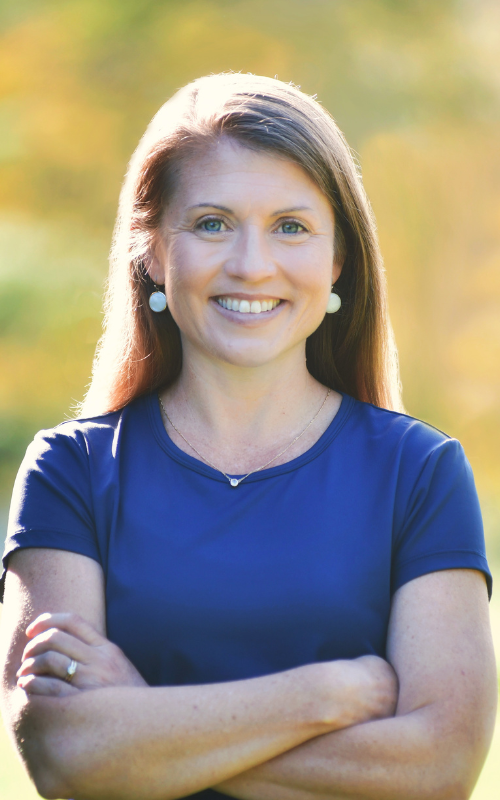
Meghan Burke is a professor of special education in Peabody College at Vanderbilt University. Her research interests include advocacy, families (i.e., parents and siblings) of individuals with disabilities, and disability policy. Her research examines how families advocate for services with their family members with disabilities. She also conducts research examining how siblings of individuals with disabilities transition to caregiving roles.
Website: https://peabody.vanderbilt.edu/bio/meghan-burke/
Linked in: https://www.linkedin.com/in/meghan-burke-4191239/
Instagram: https://www.instagram.com/meghanbm/
00:00 Introduction to Sibling Relationships in Disability
02:48 Research Insights on Sibling Dynamics
05:57 Understanding the Myths and Realities
09:34 The Experience of Being Overlooked as a Sibling
10:59 Common Strengths Among Siblings
12:48 Siblings’ Needs and Involvement
16:41 The Normalization of Disability in Sibling Relationships
18:16 Fostering Mutual Care in Families
23:02 Future Planning and Sibling Responsibilities
_
WATCH this conversation on YouTube: Amy Julia Becker on YouTube
SUBSCRIBE to Amy Julia’s Substack: amyjuliabecker.substack.com
JOIN the conversation on Instagram: @amyjuliabecker
LISTEN to more episodes: amyjuliabecker.com/shows/
Note: This transcript is autogenerated and does contain errors. Please check the corresponding audio before quoting in print.
Amy Julia Becker (00:06)
I’m Amy Julia Becker, and this is Take the Next Step, a podcast for families experiencing disability. We’ve teamed up with our friends at Hope Heals to bring you weekly conversations with fellow parents, therapists, and disability advocates about practical ways to cultivate a thriving future for the whole family. Here at Take the Next Step, we see your family as a gift to our society and to your local community. Your family matters, your child matters.
We need you among us. I loved this conversation with Meghan Burke that you’re going to get to hear today. Meghan is a professor of special education in Peabody College at Vanderbilt University. And I loved what we talked about for so many reasons. So Meghan’s research interests include advocacy, families of individuals with disabilities, disability policy, but she also speaks about all of these things from personal experience as both a sibling of a brother with Down syndrome,
and as the parent of a son with autism. And of course, she brings her research hat as someone who knows what the data is saying. And today we’re talking specifically about that sibling experience. I walked away as a parent with some good advice and some next steps. I hope you will too.
Well, here I am with Meghan Burke. Thank you so much for joining me today.
Meghan Burke (01:28)
Thank you for having me.
Amy Julia Becker (01:30)
So you are a professor at Vanderbilt University and you research family and disability. So that is why we have you on today. I thought maybe we could start with a little way of introduction to you. Just can you tell us about the experiences that led you into this field of study?
Meghan Burke (01:46)
Sure, so I am the oldest of five and my brother Ryan is number four in line. He has Down syndrome. So he is 32 now and now I have three children of my own and my oldest is 11, soon to be 12 and he is autism. So I kind of have two lines of research. One that looks at how families navigate and access services and the other that looks at siblings, which I know is what we’re.
we’re planning on talking about today. So that kind of lived experience has led me to a lot of my research.
Amy Julia Becker (02:20)
Well, sounds like we might need to have you back on to talk about the navigating and accessing services part, but we won’t do that today. Yes, I got connected to you through Eric Carter, who some of our listeners might recognize when I said to him, who should I talk to about sibling relationships? So that is what we want to focus on today, but I’m definitely interested in what you’re studying. And again, I love it when people are studying what they’re also living, because that does help. As you and I talked before this podcast, we want to give parents
meaningful and manageable ways to move towards a good future in their family lives. And sometimes we get meaningful but unmanageable advice. We don’t want to do that. So in terms of thinking about the sibling relationships, I guess, can you just give us a little bit of a bird’s eye view from a researcher’s perspective? Are there things that we know in a general sense about
Meghan Burke (02:57)
Right.
Amy Julia Becker (03:12)
siblings of kids with disabilities or about these sibling relationships that are kind of noteworthy when it comes to the research.
Meghan Burke (03:19)
So I’ll say one thing just for context. The research is limited and the research tends to focus on what we would call convenient samples. So there are samples of siblings who want to participate in research. just something to kind of keep in the back of your mind as you’re thinking about the generalizability of what I’m going to say. But based on that research, I would say overall most siblings report pretty positive relationships with their brothers and sisters.
A lot of siblings report feeling like growing up with somebody with a disability has made them more compassionate, more resilient, more empathetic. So on the whole, especially the more recent sibling research has really shifted the narrative from having a sibling with a disability is a bad thing or a stressor to having a sibling with a disability can lead to some positive outcomes, challenges, but also some positive things.
Amy Julia Becker (04:14)
And do you think so talk to me a little bit about the convenience. What did you call it? Convenience samples. Yes. Does that generally we would assume that if people want to be reporting on an experience, it’s because it is either, I guess, maybe either very positive or very negative. Like exactly. It’s not neutral. OK. But you’re also receiving mostly positive reports within those convenience samples.
Meghan Burke (04:19)
Convenient samples.
For the most part, and so we’ve tried to kind of push back on this. We have a study now that is specifically looking at siblings of autistic adults with distressing behaviors. And so really trying to understand siblings who have been kind of overlooked in the research. And even in that study though, we found that in our small sample, siblings have reported that even though their brothers and sisters demonstrated like,
physically aggressive behaviors, property destruction, I some really challenging behaviors that siblings still reported, it’s made me more empathetic, it’s made me a better person, but also challenges, right? Like it makes, it is traumatic to go through some of those things. It makes me more fearful of being in unsafe situations and it’s impacted some of my life choices. So it’s made me think harder about who I wanna date and whether or not.
I want to get married. It’s made me think about whether or not I want to have my own children. But interestingly, a lot of the siblings in that study have still said, I’m going to assume some kind of caregiving role in the future for my brother or sister, despite this mixed bag of experiences.
Amy Julia Becker (05:57)
Yeah, though, that’s really interesting and helpful. And I’m glad it is really easy to ⁓ feel like these studies or even maybe the better way for me to say it is like ⁓ generalized comments about siblings. I mean, I hear really I hear the two extremes as a parent. I either hear, ⁓ my gosh, this is going to be so good for your other children that Penny has Down syndrome. Or I hear really.
I talked to a lot of moms who have a prenatal diagnosis of Down syndrome and one of their big fears is, this going to be bad for my other children if I have a child with a disability in our family? And ⁓ those do seem like kind of these extreme cases. And what I’m hearing from you is like, yes, like those things could be true, right? Like, ⁓ which…
Meghan Burke (06:42)
Yeah
Amy Julia Becker (06:46)
It’s kind of a hard, there’s not like one answer, but at the same time that sounds like a pretty truthful representation of like there are challenges and there are good things that happen.
Meghan Burke (06:56)
Yeah, just like everything, right? I will say in the research, siblings of people with Down syndrome do seem to be a little different than everyone else. And so if we have one study where we compared siblings of people with Down syndrome to siblings of people with autism and siblings of people with Down syndrome reported warmer relationships, feeling more compassionate, more empathetic. We have another set of studies that looked at siblings who eventually wanted to
co-reside with their brother or sister with a disability. So 50 % of siblings, 50 to 70 % of siblings will say at some point, I’ll live with my brother or sister with a disability. And in actuality, 10 % do. Except for siblings of people with Down syndrome, where it is at 50%. So there does seem to be something unique about that population.
Amy Julia Becker (07:45)
No way.
That’s really, really interesting. Do you you hypothesize about why or is that not something you’re going to do?
Meghan Burke (07:59)
You know, it’s funny that you act like based on my own personal experience. Again, there are five of us. Right. So Ryan’s only one of us. But each of us have separate bedrooms in our house if Ryan were to move in. OK. And so like, I don’t know if it’s. If we’re all ready for that, if it’s because it’s always been part of the narrative, if it’s his disposition and just like how well he gets along with everyone. But for like for me, that.
Amy Julia Becker (08:15)
You’re all ready for that.
Meghan Burke (08:29)
rings true.
Amy Julia Becker (08:30)
Yeah, well, I appreciate that so much. ⁓ Do you think there are any common myths or misperceptions about siblings? And maybe we’ve already uncovered some of those. But yeah, if you were to just to name those as a researcher.
Meghan Burke (08:40)
Yeah, I mean, definitely there are some myths about being a sibling that are kind of similar to the myths about parenting a child with a disability, that it’s like, you know, mourning the loss of someone, that it’s ⁓ really negative, that they can build some resentment, that kind of thing. I think those are a lot of the myths around siblings. And so, you know, I’ll say for one of my brothers, he was in high school.
The high school found out that he had a brother with Down syndrome and they pulled him out of class. The social worker pulled him out of class to talk to him about it and try to explore his feelings. And my mom got real mad and called the school and was like, there is no need to do that. He is completely fine. So just this myth of having a sibling is totally a negative experience or that it’s gonna negatively impact you. I would say that we found for the most part really isn’t true.
Amy Julia Becker (09:34)
Yeah, I appreciate that. What about within that? ⁓ What about the idea of like being overlooked? I I struggle with this as a parent in especially when Penny was younger and the number of doctor’s appointments was just like truly disproportionate in the sense that I and I we lived in a rural area. So I was driving an hour to get her to see a specialist. And so it just felt like that I loved my kids just the same. And the amount of time I was spending with Penny, which, you know,
could have translated into attention and love seemed to be much more, yeah, in her direction. And I really felt a lot of guilt about that as a parent, but I also didn’t know how to do it any differently. I’m curious whether you see that kind of feeling of being overlooked or less important than the sibling with the disability.
Meghan Burke (10:21)
Yeah, we hear parents say that in research and we hear siblings say no. Siblings, think the way you frame it as everybody gets what they need and what you need changes over time. Yeah. Right. And so it’s just more of a recognition of a lot of siblings have been kind of like, yeah, you have to take your other child to doctor’s appointments that I didn’t need. Right. And so that’s just kind of how it goes. no, not.
Amy Julia Becker (10:29)
Interesting.
Meghan Burke (10:51)
From the sibling side, not really seeing, that guilt, you shouldn’t feel it.
Amy Julia Becker (10:55)
that. Thank you so much. Terrific. ⁓ Well, somewhat on the flip side of that, are there like common strengths or advantages that you see in the families like ours, among the siblings in terms of, ⁓ yeah, just that you’ve mentioned a few of them, but let’s just kind of hone in.
Meghan Burke (11:11)
Yeah, definitely. mean, more compassionate, more empathetic, more interested or aware of issues of injustice and more attentive to those. We’ve seen a little bit of mixed research about going into help giving professions. So you’ll see siblings who go on and become a special education teacher or social worker. But what we’ve also seen is siblings who go into certain professions that are not typically considered help giving professions, but the way they framed it is help giving.
As an example, in one of our studies, there were three siblings, one of whom had Down syndrome. The sister, very typical of a sister, went in and became a special education teacher. And the brother was going to become an accountant, which on the face of it, you wouldn’t necessarily think of help giving. But when we interviewed him to talk about, having a brother with Down syndrome impact that life choice, he said it did because he knew his sister was going to be a special ed teacher, and he knew his brother was going to need support throughout his life.
and to get support you need money. So he’s like, somebody needs to make the money and she’s not gonna make the money. And so he is framing it around his sibling. And so it does seem like, it seems like being a sibling is impacting us in a lot of different ways that on the surface you wouldn’t necessarily realize.
Amy Julia Becker (12:29)
Yeah, that’s so interesting. again, I think it just speaks to that sense of, yeah, we’re going to need to, we’re going to need one another, we’re going to need to care for one another. And that’s like an assumption in my life, but not necessarily a negative assumption. Right. Yeah.
Meghan Burke (12:45)
Exactly,
exactly.
Amy Julia Becker (12:48)
What are, you see any common needs that siblings express in the experience of having a sibling with a disability?
Meghan Burke (12:55)
Yeah, I think the most common need that we’ve seen is siblings wanting to meet other siblings, especially at younger ages. Siblings kind of wanting to have, know, if there it’s a SIB shop or a support group or just an event where you meet other siblings who have that shared experience because it is a unique experience. So you want to meet other people who can kind of.
relate to what that’s like and talk about how to address some of the issues with it. I think another common need that we’ve seen is siblings want to be involved in decision-making earlier. Siblings at a really early age have started thinking about becoming caregivers and what this is gonna look like. And not talking about it is actually probably not helpful because siblings, whether they tell you or not, especially in their teenage years, they’re watching you as parents.
navigate IEP meetings and adult disability services and all of the things. And siblings understand that eventually they’re going to probably take on one of those roles and it’s going to be a very steep learning curve for them. And so they’d rather be involved earlier and talking about it earlier versus later.
Amy Julia Becker (14:06)
And do you have, obviously this is going to be different from household to household in terms of birth order, in terms of personality, in terms of even the age of parents and that kind of thing. are we talking, we’re talking about earlier, are we talking about like when they’re in middle school or are we talking about when they’re in college? I’m just trying to get a sense of what we’re talking about there.
Meghan Burke (14:27)
We’re talking about adolescence. ⁓
Amy Julia Becker (14:29)
Yeah.
It’s interesting. situation, Penny is our oldest child and then I have two younger. But our son, who is in high school, has definitely started asking questions. And we’ve set it up in such a way that we ⁓ have basically said, we do not assume that you will be the person taking care of your sister. And he’s still like, yeah, and I should know. Like, I should know what’s going on and how to be.
you know, like helpful. You guys get hit by a bus, guess what? And he’s not even 18, but he’s still like, I would be involved, you know?
Meghan Burke (15:00)
Exactly. so, you know, siblings want, what we hear from parents is they don’t want their sibling to feel like it’s their burden, right? And I’m using the quotation marks of burden.
Amy Julia Becker (15:09)
Totally
right. I but I’ve very much we’ve very much as parents feel that way. So yes.
Meghan Burke (15:15)
Exactly, exactly. What we hear from siblings is it’s not a burden and it’s going to happen. It’s a responsibility. It’s a responsibility for sure. It’s an added thing. I think for siblings, we’ve grown up with our brothers and sisters. This isn’t something we haven’t been thinking about for a long time. It’s like might as well get it out in the open and talk about it versus
Amy Julia Becker (15:22)
But it does feel like a responsibility.
Meghan Burke (15:42)
a crisis happening and then really being in a bind.
Amy Julia Becker (15:46)
Yeah, I really appreciate that. I even think about the word response ability, like that sense of I want to be able to respond to the needs of my sibling and not be thrown into a situation where I’m essentially unable to do that because I don’t know what’s going on. I think that’s really interesting. And I certainly share that ⁓ parental desire to say, no, no, no, like this is not yours to carry, know.
I think it’s very interesting to hear that siblings have that experience of sure it is, or it will be. ⁓ I also think about, and I’m curious if this lines up with your experience, one sibling once said to me, she has a younger brother with Down syndrome, and she’s like, look, Amy Julia, for you, there was a before and after in your life. There was no before and after for me. She’s like, I’m a couple of years older. I do not remember life without my brother.
Meghan Burke (16:21)
capacity.
Amy Julia Becker (16:41)
And I certainly don’t remember him without Down syndrome because he’s always had that. And I see that, like my son was writing his college essay and he wrote, know, Penny was my first friend and my something else. You know, like she’s always been in my life as she is. I do, I wonder, and this might just be a personal answer, not a researcher’s answer, but what you think about how that shapes an experience to have always grown up with a sibling with a disability versus the experience as a parent.
Perhaps not in your case, in my case, like of not having had a lot of experience with disability and then being given a child I didn’t expect.
Meghan Burke (17:19)
Yes, exactly. mean, 100 % because this is our normal. We don’t know anything different than this, right? You do know something different than this. But as a sibling, this is just how it is.
Give an example sometimes, I knew a family, had four boys, one of whom had a disability and cochlear implants. And when it would rain, he didn’t want to get his ears wet. And so he would walk out into the rain, he would cover his ears, put his hands over his ears. And he was the oldest. His younger siblings would also cover their ears when they went out into the rain. Because they didn’t think of him any differently. They were like, this is what he does, this is what we do.
And it’s just like, that’s our normal, right? ⁓ And so I think for parents, it seems very different, but as siblings, it’s just like, that’s our normative experience.
Amy Julia Becker (18:11)
Yeah, I love that. And I love that example. yeah, I think do you have any advice for parents who have kids who are growing up alongside one another in terms of fostering family relationships of mutual care, being, yeah, of looking out for each other? And I’m thinking both about, you know, in the not just the planning for the future stuff, but the mundane day to day.
I think not simply seeing my sibling with a disability as someone who needs my help, but also someone I need in my life, you know, like that sense of mutuality. Do you have any advice for parents?
Meghan Burke (18:49)
Yeah, I think the idea of reciprocity is really important. And siblings feel this, and older siblings will reflect on, we have a reciprocal relationship, but it’s not that I’m giving the same thing that they’re giving to me. I may provide support in tying their shoes or taking them to a baseball game or whatever, but they give me support in the sense of teaching me to take my time and doing things. And I think emphasizing that early on.
you can have a really equal relationship, but you’re giving different things to one another at different times. Even if it’s going to Disney World and you get the disability pass and you get to go to the front of the line, right? There are things that you do get. And I think it’s important to recognize there is just to highlight that exchange of things I think is important.
Amy Julia Becker (19:38)
Yeah, we’ve found that as well ⁓ that there are there are some perks when it comes to traveling in foreign countries or going to Disney World. And also, I think for me, like helping our kids frame their experiences in terms of like strengths and challenges and recognizing that they’re not the same. ⁓ And yet they also that Penny does have strengths that ⁓ we might be able to benefit from, even though she also has challenges that are different than our other kids.
I you know, this makes me also curious. In our experience, one of the advantages for Penny of having her siblings is that they I would do more for her if they weren’t around and they call me on it. Right. Like my daughter, Mary Lee is like, ⁓ Penny is absolutely unloading her part of the dishwasher. And I don’t care if it takes longer. Don’t you dare get in there because you’re not helping me. And she can do it. Like so I’m just curious if you ever see any of that. yeah.
Meghan Burke (20:36)
We see siblings will say their parents are overprotective, do too much for the brother or sister. Parents will say, they’re right. But what’s interesting is we did a study once where we interviewed the sibling without a disability, the sibling with a disability, and then the two of them together. And the sibling without a disability first said, you know, as she was talking about her sister, and she was like, she’s going to move in with me eventually. We’re going to have a room for her. And that’s the future.
And then we interviewed the sister who happened to have Down syndrome. And that sister was like, well, I’m dating my boyfriend and I think we’re gonna get married and move in together. And we thought, wow, these are really divergent perspectives. And then we interviewed the two of them together and the sister with Down syndrome said, I’m gonna move in with my boyfriend and we’re gonna get married. as some context, the sister with Down syndrome had already been married. She had been married and divorced. So you may like, you know.
It could be an ableist assumption to think she couldn’t get married, she’s already proven she could do this. This is very within the realm of possibility. And her sister without Down syndrome was shocked that she was considering this, that they were that serious, that she had anything in mind other than moving in with her. And so I think even as siblings, we are a little bit more overprotective than we think we are, right? And really like…
probably need some work about having a little bit more of an open dialogue about what our siblings really want versus what we think is gonna happen.
Amy Julia Becker (22:10)
Yeah, I love that. I’m so grateful to just learn all of these things. They on the one hand affirm a lot of my own experience and they also though, like there have been some good challenges for me as a parent in listening to what you’re saying. think for me personally, especially around that idea of like talking earlier about the reality that like Penny’s needs are different and they will be different for most of her life, at least within the American system of ⁓ support. And so
having honest conversations about that and not seeing it as a burden, but as something that we as a family get to take responsibility for. That’s really helpful to me. Is there anything else that you would want to name as we get kind of to the end of our time as just in that category of like just meaningful, manageable steps that parents can take to support these sibling relationships?
Meghan Burke (23:02)
Yeah, I think on that note, it would be future planning. Yeah, right. where if you’re designing a special needs trust and your other children who don’t have disabilities are anything above the age of 16, you might want to have them in the meetings to talk about the trust and what it looks like. You might want to tell them where the trust is in your house so they know where to find it. Right? Some people will create, they’ll create like guidebooks to say like,
here’s the medications your brother takes, here’s the doctors. Just like some of the things that you have in your head but are not written down could be really helpful just to have somewhere, because it should give you peace of mind as a parent, but would also give your other children peace of mind to say, OK, at least it’s written down here, like a brain dump of everything that’s gone on. When you go to a medical doctor and they ask you for your history, you know that off the top of your head.
siblings may not remember everything. So I think those are nice low-hanging fruit type things that could be helpful.
Amy Julia Becker (24:06)
Yeah, well, this has all been so helpful. And again, I do hope we’ll get a chance to talk again about some of your other research because it’s all, again, really practical and encouraging and just grateful for the work you’re doing.
Meghan Burke (24:19)
Oh, thanks. Thanks for having me on. I appreciate it.
Amy Julia Becker (24:25)
Thanks so much for joining me here at Take the Next Step. This show is produced in partnership with our friends at Hope Heals. Hope Heals is a nonprofit that creates sacred spaces of belonging and belovedness for families affected by disabilities to experience sustaining hope in the context of inter-ability communities. I do hope you will be back with us next week. We have some more great conversations in store for you. I’m talking with Shelly Reynolds about planning for the future.
with Katherine Wolf, Hope Hill’s co-founder, about finding community, and with Mike Eerie about being a dad. So I hope you’ll come back for those conversations. And in the meantime, please follow, rate, review this show. More people will find out that it is out there, and that will help us to continue to bring you great conversations. I would also love for you to just personally share this conversation with anyone who would benefit from it.
And as always, you can send questions or suggestions my way. You can the Send Us a Text link at the end of the show notes or email me at amyjuliabeckerwriter at gmail.com. I want to thank Jake Hansen for editing the podcast and Amber Beery, my assistant, for doing everything else to make sure it happens. And thank you for listening. I hope you leave this time with encouragement. To start with delight, connect to community.
and take the next small step toward a good future for your family.
Take the Next Step is produced in partnership with Hope Heals Camp. Hope Heals creates sacred spaces of belonging and belovedness for families affected by disabilities to experience sustaining hope in the context of inclusive, intentional, inter-ability communities. Find out more about our resources, gatherings, and inter-ability communities at hopeheals.com. Follow on Instagram: @hopeheals and @hopeheals.camp.
my weekly Substack letter
My newsletter delivered to your inbox that challenges assumptions about the good life, proclaims the inherent belovedness of every human being, and envisions a world of belonging where everyone matters
LET’S REIMAGINE THE GOOD LIFE TOGETHER. SUBSCRIBE TODAY!
Get the Free Resource!
An illustrated guide designed to help you identify and create spaces of welcome and belonging—download today!