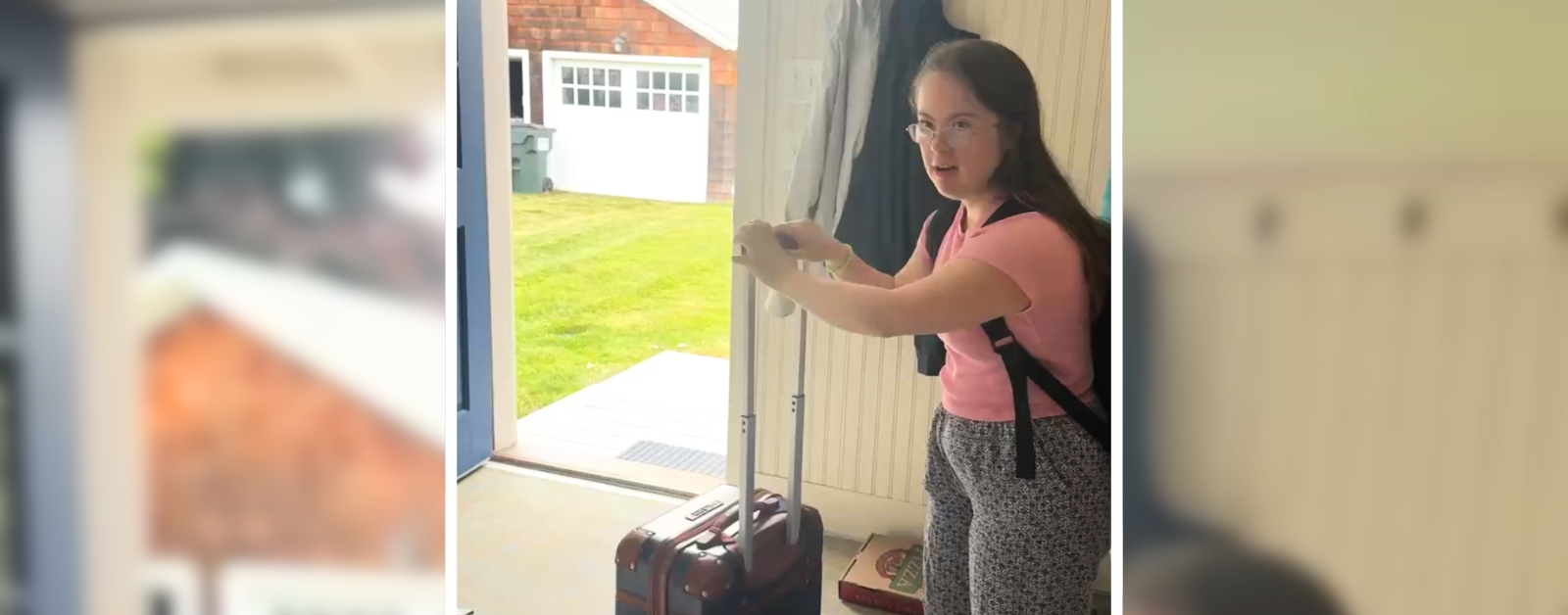
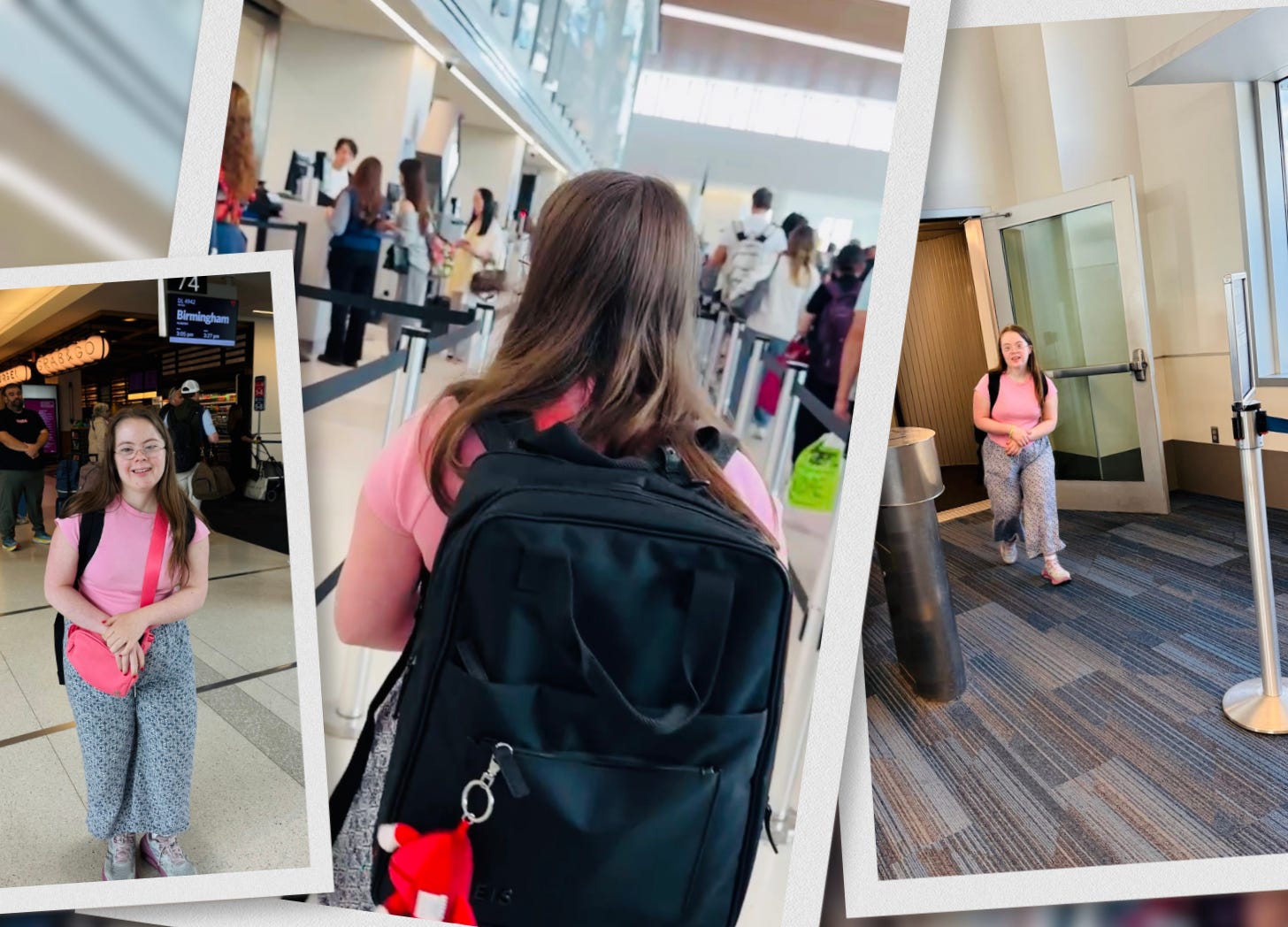
Penny flew solo for the first time on Saturday. Everything worked out easily and well. I was definitely teary as I watched her board the plane. She was definitely not! (Here are her thoughts about the flight.) She landed in Birmingham without a hitch and is now at Hope Heals Camp as a volunteer on her own. (We’ll join her there next week.)
The whole experience—not only her flying solo but also the massive support we received from family and friends and the online community and Delta itself and The Sensory Stores—prompted me to reflect on what just happened.
First of all, there was the outpouring of advice and support from fellow parents. We asked Chat GPT to take ALL these comments and distill them for us so that we can pass along what we learned to our fellow travelers (read all their advice here). Here’s the bottom line: Use every support available (gate passes, TSA Cares, disability assistance, and a pickup at the gate), and spend most of your preparation time planning for unexpected delays or cancellations rather than for the flight itself.
Second, there was the swag box that Delta sent Penny—um, wow! And, as Penny said, “Thank you, Delta!”
I could get cynical and interpret this gift as a good PR opportunity for the company because I happened to have a viral post about Penny’s upcoming flight. Or we could see it as an example of a deeper set of commitments. For the past few years, Delta has included people with disabilities in their marketing materials. Peter texted me in 2022 from a flight where a man with Down syndrome appeared in the safety video. Every time I wait in line to board a Delta flight, I see people with disabilities featured on the posters nearby.
I’ve read stories from other customers who have praised Delta for their posture of welcome and their assumptions of the competence and capabilities of individuals with disabilities. And they created the conditions for me to want to tell the story of a customer service agent who took the time to thank me and get excited that Penny was about to fly by herself. Not only that, I’ve had dozens of current and retired flight attendants reach out personally to reassure me not only about Penny’s safety but also about how grateful they are that they get to do their jobs. No one required them to do that. And once we arrived at the airport, the care and concern—without being overbearing or patronizing—only continued.
I checked Delta’s website and found this statement:
Connect the world. Reflect the world. Respect the world.
As champions of connection, we bring people together, break down barriers, bridge divides and move the world forward. Delta actively values diversity, boldly pursues equity and consciously promotes inclusion. We’re committed to creating a world where everyone, everywhere can thrive.
So I’m back to saying, thank you, Delta, not just for the bags and the speaker and the portable charger and the Biscoff, but for believing that people with intellectual disabilities can and should travel. Thank you for including Penny in your vision of who deserves connection and respect.
SUBSCRIBE to my Substack newsletter: amyjuliabecker.substack.com
JOIN the conversation on Instagram: @amyjuliabecker
LISTEN to my podcasts: amyjuliabecker.com/shows/
CONNECT on YouTube: Amy Julia Becker on YouTube
Amy Julia Becker desires to challenge assumptions about the good life, proclaim the inherent belovedness of every human being, and help us envision and build a world of belonging where everyone matters. Amy Julia invites people to reimagine the good life through her writing and speaking on disability, faith, and culture. She is the author of several books, including To Be Made Well, White Picket Fences, Small Talk, and A Good and Perfect Gift. She is a guest opinion writer for national publications and hosts two podcasts: Take the Next Step and Reimagining the Good Life. Becker is a graduate of Princeton University and Princeton Theological Seminary (MDiv). She is a member of the Disability Ministry Network and the Alliance for Disability Justice and Ethics in Reproductive Genetics. She lives with her husband and their three children in western Connecticut.