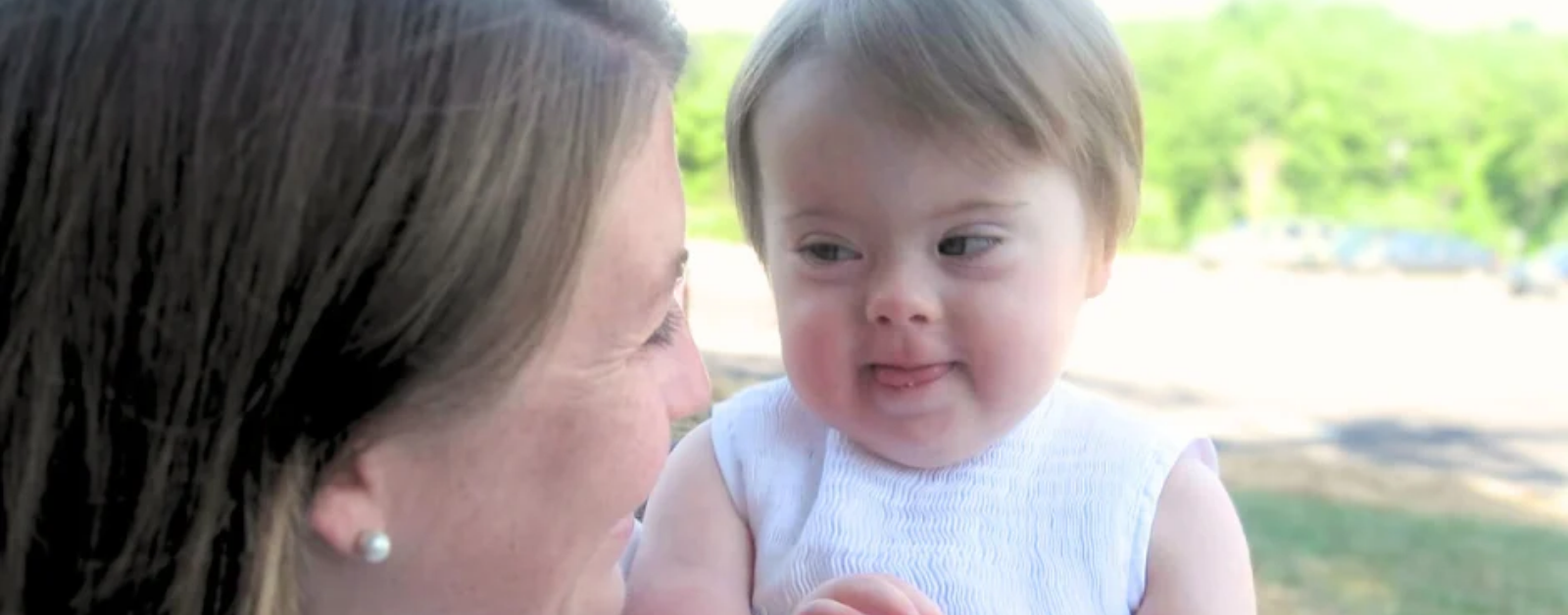
I recently had a chance to talk with the new mother of a baby girl with Down syndrome. This mom’s emotions were raw and beautiful, that same combination of wonder and heartache I felt when Penny was first with us, that fear and delight, that love that went deeper than I ever thought love could, that sense of being on the brink of despair at the prospect of a world that might reject her or hurt her, the exhaustion of navigating any of it and all of it, the beauty of holding her in my arms.
Parenting a child with a disability is harder.
I got off the phone, and at first I was thinking about how being the parent of a child with a disability is just harder. There have been so many more doctor’s appointments. There have been so many more meetings at school. There has been so much more worry—about the future, about her vulnerability. More worry that she could be bullied or taken advantage of or even simply overlooked as a friend. More worry that she’ll never get to move out of the house, live with friends, do meaningful work, grow old.
And that was the essay I planned to write today. I was going to write about how it is harder to be a parent of a child with a disability. I also wanted to say that harder is not the same as worse.
Parenting a child with a disability is easier.
But as I thought about it more, I had to acknowledge the ways that being Penny’s mom has been easier too. When I talked with this new mom, I didn’t just tell her the overwhelm of therapists and heart surgeries and IEPs. I also told her about the way Penny moves through the world without awareness of social hierarchies. She doesn’t look at people as more or less important. She isn’t angling for advantage. She isn’t judging others based on their ability to give her what she wants. She isn’t judging herself based on being cool or impressive. She doesn’t want to be someone else. She experiences a freedom to be herself that I wish I had.
Penny also doesn’t care about stuff. She doesn’t need the most beautiful things. She doesn’t yearn for the coolest shoes or clothes. She’s content with what she has and with who she is.
Penny doesn’t hold grudges. She forgives easily. She assumes the best of people. She laughs at herself when she makes a silly mistake. She delights in so many people and activities and moments of her life.
Being her mom is harder. Being her mom is easier. Being Penny is harder. Being Penny is easier.
Life isn’t frictionless.
One of my biggest pet peeves is packaging that doesn’t work properly—the plastic film on the pesto container that doesn’t peel off and instead requires a knife that then gets messy, or the perforated packaging that isn’t perforated enough to tear through, or the potato chips that are supposed to have the little notch you pull to get into the bag that doesn’t actually work. I want these things to open quickly and easily, with as little friction and as much time-saving as possible.
I want parenting to be that way. Frictionless. Quick. Easy.
And yet I know our hearts and souls are formed by having to practice things over and over, by enduring hardship, by being forced to engage with tasks challenging enough to stretch us, to develop patience within us, to prompt us to ask for help, to make mistakes, to learn, to try again. We become who we are only if and as we develop a greater capacity to both give and receive love. And that capacity happens only when we refuse the shortcuts. Only when we take the time. Only when we see each other in all our wondrous complexity.
I don’t know who I would be without Penny as our oldest daughter. I don’t know who our other kids would be without her as their big sister. I know our lives would have been easier in many obvious ways. I suspect they would have been harder in the ways that matter even more.
Even in this world of consumer choice, we don’t always get to choose the kids we have. But we do get to receive them as they are. We get to receive one another as we are. We get to receive ourselves as we are. And if we can learn that long, slow, hard, beautiful work of receptivity, we learn to become ones who love more and more fully. We learn what it means to be human and to give that gift of vulnerable humanity to one another.
SUBSCRIBE to my Substack newsletter: amyjuliabecker.substack.com
JOIN the conversation on Instagram: @amyjuliabecker
LISTEN to my podcasts: amyjuliabecker.com/shows/
CONNECT on YouTube: Amy Julia Becker on YouTube
Amy Julia Becker desires to challenge assumptions about the good life, proclaim the inherent belovedness of every human being, and help us envision and build a world of belonging where everyone matters. Amy Julia invites people to reimagine the good life through her writing and speaking on disability, faith, and culture. She is the author of several books, including To Be Made Well, White Picket Fences, Small Talk, and A Good and Perfect Gift. She is a guest opinion writer for national publications and hosts two podcasts: Take the Next Step and Reimagining the Good Life. Becker is a graduate of Princeton University and Princeton Theological Seminary (MDiv). She is a member of the Disability Ministry Network and the Alliance for Disability Justice and Ethics in Reproductive Genetics. She lives with her husband and their three children in western Connecticut.