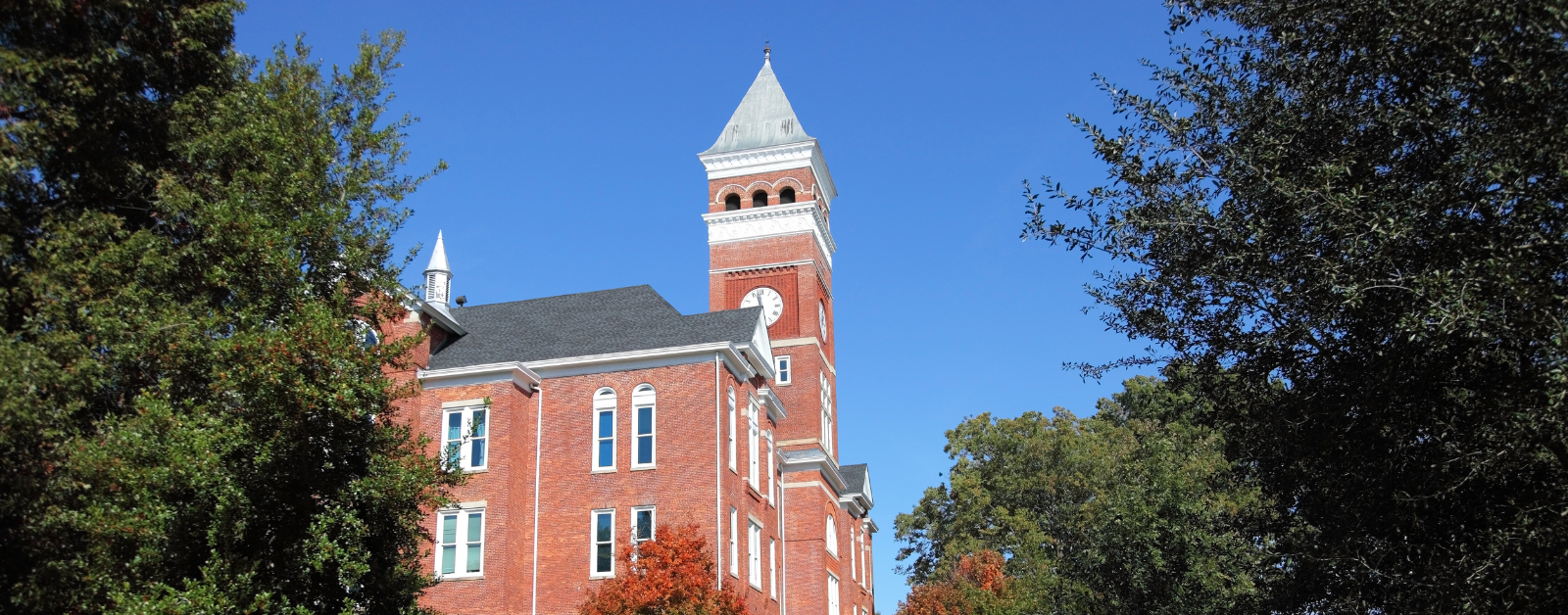
When Penny and I visited the ClemsonLIFE program back in March, one of the program leaders talked to all the parents in the room about funding. It’s not cheap to send a young adult to college, she admitted. And, she added, you all didn’t save for your kids to go to college.
She’s right. Twenty years ago, when our children were born and diagnosed with intellectual disabilities, there weren’t many (if any) college programs to send them to. The landscape has changed within Penny’s lifetime. The possibilities, the shape of the imagination—it is all different now. Now, kids like Penny have the option of applying to programs like ClemsonLIFE, where over 95% of students graduate with a job. Now, kids like Penny have the possibility of living with friends and participating in local communities.
I don’t have the space here, or the expertise, to write the whole timeline of how those gains came to be. I suspect they started with disabled adults and parents of disabled children both advocating and demonstrating the possibility of purposeful lives. And then their lived experience was codified and protected with laws like the IDEA for education and the ADA for disability rights more broadly. And then students started to receive public school education, and we learned more and more about how kids thrive and grow. And programs like Clemson LIFE were born.
Having an imagination for a good future is not fantasy—not conjuring up a pretend world divorced from reality—but it is also not certainty. The imagination, rather, is a glimpse of a world of possibility.
So when I read that the Trump administration, “has not allocated 84% of the money budgeted for special education research through the U.S. Department of Education’s Institute of Education Sciences,” this year, I’m aware of the serious consequences this lack of research could have for the next generation of kids. When we stop learning about how to educate kids with disabilities and their typical peers, we start to undo the gains of recent decades.
Instead of imagining possibility, we begin to imagine restriction. Instead of envisioning friendship and community, we envision isolation. Instead of purposeful work, we predict boredom and languishing.
I’ve been writing for a while that when Penny was born, I no longer had an imagination for our future as a family. Recently, I realized that’s not exactly true. When Penny was born and diagnosed with Down syndrome, I could no longer imagine a good future for her. Instead, I imagined a bleak and lonely one. The imagination can be a vehicle for hope, or it can be a vehicle for despair. And the stories we tell, the images we promote, the language we use, the research we produce—it all contributes to the ways we envision our future and the ways we enact policies to make that vision possible.
The past few decades have demonstrated what happens when research and the law insist that people with disabilities are worthy of attention and support. Our current education department doesn’t seem to see the value in paying attention or providing support, which is why we need to insist on it all the more.
I want to see more and more programs like ClemsonLIFE. I want young adults like Penny to be able to grow into their own hopes and dreams. And I want their typically developing peers to have the chance to be involved in friendship and community so they can grow up together.
SUBSCRIBE to my Substack newsletter: amyjuliabecker.substack.com
JOIN the conversation on Instagram: @amyjuliabecker
LISTEN to my podcasts: amyjuliabecker.com/shows/
CONNECT on YouTube: Amy Julia Becker on YouTube