When our daughter who has Down syndrome was younger, our weeks were often filled with driving to doctor’s appointments, therapy visits, and specialist consultations. Some were an hour away. I remember sitting in waiting rooms thinking about how every hour I spent advocating for or caring for one child was an hour I wasn’t physically present with my other two. And even though I knew we were doing what Penny needed, I wondered, “What is this taking from my other kids?”
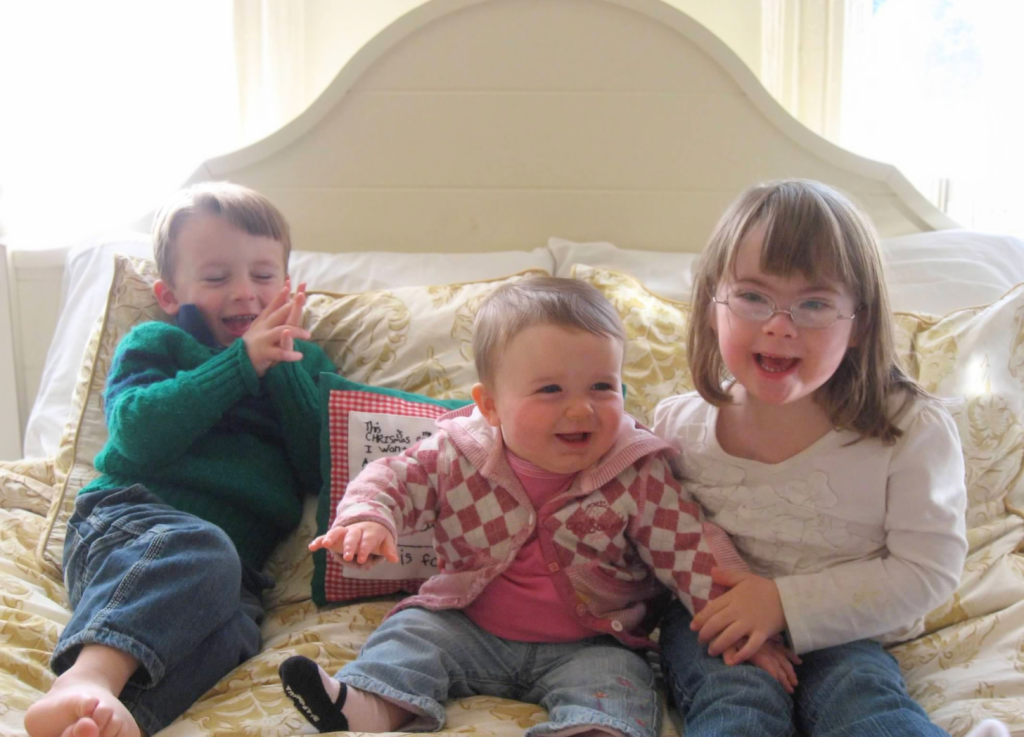
I’m not the only parent of a child with disabilities to feel this tension of meeting one child’s needs and worrying about the effect on siblings. We worry that they will become “glass children,” siblings who feel unseen and invisible because one child’s needs require more immediate attention.
But the research offers a fuller picture. In my conversation with researcher Meghan Burke, she shared that most siblings whom they surveyed describe these relationships as positive. They report experiencing challenges, but many also report growing in compassion, resilience, and awareness of injustice.
So what do siblings really need?
- They need connection with other siblings who share this experience.
- They need honest conversations earlier, especially in adolescence, about the future.
- And they need to be seen not as “secondary children,” but as full participants in a family culture of mutual care and reciprocity.
There’s more in my conversation with Meghan, including how sibling relationships can be complex and why it matters that we, as parents, make space for that complexity rather than trying to simplify it.
E22—Disability + Siblings: What the Research Says with Meghan Burke, PhD
SUBSCRIBE to my Substack newsletter: amyjuliabecker.substack.com
JOIN the conversation on Instagram: @amyjuliabecker
LISTEN to my podcasts: amyjuliabecker.com/shows/
CONNECT on YouTube: Amy Julia Becker on YouTube