Belonging is a bit of a buzzword, but I’m inclined to keep it in the lexicon because it speaks to such a core human need. We need to know that we have a place and a people where our presence is more than just welcome, where we matter to one another. Erik Carter, Executive Director of the Baylor Center for Disability and Flourishing, is the first one who said to me:
“You know you belong when a group says, ‘We aren’t us without you.’”
In an age of loneliness, social isolation, anxiety, and despair, we all need to know that we belong.
Some of us have experience in belonging to exclusive clubs, where everyone is more or less like one another and the qualifications for entry depend upon your social status or athletic ability. And sometimes churches feel just like those exclusive clubs, where you need to wear the right clothes or behave by the right standards in order to get in. But the deeper belonging we long for—and the belonging that the church and other places of worship are intended to offer—is a belonging as you are, an acknowledgement, respect, and care for who you are.
Last summer, a mom told me about showing up for the first time at a megachurch in a new city with her two autistic teens. One of them dropped to the floor as soon as they entered what felt like an overwhelming space in the church’s narthex. The mom also dropped to the floor as her daughter started to cry out. She thought, This is the last time we walk through those doors… And then a woman from a nearby welcome table came over. That woman dropped down to her knees, lay down on the floor, put her hand on the mom’s arm, looked her in the eyes and said, “We are so glad you are here. How can I help?” In two simple sentences, she told this family that they belonged, as they are.
Belonging Audit
I’m flying out to Chicago on Thursday to speak at the Evangelical Covenant Church’s Midwinter gathering, and part of what I will do with about 300 pastors is take them through what I call a “belonging audit.” Again, Erik Carter’s work is my guide here—years ago he surveyed families who longed to belong within church communities. He found that belonging doesn’t require special programs or separate spaces. In fact, the ten dimensions of belonging he articulates speak to all of us as humans as we look for places and people where we feel invited and welcome, known and loved, needed and cared for.
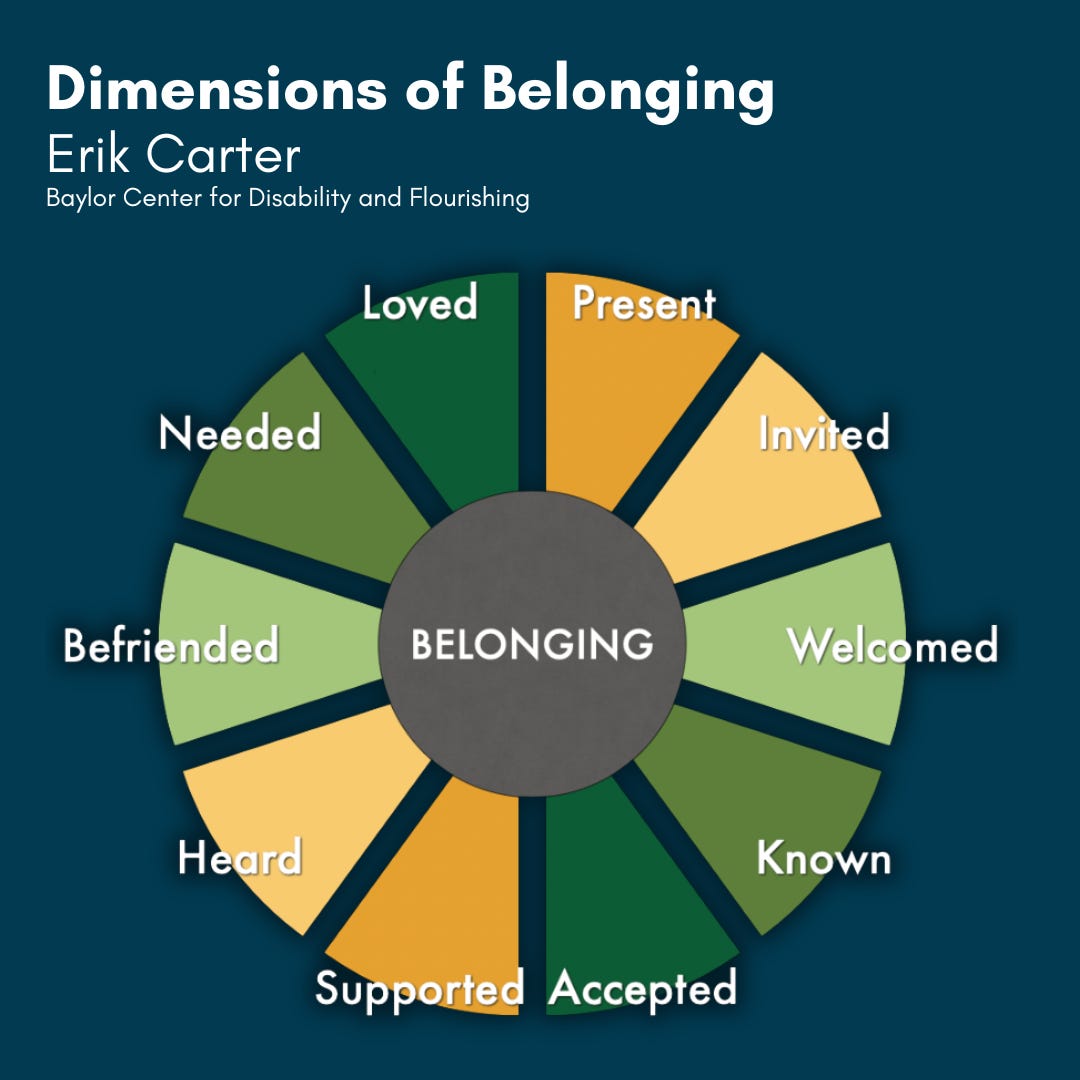
For a belonging audit, I walk participants through a set of questions to consider who is present in their communities (and who is not), how people might know that they are welcome, whether they experience a sense of welcome, and then to consider how individuals with disabilities can be incorporated more fully into the life of the local congregation. (If you’d like to walk through your own belonging audit—of a church or any other civic organization or social group you’re part of—here’s a free PDF to guide you.)
I hope we all can take these simple steps to communicate welcome, to look for ways people can know how much they matter, and to create communities of belonging. I’d love to hear from you.
SUBSCRIBE to my Substack newsletter: amyjuliabecker.substack.com
JOIN the conversation on Instagram: @amyjuliabecker
LISTEN to my podcasts: amyjuliabecker.com/shows/
CONNECT on YouTube: Amy Julia Becker on YouTube