There’s a moment in the recent Billy Joel documentary, And So It Goes, where he describes writing the song “Big Shot.” He says it came out of this period in his life when his marriage was falling apart and he was yelling at himself for all the drinking and the pursuit of fame and fortune and just knowing how messed up it all was. So he’s describing his own debacle, and then he says, “We were just starting to taste the good life.”
It’s so ironic, this declaration of the good life in the midst of pain and despair.
As many of you know, having a daughter with Down syndrome has been an invitation for us to “reimagine the good life.” I had a chance to speak on this topic last week at the Young Life Mosaic staff conference, and I’ll talk about it again at Laity Lodge later this week. I also had a chance to write an essay on the topic for the Dispatch, “Finding the Good Life in an Age of Designer Babies and High Achievers.”
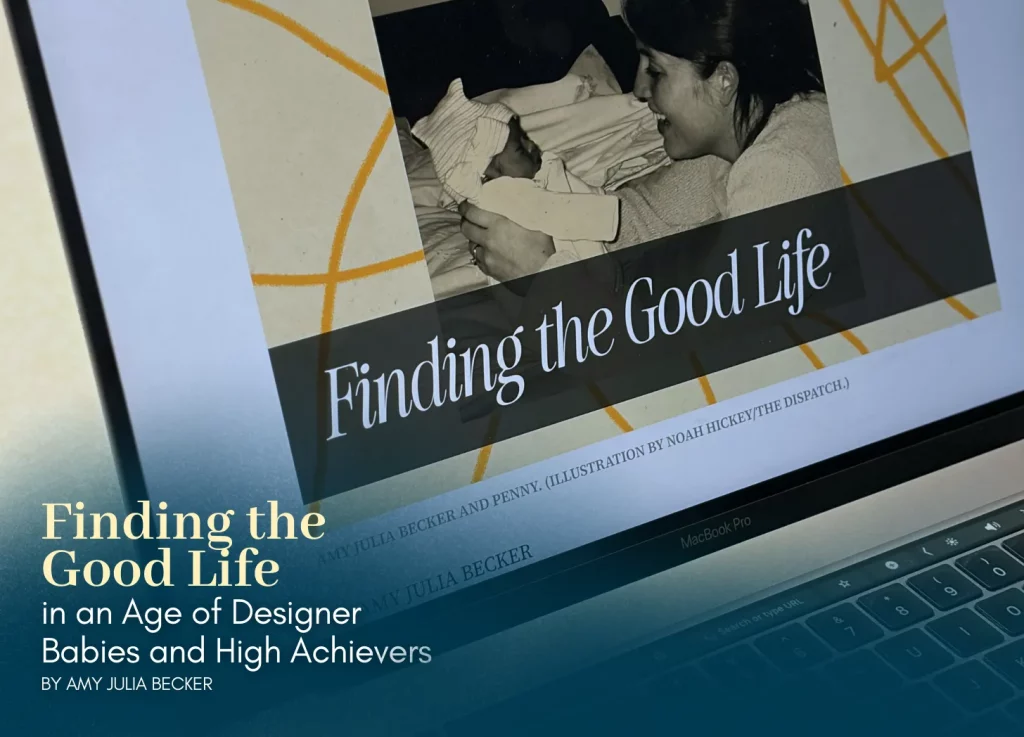
In both writing and speaking about the good life, I’m reflecting on how we pursue different versions of the good life in our culture. We pursue the ancient idea of the good life, philosophical and moral ways of being that might bring a sense of meaning and purpose and integrity to our lives. We also pursue the pop culture idea of the good life, a la Billy Joel, in which material comfort and physical beauty and success according to social metrics translates into what we want. As I write in the essay, “whether we pursue the good life through moralism, meritocracy, or materialism, many of us still find ourselves wanting.”
I believe there is another way to know the good life, but it’s a way that most of us—myself very much included—resist. And it’s a way that our culture condemns. It’s the way of vulnerability and interdependence, of neediness and weakness, of slowing down and relinquishing control. It’s the way of love.
When I speak on this topic, I often tell stories about my own experience with young adults with intellectual disabilities, because they have put flesh on the idea of the reimagined good life. I point out some of the ways we can ourselves reimagine the good life. They include receiving belovedness, surrendering to need (both in ourselves and in others), and lamenting the brokenness in this world, among a few others. But I realized this past week (as I’ve done more reading and listening about AI—see the “links worth your time” below for more on that) that another way we can reimagine the good life is by practicing slowing down and moving at the pace of the God of love, who walked this earth at a speed of approximately three miles per hour. For Christians who follow the church calendar, we are entering the season of Lent. Perhaps this Lent is a time to practice reimagining the good life, one slow, small step at a time.
SUBSCRIBE to my Substack newsletter: amyjuliabecker.substack.com
JOIN the conversation on Instagram: @amyjuliabecker
LISTEN to my podcasts: amyjuliabecker.com/shows/
CONNECT on YouTube: Amy Julia Becker on YouTube