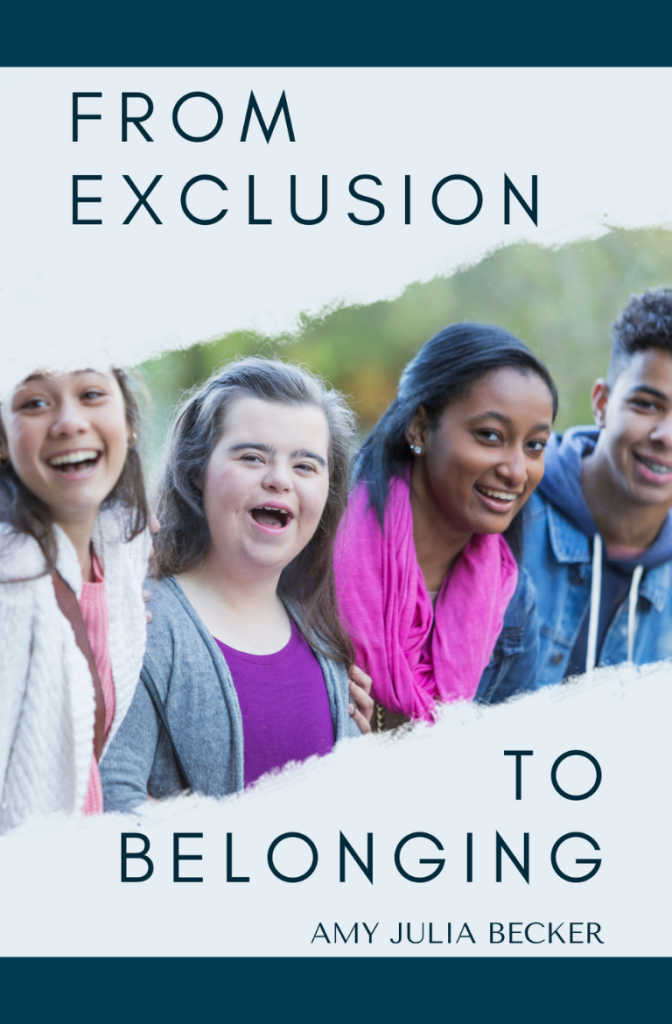
Penny and I checked out a Special Olympics track team last week. I’m going to write more about that experience—it’s a whole other story—sometime later this spring, but for now I just want to call attention to what it feels like for me to spend even just a few moments among a group of adults with intellectual disabilities. Whether it was that night at Special Olympics, or with Penny and her friends from school stopping by Starbucks, or at Hope Heals Camp, I just feel at ease. Curious. Open. Secure.
It wasn’t always this way. I used to feel insecure around people with intellectual disabilities because I worried I would say the wrong thing, or I wouldn’t understand their speech, or we wouldn’t have anything in common. Over time, their respective graciousness and welcome transformed me. As far as I can tell, I have never met a person with an intellectual disability who is judging me based on my appearance, my abilities, or my achievements. It’s disarming. And freeing. And so very different from my typical experience of walking into a room of new people and feeling like I need to say something that demonstrates why I matter. (Which I, of course, need to say subtly, so that it doesn’t ever seem like I’m bragging or else I risk judgment for being arrogant.)
Belovedness and Belonging for All
Last week, I traveled to Houston, Texas, for less than 24 hours so that I could give a talk called, “A Good Future: Belovedness and Belonging for All” at Journey School’s annual fundraising gala. If you’ve been reading this Substack newsletter for any period of time, you’ll recognize the themes in that title. I’ve been learning and thinking and living these things for twenty years now. I write about them all the time. And I’m still surprised by how much more there is for me to understand.
I realized while preparing for this talk that communities of belonging only emerge out of identities received from belovedness. If we do not understand that we are beloved as we are, then we need to set up social hierarchies in which we prove that we are better than others. We need status symbols and measurements that tell us we’re okay. But if we know that we have an identity firmly rooted and grounded, stable and secure, in love, then we don’t need to prove ourselves. We don’t need to be better. We don’t need other people to be worse. We can admit our own needs. We can receive others’ gifts. Belovedness leads to belonging. They go hand in hand.
It’s that last point that helps me understand why I am so attracted to gatherings like a random Special Olympics group on a Tuesday evening. If no one is trying to prove themselves, but everyone is welcome to be themselves, then we are all inherently living out of a place of mutual belovedness that leads to an experience of mutual belonging.
That’s my dream for the world. That we would so believe in our mutual belovedness that we create communities of belonging where everyone matters.
SUBSCRIBE to my Substack newsletter: amyjuliabecker.substack.com
JOIN the conversation on Instagram: @amyjuliabecker
LISTEN to my podcasts: amyjuliabecker.com/shows/
CONNECT on YouTube: Amy Julia Becker on YouTube
This post contains affiliate links.