I have always been a bit of a nerd. (If you talk to my sisters, they might say it went further than “a bit.”) But I didn’t expect a movie to push me into the archives of the United States Equal Employment Opportunity Commission.
Still, I found myself scrolling through pages and pages of regulations from over 50 years ago after watching the recent Apple TV film Being Heumann. I could have saved myself some time by simply scrolling all the way to the end. Section 504—the legislation at the center of the film—is the very final sentence of the act. It reads:
Sec. 504. No otherwise qualified handicapped individual in the United States, as defined in section 7 (6), shall, solely by reason of his handicap, be excluded from the participation in, be denied the benefits of, or be subjected to discrimination under any program or activity receiving federal financial assistance.
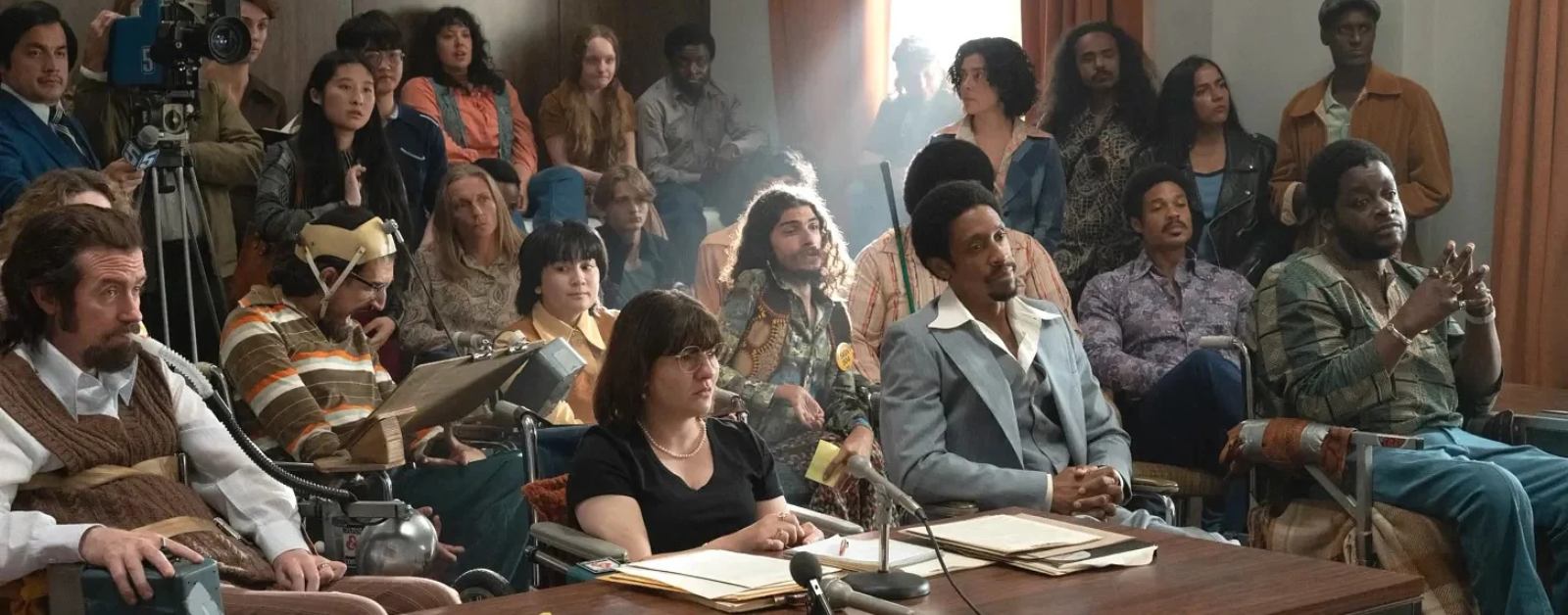
So by now you might think that Being Heumann is dry and boring, like sitting in a dull history lecture. But you would be wrong. The film is witty, funny, powerful, exhilarating, and all while telling the story of a little-known corner of American history that still resounds today. Through the lens of disability rights pioneer Judy Heumann, it focuses on the group of disabled adults who occupied a federal building in San Francisco for nearly a month in 1977, after waiting for years for the Rehabilitation Act of 1973 to be funded and implemented.
As Ellen Wexler explains, “Because the provision was only one sentence long, activists had asked officials to issue regulations explaining exactly what it required. But these regulations remained in limbo four years after the act’s passage.” Without regulations that described a set of changes and a timeline for implementation, the law was meaningless. And those regulations had been sitting around, waiting for a signature, for years. Until a group of disabled activists decided it was time. And they—peacefully, even joyfully—took over a building. To give you just one example of how much passing these regulations mattered: over one million schoolchildren with disabilities gained access to an education as a result of these actions.
Being Heumann underscores the power of democracy, the importance of a free press, the significance of peaceful protest, and the surprising effectiveness of undervalued, overlooked humans who band together and believe that change is possible.
I wrote last week for The Dispatch about the ways lawmakers and the Trump administration have been eroding the rights of people with disabilities in recent years. In education, housing, medicine, and more, the prospects for people with disabilities look more precarious than promising.
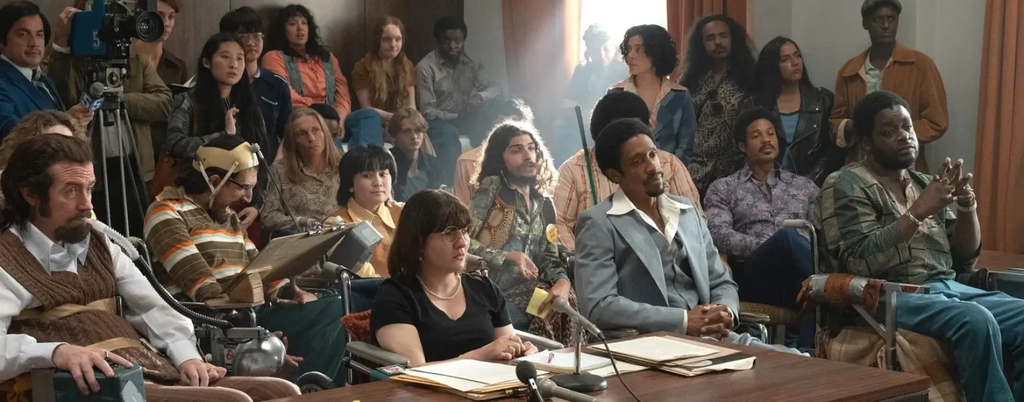
Citizens’ rights in a democracy do not only depend upon legislation granting those rights, but also upon people who insist those rights be supported and enforced.
I also had a conversation (one of my favorite podcast conversations ever, I might add—more below) with Rebekah Taussig, co-writer of the screenplay for Being Heumann and author of her own brilliant memoir, Sitting Pretty, about the incredible, substantial, ongoing gains for disabled people. Both are true. It’s an exciting, beautiful, hopeful time to be a person with a disability. And it’s a scary, demoralizing, dehumanizing time to be a person with a disability.
As a mother to a daughter with Down syndrome, I often feel overwhelmed by the prospect of advocating for the rights of people with disabilities in the face of our behemoth of a federal government. This film, and this conversation, helped me believe that people like us can make a difference, and that the when communities support people with disabilities, we all benefit.
I hope you’ll watch Being Heumann and let me know what you think!
SUBSCRIBE to my Substack newsletter: amyjuliabecker.substack.com
JOIN the conversation on Instagram: @amyjuliabecker
LISTEN to my podcasts: amyjuliabecker.com/shows/
CONNECT on YouTube: Amy Julia Becker on YouTube
Amy Julia Becker desires to challenge assumptions about the good life, proclaim the inherent belovedness of every human being, and help us envision and build a world of belonging where everyone matters. Amy Julia invites people to reimagine the good life through her writing and speaking on disability, faith, and culture. She is the author of several books, including To Be Made Well, White Picket Fences, Small Talk, and A Good and Perfect Gift. She is a guest opinion writer for national publications and hosts two podcasts: Take the Next Step and Reimagining the Good Life. Becker is a graduate of Princeton University and Princeton Theological Seminary (MDiv). She is a member of the Disability Ministry Network and the Alliance for Disability Justice and Ethics in Reproductive Genetics. She lives with her husband and their three children in western Connecticut.