REIMAGINING THE GOOD LIFE PODCAST
Who decides which bodies belong in public? What can we learn from the past as we keep building a world where everyone belongs? Activist Judy Heumann’s fight for disability rights changed accessibility, but the work isn’t over. Rebekah Taussig, co-writer of the film Being Heumann, talks with Amy Julia Becker about the power of disability activism and the challenges facing disability rights today.
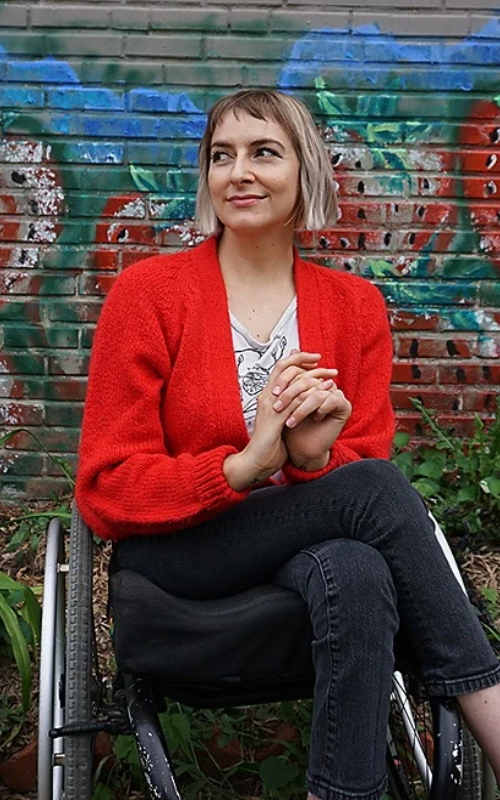
Rebekah Taussig is a Kansas City writer who lives in a house full of half-finished art projects, loud music, and a fussy family of tenderhearted snugglers. She writes to understand, to reclaim, and to participate in changing the cultural narratives we have around disability,motherhood, and what it means to live in a human body. She believes storytelling can change the world. Literally.
She earned her PhD from the University of Kansas, runs the Instagram platform @sitting_pretty, authored the bestselling memoir Sitting Pretty and the picture book We Are the Scrappy Ones.
She also co-wrote the adapted screenplay for Judy Heumann’s memoir, Being Heumann, out now from Apple Studios.
After almost a decade of teaching in the traditional classroom, she has pivoted to full time writing and speaking. You can find her writing regularly in TIME Magazine and on her Substack, This Too.
00:00:00 — Rebekah Taussig and The Story of Being Heumann
00:06:10 — A World That Dehumanizes People with Disabilities
00:09:07 — Disability and Dignity
00:15:25 — Cultural Assumptions: What Has Changed? What Hasn’t?
00:25:55 — Legislation and Cultural Imagination
00:31:17 — A Journalist’s Changing Perspective: From Pity to Dignity
00:39:23 — Collective and Collaborative Support
00:42:16 — When Access Needs Conflict
00:45:24 — Telling a Better Story About Disability
MENTIONED IN S11 E4:
_
SUBSCRIBE to Amy Julia’s weekly Substack newsletter: amyjuliabecker.substack.com
WATCH this conversation on YouTube: Amy Julia Becker on YouTube
JOIN the conversation on Instagram: @amyjuliabecker
LISTEN to more episodes: amyjuliabecker.com/shows/
Note: This transcript is autogenerated and does contain errors. Please check the corresponding audio before quoting in print.
Amy Julia Becker: 00:04
Who decides which bodies belong in public and who gets left out? And what can we learn from the past as we keep building a world where we want everyone to belong? I’m Amy Julia Becker. This is Reimagining the Good Life, a podcast about challenging the assumptions about what makes life good, proclaiming the inherent belovedness of every human being, and envisioning a world of belonging where everyone matters. Today I’m talking with Rebecca Taussig, co-writer of the new film Being Heumann. We are talking about the power of disability activism, the challenges facing disability rights today, and all sorts of other fun and interesting things. So you’ll hear in this interview that I really loved this film, Being Heumann, which is new. I highly recommend it. You’ll hear more about that. It’s a way to learn about an important and overlooked moment within the history of disability rights. And it’s also just a good film. It’s told with complexity and humor and power. I loved talking with uh Rebecca about the power of storytelling and the role that that has in our public life. I loved uh the balance of celebration over how far we’ve come when it comes to disability rights, as well as concern about our current moment. That was true in the film and it’s true in our conversation. So I do want to highly recommend that you listen to this conversation, but also stream the film on Apple TV and give it some support. And I think you’ll also just enjoy it a lot. Uh, Rebecca is not only the co-writer of this film, but she’s also the author of a fantastic memoir called Sitting Pretty, which is about her own experience as a disabled child and then young woman and now adult uh who has used a wheelchair for most of her life. So I think you will really appreciate getting to know her a little bit. I certainly did, and I hope you will really enjoy this conversation. Rebecca, welcome to Reimagining the Good Life. Thank you so much for being here.
Rebekah Taussig: 02:01
Oh, thank you so much for having me. I’m really excited to be here with you.
Amy Julia Becker: 02:06
Well, I am really grateful to have this opportunity because your book, Sitting Pretty, is one of my favorite memoirs about disability. So for anyone who’s listening, I really, if you have not already read Rebecca’s book, if you haven’t been following her on social media, I just highly recommend it. Um, and it’s funny because as you and I were talking a little bit ahead of uh recording, I do think that when I say it’s one of my favorite memoirs about disability, I’m also saying that it’s one of my favorite memoirs about being human. And that, again, I don’t ever want to conflate the experience of disability and say, oh yeah, it’s just the same as everything and the experience of everyone else. And yet I also think there’s these ways in which the experience of having a disabled body or mind in our culture can really help us understand our humanity. And as it happens, you’ve recently co-written the screenplay for a new film, Being Heumann, is the name of it. And we’ll talk about where that name comes from in just a minute. Um, and I want to talk about these things together, your book, but also this um wonderful film, which I got a chance to screen a couple nights ago. Um, so maybe we could start with the title of the film, which is Being Heumann. And of course, anyone who is listening or watching us right now doesn’t see that title as it is spelled out. So uh could you give us like an introduction to the story of this film, uh perhaps by way of the title?
Rebekah Taussig: 03:30
Yes, of course.
Rebekah Taussig: 03:31
Um Being Heumann, human is spelled H-E-U-M-A-N-N after Judy Human, um, the disability activist who um, with her peers, like transformed disability rights in our country. Um, and can I just can’t imagine a better last name for someone being like Judy Human, um, in part because of her work and like what you’re saying about um the humanness, the deep humanity of the experience of disability. Um, and and this um quest to make the world where all of us are treated as humans with dignity. Um, so the film is um about Judy, but it’s really about it, really focuses on um one incredible um act that Judy and a group of of her allies um uh took a federal building, uh flooded a federal building in 1977 with the um demand that the federal government agreed to implement Section 504 of the Rehabilitation Act, which was this tiny little bit of legislation and the very first um bit of civil rights level legislation for disabled Americans. Um and so uh Judy and she led it was like 150 disabled protesters and allies into this building, and they refused to leave. They lived there for almost a month until finally um they got the signatures they needed, and it was agreed that that um the government would set to work implementing um those those regulations, which led to the Americans with Disabilities Act in 1990, all of which fundamentally literally transformed the landscape of our built world in ways that um I don’t know, as a as a kid who grew up four years after, or be I was born four years before the ADAA was passed. A lot of the things that, a lot of the ways that the world has been transformed by this are ways that I grew up to take for granted, that I would go to school with my p my siblings, right? That I um would be able to um that I wouldn’t be turned away from a restaurant just because I had a disability. Um, but I could expect maybe there’d be at least um a couple of wheelchair accessible seats in a movie theater, things like this. So um just to name a few, by the way.
Amy Julia Becker: 06:00
Yeah, well, and to that point, I wondered if you would just give listeners a description of the opening sequence of the film because it’s such a vivid portrayal of this experience of navigating a world that was not built for people who use wheelchairs and all sorts of other people too. But yeah, could be. Yes, totally.
Rebekah Taussig: 06:16
Yeah, so Judy uh lived in New York, um, New York City, and our the opening scene of the film shows her doing something that she did all the time, every day in the streets of New York, which is that um she had to navigate with her wheelchair through city traffic. Um the there were no curb cuts. So she couldn’t get on.
Amy Julia Becker: 06:40
Just describe what a curb cut is in case there’s someone who doesn’t know.
Rebekah Taussig: 06:43
Yes, absolutely. Yeah. Curb cuts are things that you probably witnessed around you all the time, but the sidewalk that slopes off so that you don’t have to um step off of the edge or step up to the edge of a sidewalk. Um, so there there were no curb cuts um when Judy was coming of age. And so um she would just be right there with the buses and the cabs and the cars weaving through traffic, which um, you know, it’s a pretty dangerous thing to do, but she does it pretty fearlessly. Um, I mean, this is the way she’s moved through the world since she was young. Um, and also she happens to be an incredibly uh bold and fierce person. Um, but you know, we uh one of the things I love that the director did in the film is um have the camera at her eye level. So we’re seeing the world as she sees it with all of these standing, walking people all around her. She’s like at butt level with all of the people. Um, and we get to see the world as she’s experiencing it and feel the textures of that, um, the risk and the audacity to for of her to exist in this public world as it had been built.
Amy Julia Becker: 07:52
I thought it was such a powerful and it’s kind of like both uh nerve-wracking and funny and fun, but also like really edgy all at once in that opening scene. And um, there is this sense of her just as you said, kind of insisting on her humanity while also provoking, at least for the viewer, probably not again for the experience, uh the experience of the others around her, at least as they’re depicted in the film, are like, what is wrong with this woman who’s got her wheelchair in the middle of traffic? Not, gosh, what’s wrong with our sidewalks that you can’t be on them, right? Like totally. You know, but it even that is kind of an indication, I think, um, for people who do move through the world without asking the question, like uh with asking kind of the wrong question about how our bodies are operating and having access to things, which we will get back to in a minute because I want to um talk about access. But um, I thought maybe we could also start with just asking the question. Okay, we’re talking about this idea of being human, whether it’s due to human or human as a you know, human being. And could you just speak to some of the ways, um, whether that’s in the film or from your own experience, that we live in a world that dehumanizes people with disabilities? Oh, yeah.
Rebekah Taussig: 09:09
Yeah. I mean, I feel like so much of it, so a big part of it in my experience has to do with dignity. Um, you know, I actually I I just wrote an essay for time that came out yesterday about um the making of of this, like being a part what it has been like to be a part of the telling of this story. And um, and one of the things that happened while we were in the process of writing the script, um, I flew down to LA to be there for a table read where we were kind of doing an early draft of the script and seeing how that landed with people. And um, and uh flying is for anyone who who um I think a lot of people with different kinds of disabilities, but in particular anyone who flies with a mobility aid knows like the very real risk of flying. Um uh it’s wild to me that we still have airplanes that don’t accommodate mobility aids or yeah, we can we can get on buses and subways, but we have yet to make any changes to airplanes. Um so you have to um be separated from your wheelchair. The bathrooms on planes aren’t accessible, so you really are not gonna go to the bathroom anytime you’re on the plane. Um, so prepare yourself to dehydrate for the day. Um, and then your chair is put under the plane. And when I was flying home after that, um, table read, um, an airline returned my chair to me without wheels. Um, and um there was a it was I was at a connecting flight, there was a lot of like chaos, and they they assured me that they would put them on the next plane. And uh we landed back at my home in Kansas City, and they’d lost both the wheels and the wheelchair frame. Um and I I don’t I normally travel alone. My husband was thankfully with me. Um, but the um yeah, the whole experience, I was like put in the wheelchair airplane or uh an airplane wheelchair, which is not a wheelchair, you can’t push it yourself. So it’s like a cart. Um and I hadn’t peed in like eight hours because I, you know, there’s not an accessible bathroom on the plane. Um, and so my husband was pushing me in this cart. We like try to find an accessible bathroom, and he is like not registering how little ability I have to get myself anywhere. So I’m like, no, you have to push me like right up next to the toilet. Um, and I’m I don’t know, I’m describing this, I feel like almost embarrassed telling, I don’t know why I’m feeling a little tiny bit of embarrassment telling this story, but I think part of it is just like the indignity um and the expectation that, or I don’t know, like the uh lack of urgency that this is a very real problem or that this is something that needs to be fixed. Um, there uh I don’t know the latest numbers, but I feel like one of the last times I checked, there’s like a hundred mobility aids and that get damaged or lost through airlines every day. Um and so this is um, you know, people sitting in in um their most wheelchairs now for people who are full-time wheelchair users are fully customized to their bodies. It’s like an extension of your body. Yeah. Um, and the idea that it’s okay for us to put these under, you know, just like throw them with the baggage under the plane, um uh despite what risks that might be taking for a person’s life um and livelihood. So that’s like that’s one very specific example, but I think the um uh part of what I find interesting about that example is that it does feel to me in many ways that we as a society um have a high tolerance for the indignities that we think are okay to be um doled out to people with disabilities, that it’s okay to be that that there’s something that’s acceptable. If you have a disability, um there’s maybe an assumption that of course there will be these moments of indignity or that that’s tolerable. Um but I in my mind, if you think about if this was happening to a different category of people or a different subset of people, like if I don’t know, if all if all billionaires um had to put at risk when they flew on a plane, um, that maybe one of their body parts would get injured and one a hundred a day got injured, like what kind of urgency would we have to fix that problem? Um and so I hope that is at least that’s I know that’s just one example, but hopefully that illustrates um some of the um the ways that we are dehumanized, and that seems to be acceptable for the moment um to a lot of people.
Amy Julia Becker: 13:54
I really appreciate that example, and I appreciate you bringing the word dignity into the conversation because that was certainly something I wasn’t even sure why in reading your book again, rereading it, and also um watching the film, I did feel a, I felt indignation um as someone watching um and just seeing this history, but I also it came, it kept coming up like the the amount of dignity that the characters in the film have and and that you’re introduced to, I think, throughout um seeing them as characters and yet the ways in which they are treated without dignity. Some of these, again, the film did a really good job of making humorous, whether it was like um when the police tried to arrest them and they were like, well, we don’t have accessible jails, so we can’t take them there. Like, I mean, that was a pretty great way of just being like, oh, well, sorry, you know, um, but then there’s also a scene, and again, I hope this is not too much of a spoiler, um, but in which getting picked up at the airport requires a U-Haul because there were not any vehicles that could transport multiple people in um wheelchairs from one place to another. And so you’re in this like really unsafe. I mean, I honestly thought the film might have been exaggerating the point until at the very end there are pictures from like the real life version of what happened. And I was like, nope, okay, that’s exactly what happened. Like, so again, I think it does a wonderful job of saying, no, really, like, really, this is what um both life was like. And I guess this is the next thing I want to talk about. So the film is set in the 70s, and it really highlights some of the advances that we have made because of this incredible work that both Judy Human and this whole, I mean, amazing array of people um did on behalf of all Americans, right? And yet you also have had an experience, the one you just told us about, and in your book for decades, right, as both a child and adult using a wheelchair that say it’s still hard to navigate our built environment and our cultural assumptions about what it is to be disabled. So can you speak a little bit to like what has changed and also what hasn’t? Yes, absolutely.
Rebekah Taussig: 16:02
And by the way, just as a side note, I love what you noted about the U-Haul and the uh inaccessible jails. I just want to note the most uh outrageous moments in the movie, like things where you’re like, oh, did that really happen? Are those are like the exact true things that happen. I mean, it is wild to me. Like there were so many details as we were researching where it was like they really uh like we changed the timeline of some of the things, some of the events, but like they really were um unable to be put in jails because the jails were inaccessible and they couldn’t get them there. Like they really, um, there really was a bomb threat in the building. They really did have to like tumble around in this U-Haul while they were traveling through DC. I mean, unbelievable. Um, the I Eidenberg really does get up and run out of the meeting. Like all of the most ridiculous things were the things that really happened. So, anyways, I just had to say that because it delights me so much to be able to tell people, yes, that happened. Um, oh yes. Okay, so this question you’re asking is so um top of mind for me. Um and again, it’s something I kind of explore in that essay that just came out. Um, but it has been really disorienting for me working on this film, holding um both of the truths of the progress and the progress yet to come at the same time. Um, I was really, I was, I had been aware of the history um of Judy Human, of the Section 504 sit in. I was aware of the activism and the protests, but really immersing myself in that story and learning more about what the world was like before. Um, learning more about the origin stories of all the people who had been a part of this fight, it was really eye, it has been very eye-opening, profoundly eye-opening for me to understand um, to take in how different the world is, even as I am so aware of the ways that the project is not done. Um so yeah, in terms of kind of bringing to light the contrast, um, just a few details about Judy, I think that kind of illuminate where how far we’ve come. Um, Judy wasn’t allowed to go to school for many years, right? So the assumption um that we have now is that every every child, um, regardless of ability or disability, should have a spot in a classroom. Um but when Judy was growing up, um, she and her peers um could be turned away from a school um for no other reason than like we’ve decided your wheelchair is a fire hazard and you can’t be here. Um, so that was a reality at that time. Um, she uh she did go to college. She did very well in school. She was super bright and she went to college. She uh this detail for some reason um always stands out to me. But she couldn’t go to the bathroom in her dorm without asking someone to help her get up and down the stairs into the bathroom. Um, so she is managing everything that comes with being a student in school and also keeping in her mind who do I know who can help me go to the bathroom and win? And do they have tests today? Are they gonna be around? Um so just taking it stock of that reality. Um and then when she um graduated from college, there was a physical exam to get your teaching license. So she had studied to be a teacher. Um and at that exam, and if you read her book, um she brings this whole scene to life. It’s speaking of dignity, it’s like one of the most um is it they this whole physical exam is like so belittling to her. Um, but they basically deny her her teaching license because um she uh they again they deem her wheelchair a fire hazard. So uh the world before um there were protections that exist today that just did not exist. Even the idea of them did not exist. The idea that if you are qualified for a job, um, disability should not disqualify you. Like that shouldn’t be the thing that means you can’t get this job, or that you could be fired because you acquire a disability. If you’re still able to do your job, you you should be able to do your job. Um, with if there’s like accommodate accommodation you need to be able to do that job, you should have that accommodation. Um so in some ways, I think the work of what Judy and her her cohort did, um, besides the like the the literal laws that they created that changed the world in ways that we’ve we’ve talked about, um, I think part of what they did was bring uh a whole story of uh of disability and how to think about disability into the world that was fundamentally different than the one that they grew up with. So the story that they grew up with was that disability was a legitimate reason for exclusion. Um their parents were told, so many of their parents were told when when they had a child with a disability, were told to send their kids, their doctors would tell these parents to send their kids to an institution, um, to live their lives in an institution. Like that was the norm. Um, and so what these activists did was was create this entirely different story that says that like we actually belong here just as much as anyone else. And so some of that, I and when I think about the impact of what they did, um I think part of it was the literal transformation of these laws and like getting us into schools and um and making sure that we’re not excluded um from public life. Um, but part of what they did was was instill. us with a set of beliefs. And I wouldn’t say it’s not that that is like every single one of us holds that, but way more of us hold that belief now than did then. So when I think about what’s left to do or this project that we’re still kind of working on today, there’s a couple of pieces to it. When we started working on the film, I think I thought that the main work was just continuing the project, right? So um make like making pushing for air travel to be accessible, pushing for public transportation. And then New York City is a city I’ve watched a lot. Their subway stations, um, you know, you think of the the ADA passed in 1990. And today I think it’s like uh 69% of their subway stations remain inaccessible.
Amy Julia Becker: 22:53
Yeah.
Rebekah Taussig: 22:54
So you think there’s more work to push forward, right? We need this to be implemented. We need the laws to be implemented. Um we need to um keep generating disability community and togetherness. Um uh we need to rally together and and um make our voices known and heard but um one of the things that was incredibly surreal while working on the film was that uh we started to see more threats against section 504 um that we’d never seen before.
Amy Julia Becker: 23:30
So there was a lawsuit that was filed by 17 states um and uh we’ve been following that lawsuit for since 2024 um watching how that has played out in the courts and um I’m gonna like fumble the the legal language here um but the latest I don’t know if you’ve followed this Amy Julian I have been trying to but I also have a hard time ex like understanding the difference between a regulation and a like so try your best.
Rebekah Taussig: 24:03
Okay for sure I will try my best and I feel like again I I I didn’t intend to reference my essay so much but in the writing I’m so glad we will make um we will make sure that it is linked to in the show notes because the way that I wrote it was with like lots of fact checking and going back and forth and making sure my language is exactly right. So if you want to get the like spot on exact legal explanation of this. I’m gonna go read it that’s for sure. Okay cool. But um essentially essentially as it has wound its way through and states have dropped out of it and come back into it and the Justice Department filed a memo there’s been a lot of things that have happened. But at the end of the day essentially what happened is that they um the the law of section 504 still stands because nobody can change the law except Congress um but it’s essentially with collaboration of these states in the Justice Department they have reinterpreted what the language means and um what has always been interpreted as keeping disabled people in our communities and um with as much as possible. The new interpretation says that it is okay for us to send people away to institutions instead of keeping them integrated into our communities.
Amy Julia Becker: 25:22
So that is essentially it the law still stands but the way that it’s being interpreted has been comp has has been um muddled and by extension it makes the law less effective which has been devastating for us to witness so all that to say I think there’s more work to to both now we’re in the position of trying to protect and um mend and push forward the same uh mission I guess if that makes sense and this kind of leads me to my next question which is the relationship between passing and enforcing legislation and what might be called like winning over hearts and minds, which you’re talking about both of those things, right? This like set of beliefs and an imagination, which is part of like the name of this podcast like reimagining. So that is one of the things that like Judy Heuman and her um cohort gave us a new imagination for what it meant to have dignity and to be able to work and go to school and all those things. So that imaginative piece was just as important I would argue as saying pass 504 or you know enact it in these places but I also feel like um passing I guess I’m curious what you think the relationship between those things between the legal side and the kind of cultural acceptance imagination side how do those things interact and again you can talk about that in the 70s as far as what the film portrays and today or both one or the other both whatever you want.
Rebekah Taussig: 26:55
I can’t believe how much you’re asking me questions of exactly what I’ve been thinking about as I’ve been working on this. Because I yes I’ve been thinking about this so much. I mean this one of the things that’s interesting is that we’re telling the story uh we’re telling a legal story right we’re telling a story about the law and about politics basically um like like um that’s one piece of it but we’re doing it through culture like we’re telling a story which is a really interesting thing to I mean play with and think about um but in in my mind I would agree with you that the story that they gave us is at least as powerful if not more powerful than the laws themselves. And I believe that for a couple of reasons. One is that um laws are only as effective as the people who choose to implement them, right? We can have laws that nobody cares about nobody enforces so why like then what use is that law um so we need people who understand the law we need people to understand and care about these laws um or they are not effective to begin with. And two laws can be undone as we have witnessed and stories are much harder to undo. I in my in my mind I think um when I I remember when I first started sharing about and writing about these the early threats to section 504 when we first saw the lawsuits come through there were so many um parents that I heard from who had kids on 504 plans in schools or um um who who were just like completely aghast at the idea that this would be threatened in any way.
Amy Julia Becker: 28:46
Yeah.
Rebekah Taussig: 28:47
And I I just was really taking that in and thinking how different that is than the than the parents of like Judy Human’s generation. They were fighting to get their kids into school but the idea that this is um a right that we all expect to have didn’t exist yet and a belief a deep belief that we have in what is right that didn’t exist in the way that it does now. And so yeah in my mind I think um I I believe that and I I know I’m biased and I know I sound dramatic when I say this, but I really do believe that storytelling is one of the most powerful forces on earth that we have access to um and so I have a a hope I feel like I’m always in this posture of like cautious hope um that a story that helps us understand um this, I don’t know, this this fight, this um this set of beliefs about who is valuable, who belongs in the world I have this hope, this cautious hope that a story could do incredible work, um, could billow out into more stories um and and can and could share that belief with more people in a way that I think could be really powerful. And also I want the laws like I don’t it’s not like I don’t the laws need to stay. I I I want us to have that as a a as a framework of the world that we live in. But it is um it is interesting the ways that I think that they can run through each other and back and forth between each other and we and we need both.
Amy Julia Becker: 30:29
Yeah I totally agree and um have thought a lot about that the fact that um our daughter you know to your point about schools it’s like without the starting point of a legislation that says she deserves education alongside her peers in the um you know least restrictive setting I think is the um language for IEPs um which is somewhat related to the what you were talking about with the housing the most integrated setting but anyway or and but um I then it gives it like the law gives space for the story to be lived out in public. And it but if the story’s not lived out in public then the law doesn’t matter. But if the law’s not there, the story can’t be lived out in public or something. Yes, yes, yes. And I one person, one story I wanted to ask you to tell a little bit was the character of Evan, who’s a reporter in the movie um because I really loved watching his progression in his own understanding of disability and of what was happening over the course of the film. So will you just tell us that story a little bit because it’s a beautiful one.
Rebekah Taussig: 31:35
Yeah uh we have a lot of like these character arc pairs throughout the film and Evan and Hale was a really really interesting one to me that I um I really loved the dynamic between those two. Um so yeah Evan White was it he’s still alive um but he was a reporter I like a junior reporter um who got really captivated by the um the Section 504 sit in and what he was witnessing. And we kind of fictionalized a bit of his arc in real life. I think in real life he was much more like right there at the beginning and like understood and this group of people as um uh fully human and full of dignity. He was more a part of like um he was invested in civil rights. But in the film to sort of show um a progression of a lot of people who were witnessing the protesters um and taking in uh what they were doing we start him from a position of a little bit more ignorance and kind of seeing um see and representing I think a lot of like well intended reporting and media which is like to to start from this position of like pity um and maybe um kind of like the yucky kind of inspiration like look at these look at these handicapped people and their crutches hobbling in and they’re doing something so strong and brave like let’s cheer for them right he’s sort of starting from that position um and it felt important to have a character represent that um yeah that perspective because it is so common um and and and he uh he attempts to talk to Hale at the beginning of the movie Hale um Hale Zucas real life incredible man um head CP he um communicated with um he had like a helmet that he wore with a pointer and he would he had um this is you know like low low tech days so he would point to the board to spell out words and interacting with Hale at the beginning the reporter Evan White is just like doesn’t know what this is about and like um can’t is is really clumsy in his response. And so he Evan is but is captivated by something he sees that this group is doing that is is really exciting. And so he decides to which the real Evan White did come stay in the building with them to tell this story and record it and document it. And while being immersed in this this um this group in this fight um really comes to understand um what it is that this group is doing the value that they have to offer um and um and really comes to understand his role as the press of like what his job is to do holding people accountable telling the truth representing the truth is um and and the powerful tool of reporting um from the inside and by the end um he he has a totally different way of interacting with Hale um he’s learned like you know he’s treating this man with dignity the dignity that it deserves and is um waiting and patient to be able to wait to hear what Hale’s going to say as he type as he you know marks it out on his board. So those were the things that um I was really excited about in representing that um that duo um and Evan as a character.
Amy Julia Becker: 35:11
But I don’t know if that hits on what you noticed about some of these I think one of the things that’s um that I loved about the film is that you are letting some I mean you might call them like tropes of disability whether it’s like the pitiable or the inspirational or whatever but you’re like kind of letting it be there. And like Evan even though he begins again I guess fictionally as someone who is somewhat ignorant um you’re not he’s not getting kicked out he’s not being condemned it he’s everyone’s kind of shrugging their shoulder at the guy who just doesn’t understand. But at the same time you’re also I think as a viewer being invited to be someone who grows in understanding. Yes. Right? Like that’s actually and not being condemned for my husband and I have actually talked a lot about this whether it’s in the disability space or in other areas where we have grown in our understanding where it’s like you know what I might want you to be at a hundred but if you’re at one and you get to two, like that’s progress that I can celebrate. Yes. Let’s keep going together, you know? And I feel like you all did that with some of the character arcs and I really appreciated that. That’s good. I guess that’s like there’s a generosity uh to understanding what it is um to even I mean even the concept of a world not built for me right like that that is something that I think many people who have typical you know abled bodies walking through the world are like I’m sorry I don’t actually know what you mean. Yeah. And then actually is this in your book? Is it in your book where you I think I yes okay this is in your book. Mattresses, cups and clothes exist because the human body has limits and tools make surviving this planet a bit easier. Literally everything that has been built every signpost and path out in nature every building and bus in our cities every doorknob and chair in your house was made to accommodate somebody we stop refining or expanding our accommodations only when we’re satisfied that those we want at the party can get there. I mean that’s such a powerful statement and I just think again there’s like a generosity in the ways in which you all kind of say let me show you what I mean but there’s also something really powerful about um making sure that we have the awareness that this is a true statement that the world is built for some people and not for others.
Rebekah Taussig: 37:40
Yeah. Yeah I I’m so glad you experienced it that way because I do think that in a lot of ways we were thinking of Evan as someone who might be uh the POV of an audience member who is working through some of these tropes and assumptions throughout the course of the film you think about that it’s in the trailer so I don’t I’m I’m like am I doing so many spoilers um but that moment when Evan is like I think if people heard this he’s talking to Judy it’s like kind of their first conversation together and he’s like I think if people heard your story they’d be inspired and she’s like inspired to do what inspired or just or inspired to do something or just inspired? And I think that’s the the position of like what would be really common for a lot of people watching this movie. It’s just such a deeply ingrained trope. But one note I’ll just say about the real Evan White before we we move on he one of the things and we had this in the script at one point but you know if I was in charge of the script I mean we would have done a 17 hour movie. There’s so much that we could do. But one of the things that Evan did while he was out of the building was take his camera guy around San Francisco and try to get around San Francisco in a wheelchair and like filmed himself trying to do that. Wow yeah as a I mean like talking about like um the ways that you don’t see inaccessibility until you’re living it and trying you know like kind of bringing himself and his viewers into that experience um that most of them probably hadn’t hadn’t thought of before. So he was a really interesting guy for sure.
Amy Julia Becker: 39:19
Yeah yeah well I loved the way you told his story. And I think one of the things that I was also struck by which again you all were not able to fully like unwrap, but it was that intersection of the civil rights movement for black Americans, feminist movement, LGBTQ movement, and the disability movement they’re all interrelated and yet there also are points of tension between them and those come up um in various ways throughout the film. So I just wondered if you could speak a little bit to both that sense of these all intersecting and to the tensions of those intersections and how those play out again both in the past and perhaps in the present too.
Rebekah Taussig: 40:01
Yeah yeah it was a part of the story that felt really important to tell them is that the only really the only reason that these protesters were able to live in the building as long as they did is that they had support from so many different groups outside of the building more than we even could depict in the film. So the Black Panthers Brad Lomax was one of the disabled protesters inside the building he was a Black Panther and and worked really hard to build connection with the Black Panthers in this particular fight. And they showed up to the building every day and brought them food every day while they lived in the building there the Dykes on bikes and the butterfly brigade showed up I think the dykes on bikes came and like washed their hair in the sinks um but it was also like Glide Memorial Church was a huge support for them and helped fund their trip to Washington DC um was also Salvation Army Salvation Army came and brought them so brought them mattresses the mayor came and brought them supplies um I think and don’t quote me on this but I think McDonald’s even brought them food sometimes like there was it was just like the biggest furtiest coalition of support um and and I think part of that was that Judy and her organizers were like incredibly good coalition builders like they knew how to do that they were like great at building bridges I think part of that um was that there was there was this sense of like shared cause um that these are people who have been pushed out of society and and deserve a spot in in the circle of belonging um and we could see that shared cause with the Black Panthers and with the butterfly brigade and the dykes on bikes and um so I think that that was an that’s incredibly powerful and beautiful part of the story especially as viewers in 2026 taking this in um and thinking about um community and collective and collaborative support um and now I’m like well oh and then yes the tensions I I think the tensions um for me that I I find the juiciest were like inside the uh building um between the protesters um so initially uh it’s just like exciting and we’re all going into the building and we’re demanding sign 504 and then you know they’ve been in the building for 12 days and they’re hungry and everybody’s tired and we start seeing some of these tensions come up. Yeah and we actually realize that like oh are there ways that that accommodations for blind people are at odds with accommodations for wheelchair users. There’s a a particular moment where they’re talking about curb cuts and the wheelchair users are like this is a non-negotiable and then uh the guy who plays Dennis Phillips his name is Charlie he’s such an amazing human um and he points out like well curb cuts are a problem for blind people. I need to know when the edge of the curb shows up and so we see these moments of tension where it’s like oh this is not uh the this problem solving is not simple like there there’s um tension or like the deaf protesters um there were actually I think 10 deaf protesters in the building in the in in real life um we have two of them kind of representing that group in the film um but they um in real life there was tension with they were kind of hustling for uh the group in a lot of ways they were like signing messages out out the windows when the phone lines were cut and they were at the windows all day signing messages they were working really hard um but they often felt like their needs were not were overlooked in the in the General mission that was being pushed forward, that wheelchair users were centered more than deaf people, that wheelchair users were really pushing for this like wanting to be mainstreamed in the world. And the deaf protesters were like, we don’t really want to be mainstream. That’s not a goal of ours. And so there are all of these really interesting and I think relevant points of tension where it’s like, um, this is this cause is not as simple as like uh check the box, we’re gonna accommodate everyone. There’s this way in which our needs can be um uh not always perfectly aligned. And what do we do when that happens? And how do we problem solve around that? Um and we in the in the movie, we Hale, one of my favorite characters, starts proposing um what will end up becoming the bumpy um ridges on curb cuts. Um so it’s it’s this idea that like this is really messy. Uh, and also we have to believe that it’s possible. This is something that Judy says in her book a lot. We have to believe that it’s possible to solve hard problems. Um and so I I love I love honoring the mess of that. It feels like an important part for us to look at as we think about how to make the world more inclusive. It’s it’s it can be messy, and it’s important that we acknowledge that and are up for leaning into that.
Amy Julia Becker: 45:24
I want to ask you one more question that kind of um ties together both the film and your book. So in Sitting Pretty, you write, one of the spaces where we already and actively workshop narratives is narratives about disability, is in the stories we tell on screens through speakers and on pages. We’re currently in a time of great revision. And you just got to be a part of that great revision of actually telling a story in a um, well, a story that has certainly not been told this way before, um, in and with so much, you know, kind of backing behind it of a major network and um or major studio. And um, I just wanted to ask what it was like for you to be able to be a part of um making that happen.
Rebekah Taussig: 46:09
Easily an honor of a lifetime. Um, I remember when I first started working on it, my dad was I was talking to my dad, trying to explain to him what I was doing. And I remember saying, like, even if this movie doesn’t get made, just getting to like work on writing this script about it is an honor of a lifetime. Yeah um and you know, lots of movies don’t get made. And so uh the fact that it has been made, I I will just say I feel I feel emotionally with you even just asking that question. I it feels really overwhelming to me um that this movie is is making its way into the world. Um and the fact that I got to be a part of it is like I slipped into an alternate timeline. I know it doesn’t feel real. It doesn’t feel real. But I mean, I I think about the like younger versions of me watching Forrest Gump literally, I mean, I had just been fitted for my leg braces when that movie came out, my first pair of leg braces. Wow. He literally runs until his leg braces just fall off. And I’m thinking about um when I like right after I graduated from high school, um, Million Dollar Baby came out, and I watched a newly disabled woman wish to end her own life after her injury. Like these are the stories that I had. Um mostly disability was erased from the stories, but the ones that were there um weren’t great. Um and so, yes, I would just say like honor of a lifetime um doesn’t feel quite real, but I I just hope that it makes its way into the audiences that um are open to it and that it um it does something. It does that deep sinking of a story into us, uh our our culture, our um ourselves, our humanity, um, that it calls us to to our deep humanity in that way. Um yeah.
Amy Julia Becker: 48:19
I think it does exactly that, and I’m really grateful for it and for your work in general. Thank you for this conversation. It was so good to be with you.
Rebekah Taussig: 48:27
Thank you. I had a blast. Your questions are amazing.
Amy Julia Becker: 48:33
Thanks as always for listening to this episode of Reimagining the Good Life. Again, I hope you’ll watch this film. I would love to hear your thoughts about it. You can email me at podcast at amiejuliabecker.com. If you are enjoying this show, I would love you to follow, rate, and review it so others can find it. Feel free to share with a friend. And um, please come back. I would love to have you as a part of our ongoing conversations here. As always, thanks to Jake Hansen for editing this episode, Amber Beery, my director of content, for producing the show, and thank you for being here. Let’s all keep reimagining the good life together.
Amy Julia
“We actually belong here just as much as anyone else.”
“Laws are only as effective as the people who choose to implement them, right? We can have laws that nobody cares about, nobody enforces… …laws can be undone as we have witnessed, and stories are much harder to undo.”
“Storytelling is one of the most powerful forces on earth that we have access to.”
“We as a society have a high tolerance for the indignities that we think are okay to be doled out to people with disabilities.”
“We have to believe that it’s possible to solve hard problems.”
my weekly Substack letter
My newsletter delivered to your inbox that challenges assumptions about the good life, proclaims the inherent belovedness of every human being, and envisions a world of belonging where everyone matters
LET’S REIMAGINE THE GOOD LIFE TOGETHER. SUBSCRIBE TODAY!
Get the Free Resource!
An illustrated guide designed to help you identify and create spaces of welcome and belonging—download today!