We received an issue of Connecticut Magazine with a cover story about the cost of special education in our state: “Schools face cost, staff constraints.” As kids across the country head back to school, Connecticut is not alone in struggling to educate a rising number of students with disabilities.
On the same day that magazine arrived, I learned that the current war in Iran has, so far, cost taxpayers $37.5 billion. Our defense spending in general is approaching one trillion dollars.
I’m not a policy wonk. I’m not someone who knows all the intricacies of education or defense spending. I know we need to defend our nation. But I also know that we initiated the war in Iran, and we’ve spent tens of billions of dollars wreaking havoc on another nation. And we’ve done so while also cutting programs to benefit kids growing up within our shores.
What special education services would $37.5 billion pay for?
For twenty years now, our daughter Penny has been the recipient of services—therapies and educational instruction—through Early Intervention and the public school system. It’s hard to know the exact amount her education has cost, but it has certainly required more people and more money to educate Penny than her typically developing peers. And these costs are not expended with a clear utilitarian endpoint. Penny hasn’t all of a sudden become someone without an intellectual disability just because her school devoted a special education teacher to her math and reading classes when she was younger. I suppose some people might say it isn’t worth the expense to keep her in school alongside her typically developing peers.
I could argue that other students have benefitted from having her in the classroom because she is a gift to them. I could argue that she will be less likely to need the state to support her in the future because she has received skills that will enable her to contribute to society as an adult. But these aren’t the reasons we should educate and welcome students with disabilities and pay whatever it costs to serve them well.
We should educate all our kids with an attitude of abundance because we value who they are as they are.
I used to feel ambivalent, even a little embarrassed, that our family utilized these resources. When we sat through an IEP meeting with five or more adults present, each getting paid by the school for their time with us, I wondered whether we were receiving a disproportionate amount of resources. I worried that it was too much or unfair to other kids.
I now believe that providing education, community, and care for kids with disabilities is a part of creating a society that values caring for one another. And I believe that when we communicate the opposite, when we say there just isn’t enough money to support and care for needy people, then we begin to devalue each and every one of our lives. We end up in a place where institutionalization is the most efficient way to house people who are seen as problems. We end up in a place where physician assisted suicide makes more sense than providing support for people in need.
If we have enough money to attack Iran without provocation, surely we also have enough money to educate our kids. And if we don’t, well, then, perhaps we should extricate ourselves from voluntary military engagement. We have a posture of abundance when it comes to the military and violence, but we maintain a posture of scarcity when it comes to caring for children.
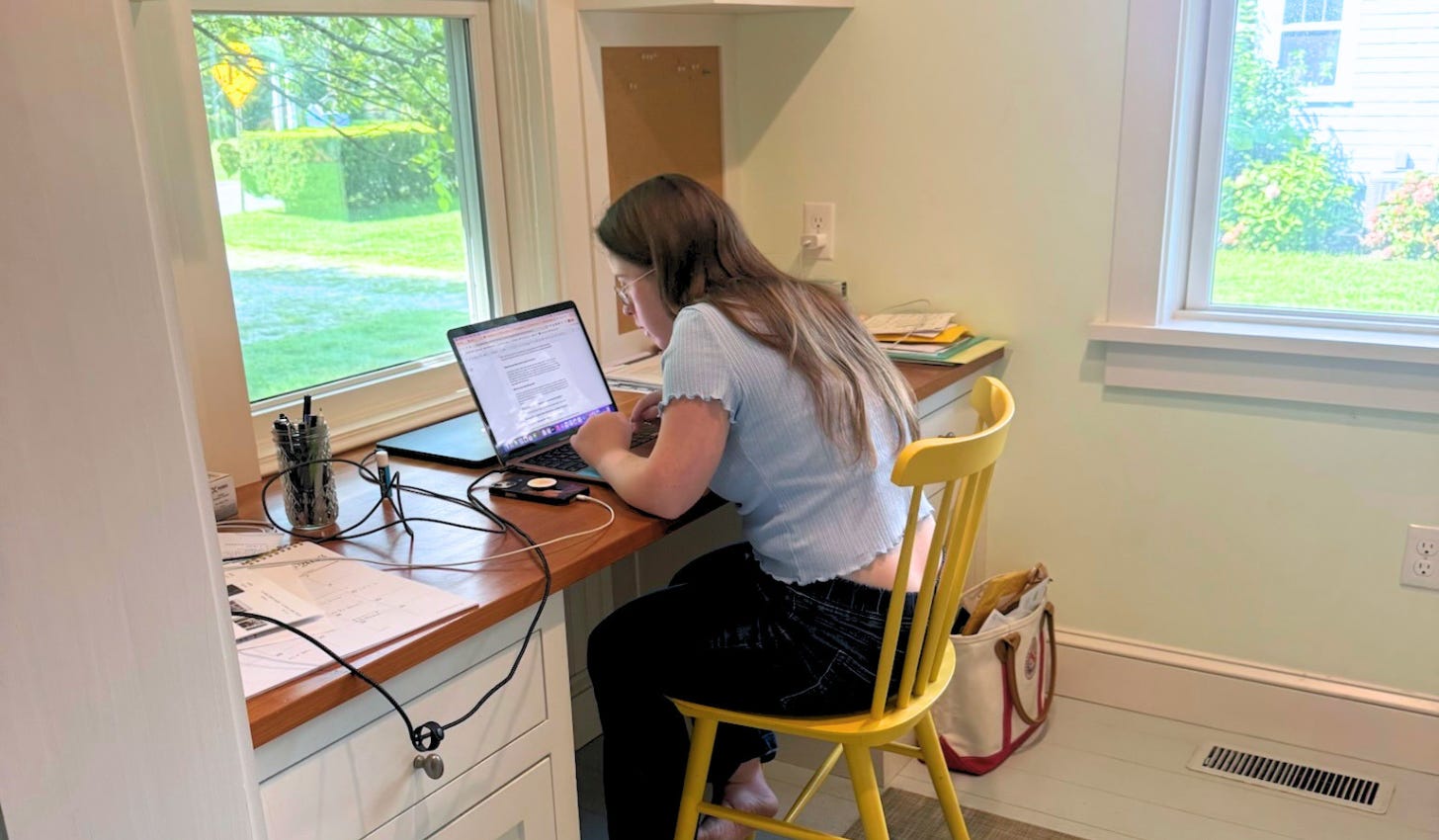
Penny is heading back to school this week for her third year in a college program at a local university. She has submitted her application to the ClemsonLIFE program. She has received the best that special education has to offer. Let’s offer that same education to all our kids who need it.
SUBSCRIBE to my Substack newsletter: amyjuliabecker.substack.com
JOIN the conversation on Instagram: @amyjuliabecker
LISTEN to my podcasts: amyjuliabecker.com/shows/
CONNECT on YouTube: Amy Julia Becker on YouTube
Amy Julia Becker desires to challenge assumptions about the good life, proclaim the inherent belovedness of every human being, and help us envision and build a world of belonging where everyone matters. Amy Julia invites people to reimagine the good life through her writing and speaking on disability, faith, and culture. She is the author of several books, including To Be Made Well, White Picket Fences, Small Talk, and A Good and Perfect Gift. She is a guest opinion writer for national publications and hosts two podcasts: Take the Next Step and Reimagining the Good Life. Becker is a graduate of Princeton University and Princeton Theological Seminary (MDiv). She is a member of the Disability Ministry Network and the Alliance for Disability Justice and Ethics in Reproductive Genetics. She lives with her husband and their three children in western Connecticut.