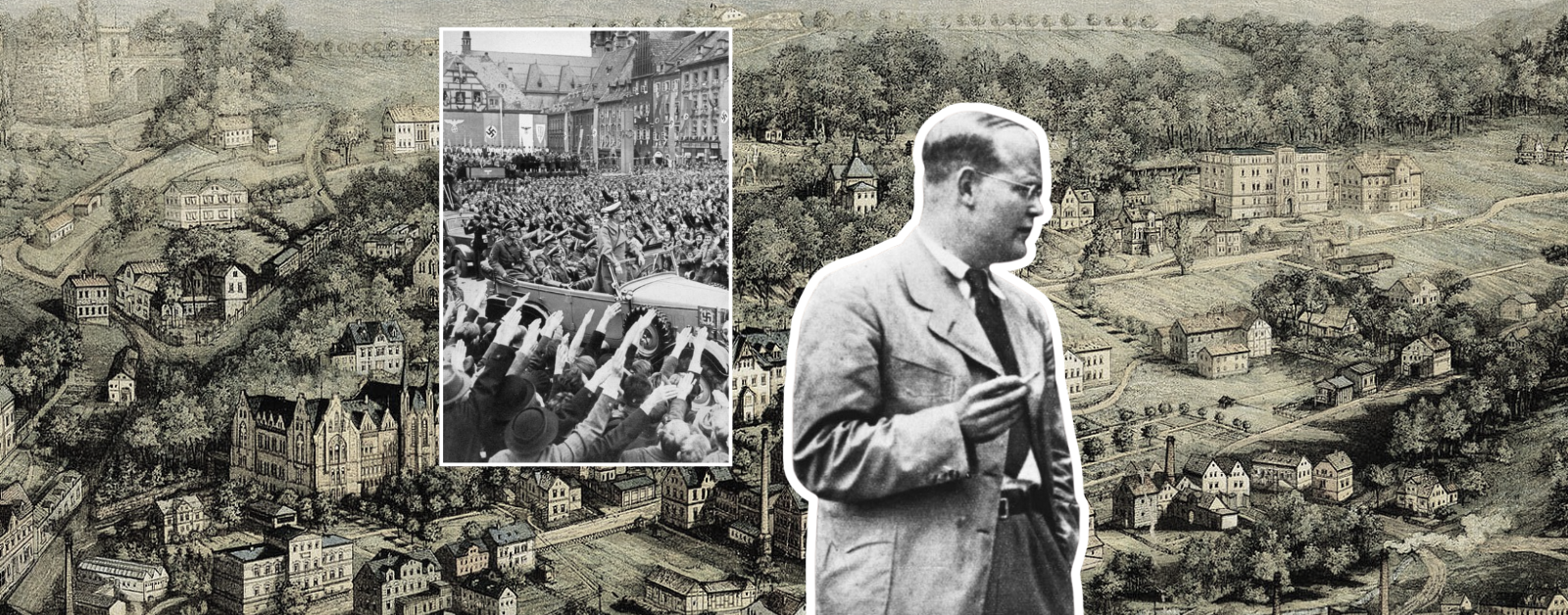
In Nazi Germany, two very different answers emerged to the question: Who belongs? Brian Brock describes how one answer took shape at the Bethel sanatorium, which Dietrich Bonhoeffer, the German pastor and theologian who opposed Hitler’s regime, visited and later wrote about. At Bethel, disabled people worshiped alongside doctors, caregivers, and neighbors. “Everybody worshiped together.” That shared life created a community of belonging, a solidarity that made it morally unthinkable to send some members away to die. Belonging was a form of resistance to the stories and systems that measured human lives by their “usefulness” or ability.
Outside the walls of Bethel, however, the answer to the question Who belongs? took a darker turn In Nazi Germany, the question was: Who can we dispense with, and on what grounds?
Brian points out that the rationale behind the Nazi euthanasia program was, in part, economic. People were to be cured or considered expendable. History warns that when we begin to measure who is worthy of belonging, the boundaries never stay fixed. They keep moving. Who belongs? The answer reveals the kind of world we are building.
“We begin to know ourselves and creation rightly only by throwing ourselves into the nerve-racking business of loving and being loved in return.” – Brian Brock
If you’d like to hear more of this conversation about why it matters how we think about disability, belonging, and what it means to be human, I hope you’ll listen to the full episode:
Who Counts as Human? with Brian Brock on Reimagining the Good Life with Amy Julia Becker {S10 E8}
SUBSCRIBE to my Substack newsletter: amyjuliabecker.substack.com
JOIN the conversation on Instagram: @amyjuliabecker
LISTEN to my podcasts: amyjuliabecker.com/shows/
CONNECT on YouTube: Amy Julia Becker on YouTube
Amy Julia Becker desires to challenge assumptions about the good life, proclaim the inherent belovedness of every human being, and help us envision and build a world of belonging where everyone matters. Amy Julia invites people to reimagine the good life through her writing and speaking on disability, faith, and culture. She is the author of several books, including To Be Made Well, White Picket Fences, Small Talk, and A Good and Perfect Gift. She is a guest opinion writer for national publications and hosts two podcasts: Take the Next Step and Reimagining the Good Life. Becker is a graduate of Princeton University and Princeton Theological Seminary (MDiv). She is a member of the Disability Ministry Network and the Alliance for Disability Justice and Ethics in Reproductive Genetics. She lives with her husband and their three children in western Connecticut.