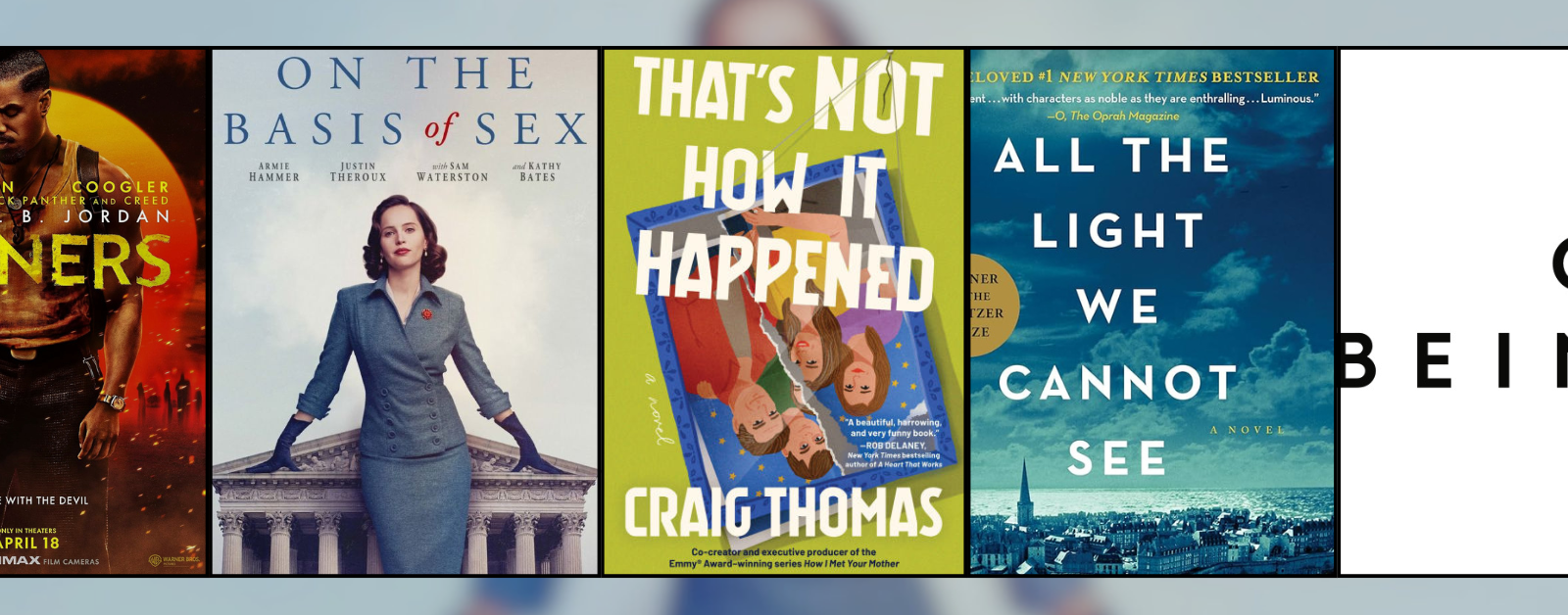
Books, essays, podcast episodes, and more that I think are worth your time, plus recent cultural news that I’m paying attention to in the month of April…
{Get my favorites delivered to your inbox each week. Subscribe here.}

Books
Memoir: Raising Hare by Chloe Dalton.
I still don’t understand how I could read a book about an unnamed animal and come to feel extremely invested in her wellbeing, but there it is. This memoir from a woman who noticed a baby hare and protected and came to know her over the course of time is thoughtful and lovely.
Middle Grade: Special by Nancy Goodfellow.
Penny is reading this book out loud to me, and we are both loving it. The chapters go back and forth between Madison and Meg, 7th grade girls who both have their own challenges to face as they navigate the beginning of junior high together. Meg has Down syndrome and Madison does not, but instead of a simple morality tale, Goodfellow has created a complex and heartwarming story about two girls who admire each other, hurt each other, confuse each other, and love each other. I still don’t know how it ends, but I didn’t want to wait to tell you all about this book that I highly recommend for anyone who enjoys a good social drama. If you’re a mom of a girl in late elementary or middle school or even early high school, this is a great one.
Non-Fiction:What Grows in Weary Lands by Tish Harrison Warren.
All right, people. If you are a Christian or something like it, you want to preorder this book. It’s about surviving—and thriving—the desert that inevitably comes. Tish says we can “flame out, numb out, or go deep,” and this book is a beautiful invitation to go deep.
Non-Fiction: Mattering by Jennifer Wallace.
Mattering, by Jennifer Wallace, is an easy read with great significance for how we understand ourselves and how we treat one another. Wallace weaves together research, stories, and reflections to explain why we need to know that we are valued in and of ourselves and at the same time that our contributions in the world add value. She doesn’t write about disability explicitly, but her work underscores so much of what we’ve learned about the inherent value of each person and how we can affirm each other’s significance.
Novel: That’s Not How It Happened by Craig Thomas.
I loved this novel about a family of four, including an adult son with Down syndrome. Thomas writes from the perspective of each of his four main characters. The mom here has written a bestselling memoir about her heroic efforts to raise a son with Down syndrome, starting a cafe and a group home in order to set him up well for life. The dad is a screenwriter who wants to turn her memoir into a screenplay. Once Hollywood gets its hands on the story, an actor without Down syndrome is cast in the leading role. Chaos ensues. My favorite part of the book was reading from the perspective of Emmett, the 26-year-old son with Down syndrome, as he expresses his own hopes and dreams and the ways his well-meaning parents have trouble letting him make his own decisions and have his own desires. Needless to say, I could relate to a lot of the dynamics within these pages. Thomas also does a great job asking questions about how we represent people with disabilities in the media, the idea of savior narratives and inspiration porn, and the reality of midlife and marriage. I highly recommend.
Novel: All the Light We Cannot See by Anthony Doerr.
As readers of this newsletter know, we just spent a week in France as a family. We traveled to Saint-Malo, the site of All the Light We Cannot See. It inspired me to go back and reread this story of two teenagers—one in occupied France during WWII, the other an orphan in Germany who ends up as a soldier. It’s a beautiful, harrowing story of love and resilience and beauty. It has sold millions of copies worldwide. I noticed this time more than the last time I read it that characters with disabilities—whether that’s blindness or mental illness or intellectual disability—are portrayed as very full humans with great purpose and significance. The book as a whole is opposed to the Nazi regime, but there’s a more subtle story within it. When we value vulnerable humans, we value our full humanity rather than reducing each of us and all of us to utility.
Shows/Films
Film: On the Basis of Sex
I watched this 2018 film on our flight to France, which is the story of former Supreme Court Justice Ruth Bader Ginsburg’s early career. It’s good—if infuriating—to remember how our society was structured to keep women out of high-level careers and how much it took to break through those barriers. Such a well-done movie, with good reminders from history and also relevance to our current moment.
Film: Sinners
Okay, so I did not like the movie Sinners. But I am glad I watched it, and you might want to watch it too. At first, I thought the story was a simple morality tale showing me that racism is bad. I thought it was pointing a finger at white people for exploiting Black people. And there were vampires, with lots of blood and gore and horror. No thank you. But still—the role of both music and religion in this film unsettled me. I knew there was more going on than I understood or appreciated upon first viewing. I couldn’t figure out why the music was so beautiful—the music of the vampires and of the juke joint. I couldn’t figure out how the film invited me to think about life and death and the afterworld. And I wasn’t really clear on how race operated as Black characters became vampires too and white characters spoke the Lord’s Prayer. If you have watched Sinners and want some help deciphering it, or some help at least knowing what questions you might ask, I appreciated these posts: There’s this Substack piece by Justin Rosolino which gave me a much deeper understanding of (and, shockingly, empathy for) Remmick, the leader of the vampires. And this essay from the Atlantic gave me a better appreciation for the role of the music. (I also appreciated this essay from The New Yorker, but they don’t let me give it to you.)
Podcast Episodes
On Being: Shai Held • On Love, and Judaism
This conversation between Krista Tippett and Shai Held about how love is the main event within Judaism gave me so much to think about. I appreciated Rabbi Held’s insistence that while there are places of convergence between Judaism and Christianity, they do not hold identical understandings of who God is or how God relates to love. (Rabbi Held says in Christianity, God is love–a Trinitarian understanding of God. In Judaism, God is loving.) And I needed his pastoral reflections on what it looks like to love one another in the midst of all the ways we harm one another.
For the Life of the World: Dwell in the Darkness
I listened to this beautiful conversation with David Ford about the Gospel of John in anticipation of Good Friday and Easter. There is so much to share, but I’ll just offer a nugget here now–he mentions that in the beginning of John 13, John writes that God gave all things into Jesus’ hands (3), and then Jesus immediately uses those hands to wash the disciples’ feet. It’s this subtle detail that underscores the profound point that Jesus, when given all the power in the world, uses that power only to love and serve and care for his disciples, including the one who betrays him and the ones who deny knowing him.
2 Podcasts Episodes on Current Political/Religion News
I thought about offering my own thoughts on the various prayer/Scripture/religion news stories coming out of the White House and the Pentagon lately, including the meme of President Trump as Jesus and Pete Hegseth quoting Quentin Tarantino’s prayer as if it were the Bible, but I decided instead to direct you toward two conversations that helped me think through the problems inherent in both of these incidents:
Both of these podcasts did a good job last week of talking about Old Testament rhetoric of judgment and violence and why lifting those verses directly into an American context today distorts their meaning and purpose.
Essays
NYT {Gift Article}: “A New Yorker Rediscovers Her City, in a Wheelchair”
I loved reading about the experience of navigating NYC using a wheelchair—the excitement, anxiety, frustration, and about what spaces truly signaled welcome.
Essay: “Fear and Suffering in the Age of MAiD”
In addition to the Cognoscenti essay I mentioned above, I read another essay that pointed out how the way we narrate disability directly affects the way we treat people with disabilities, for good and for ill. Rebecca Vachon writes for Comment magazine about a father who killed his daughter Tracy, a 12-year old with disabilities:
Tracy herself is often lost in the media coverage, except as “merely a bundle of unending suffering,” as disability scholar Heidi Janz says. Immobility, seizures, complete dependency, and constant pain were at the centre of the media’s characterization of Tracy’s life, drowning out the testimony in court from members of her care team and community, who recounted that Tracy was a happy girl with preferences and personality.
Vachon ties this court case from the 1990s to the current laws surrounding disability and death in Canada:
A coalition of disability organizations and individual plaintiffs is currently challenging this aspect of the MAiD law in the courts, arguing that allowing MAiD for those whose deaths are not reasonably foreseeable is discriminatory. One of the leaders in this coalition describes the law’s “devastating message that life with a disability is a fate worse than death.”
The way we tell our stories shapes our realities. We need to insist on and constantly portray the full humanity of individuals who are so often overlooked, misunderstood, and misrepresented. I’m grateful for writers like Vachon and Trapp and countless others in the disability space who help shape our imagination differently.
Get my favorites delivered to your inbox each week.
Subscribe here.
More Favorites and AJB Recommends
If you use a link from here to purchase something I recommend, it sometimes earns me a small commission, which enables me to continue the work I do here. So thank you! (As an Amazon Associate, I earn from qualifying purchases.)
SUBSCRIBE to my Substack newsletter: amyjuliabecker.substack.com
JOIN the conversation on Instagram: @amyjuliabecker
LISTEN to my podcasts: amyjuliabecker.com/shows/
CONNECT on YouTube: Amy Julia Becker on YouTube