President Trump’s use of the r-word to describe Tim Walz sparked a huge increase in the word on social media, and the majority of that increase came from people using the word to “enthusiastically endorse” its use.
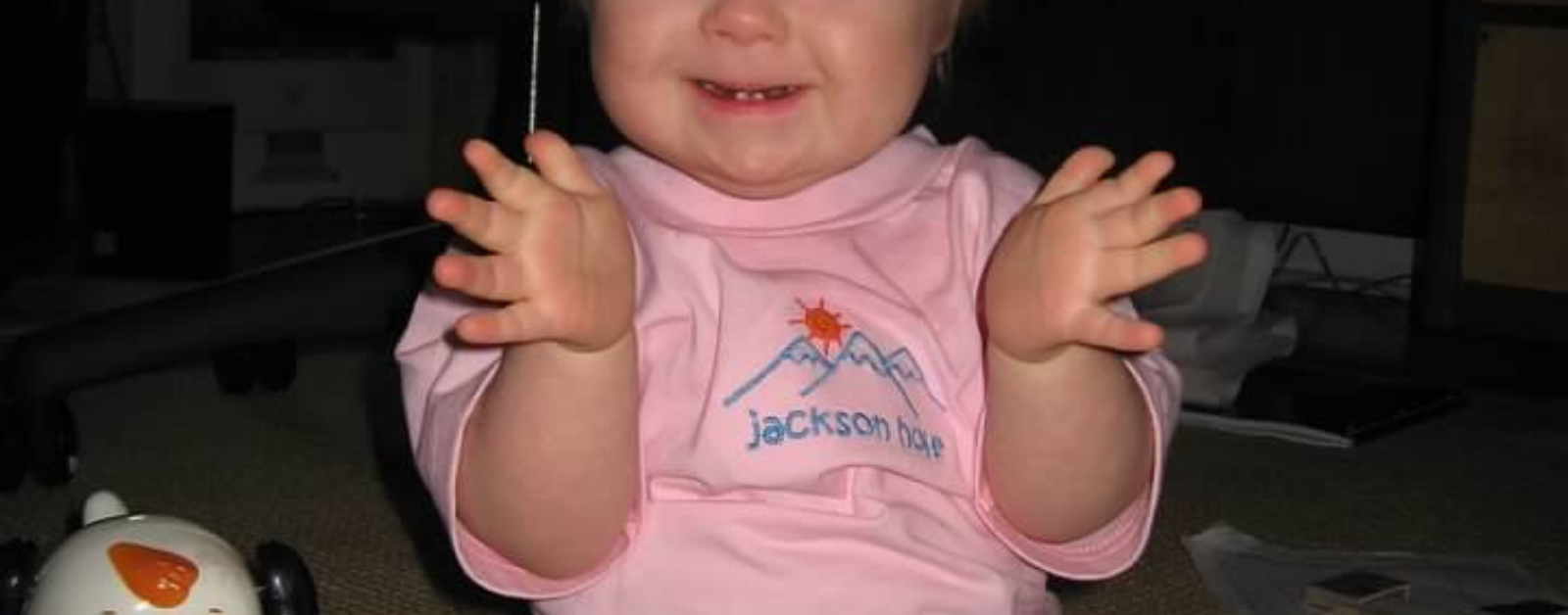
When our daughter Penny was born and diagnosed with Down syndrome, doctors told us that we knew two things for sure. One, she would experience developmental delays. And two, she had mental retardation. In the subsequent twenty years, the medical terminology used to describe Penny’s condition (and millions more like her) has changed to intellectual disability because the medical establishment (and later, the federal government) recognized how the r-word had become an insult, a slur. (This Rolling Stone essay gives more detail on how that happened, if you’re interested.)
We lived on a boarding school campus when Penny was born, so we brought her home to a house of 30 high school boys. Within a year of knowing Penny and our family, those boys talked about how their language changed. They no longer used the r-word. They recognized the way that a shorthand that conveyed another person’s (or their own) inadequacy also denigrated a whole group of people.
I talk with teenagers now who tell me they didn’t know the r-word was offensive. I don’t want them simply to add this word to a list of taboo phrases. I do want them to engage with the reasons why the r-word is offensive. As I’ve written before, here’s why: the r-word belittles people with intellectual disabilities, normalizes the use of slurs, suggests intellectual disability is shameful, appeals to our worst instincts, cuts off dialogue instead of allowing constructive disagreement, and dehumanizes all of us by reducing any of us to an insult.
So, here I go again, with an appeal to resist crass shortcuts to demean one another. When we use language to honor one another even if and as we disagree, we honor not only people with intellectual disabilities, but all of us as humans who make mistakes, who need to learn and grow, and who can choose our words in a way that builds us up instead of tearing us apart.
SUBSCRIBE to my Substack newsletter: amyjuliabecker.substack.com
JOIN the conversation on Instagram: @amyjuliabecker
LISTEN to my podcasts: amyjuliabecker.com/shows/
CONNECT on YouTube: Amy Julia Becker on YouTube