TAKE THE NEXT STEP PODCAST
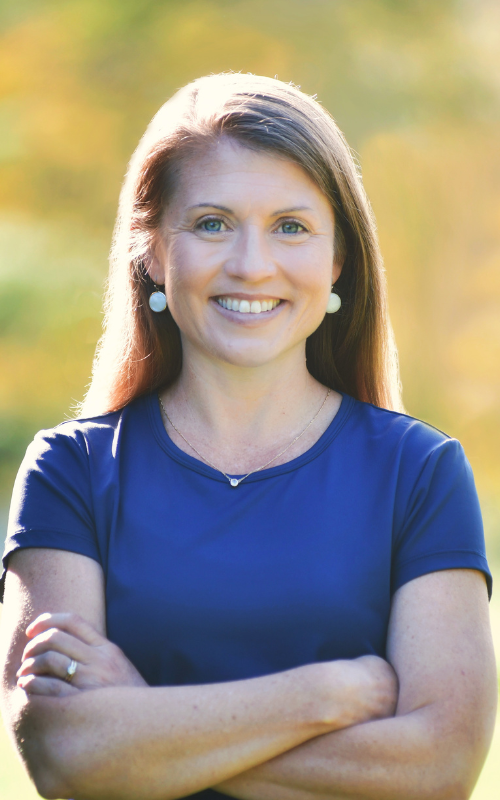
E28 — Do you feel overwhelmed, isolated, or afraid of the future? Misty Coy Snyder knows those feelings well. After receiving a prenatal diagnosis of Down syndrome for her son, she faced many of the fears and uncertainties that can accompany a disability diagnosis. But over time, her family’s life changed in ways she didn’t expect. Misty joins Amy Julia Becker to talk about family life and disability—and about the freedom she found when she realized she didn’t have to solve everything at once. She shares practical encouragement for parents and caregivers, including ways to:
For over twenty years, Misty has been inspiring people through storytelling. Whether she is onstage taking the audience on a journey through her acting, transporting people through her vocal performance or challenging and edifying her readers through her writing, Misty relishes communication, connection and community. Misty utilizes her gifts as a performer, entrepreneur and content creator to advocate for and lift up the disability community. Upon receiving a Down syndrome diagnosis for her second son, Jed, she created a worldwide platform to promote inclusion and awareness called, Happiness is Down syndrome. In addition to creating content for this page, she launched her own podcast called, Bold Voices, Soft Hearts, featuring stories of those who have discovered their passion through pain. For World Down Syndrome Day in March of 2025, Misty spoke on a panel at the UN discussing community support for the Down syndrome community and frequently travels globally sharing her story of hope. She is currently the Creative Director at RODS Heroes where the mission is to uncover the superpowers of Down syndrome.
Website: mistycoysnyder.com
Social Media: @mistycoysnyder @happinessisdownsyndrome on Instagram
Misty Coy Snyder and Happiness is Down Syndrome on FB
@mistycoysnyder on TikTok
00:00 Introduction to Misty and Her Family
03:09 Why “Happiness is Down Syndrome”?
07:17 The Role of Community in Parenting
11:02 Creating Connections and Resources
15:10 Planning for the Future Without Fear
22:45 Take the Next Step: Be Present
Links:
_
SUBSCRIBE to Amy Julia’s weekly Substack newsletter: amyjuliabecker.substack.com
WATCH this conversation on YouTube: Amy Julia Becker on YouTube
JOIN the conversation on Instagram: @amyjuliabecker
LISTEN to more episodes: amyjuliabecker.com/shows/
Note: This transcript is autogenerated and does contain errors. Please check the corresponding audio before quoting in print.
Amy Julia Becker: 00:06
Do you feel overwhelmed or isolated or afraid of the future as the parent of a child with a disability? If you do, you’re not alone. But my guest today is here to remind us that we don’t have to figure it all out at once. We can experience a lot of delight along the way, and there are people out there to support us in the journey. I’m Amy Julia Becker, and this is Take the Next Step, a podcast for families experiencing disability. We’ve teamed up with our friends at Hope Heals to bring you weekly conversations with fellow parents, therapists, and disability advocates about practical ways to cultivate a thriving future for the whole family. Here at Take the Next Step, we see your family as a gift to our society and to your local community. Your family matters, your child matters. We need you among us. Today, author Misty Coy Snyder joins me to talk about family life and disability. Life in our families can feel really overwhelming, but there is a world of support and connection that can walk with us through it. So Misty and I will talk about how to move forward by finding community, focusing on what matters right now, and making space for joy. Misty, welcome to Take the Next Step. Thank you so much for having me, Amy Julia. Well, I’m delighted to have you. Um, and I would love to give listeners who don’t know you just a little glimpse of life in your family. So can you introduce us to you and to these people who you love?
Misty Coy Snyder: 01:40
Yes, yes. So I’m Misty Coy Snyder. I live in New Jersey with my husband Braden and my son Clay, who’s eight, and um Jed with Down syndrome, who is it just turned six.
Amy Julia Becker: 01:54
We’re gonna get to hear a little bit more about you and your family because you’ve recently released a book, and that is called Happiness is Down syndrome Strategies and Support for Parents at Every Stage. If you’re watching this, you can even see the happy cover behind Misty’s head. Um so much of what Misty has put together uh in this book, both in her own reflections and others, is really applicable to parents who are in the Down syndrome community and to parents and caregivers of any children or young adults with disabilities. So I wanted to ask questions that kind of get at that broader disability parenting conversation. Because as you said, this is a resource guide. This isn’t just this isn’t a memoir. It’s not a this is just my story. It’s actually a resource guide. And that is what so many of us need at every stage along the way, which also is what you’re trying to do in this book. So um, before we get to some of those resources though, I wanted to start with the title because most people don’t think of happiness as a word that describes their experience with disability. So could you just talk to us about what it means to say happiness is Down syndrome?
Misty Coy Snyder: 03:03
Absolutely. It would have been the furthest word I would have used to describe Down syndrome before
Misty Coy Snyder: 03:09
Jed. Um, and it really evolved from I’m from Southern California and I grew up in a family of performers. I was immersed from a young age in musical theater. And so every reference, if you know me, if you speak to me for more than 10 minutes, I will sing to you in some sort of musical theater reference, for better or for worse. And um, shortly after Jed was born, uh, I was just really overcome by this feeling of, oh my goodness, what was I so, so afraid of? This fear gripped me in my pregnancy of just Down syndrome. It just took my breath away. I was, I really thought my life was gonna end. Like I was just so terrified of this prenatal diagnosis. And I thought everything that’s ever been good is gonna just go away. And I almost thought I was gonna be this martyr. Like uh, you know, I was gonna suffer and all the things that I’ve heard so many people say to me about Down syndrome now. I just kind of thought that was gonna be the case. And so when I met Jed and I looked in his eyes and I felt so much joy and rapture and happiness, it it sort of surprised me. Like, and it seems so silly to say that because he’s my son, right? But it just over it, it just overtook me. Like, wow, I love you so much and you’re so beautiful, and you bring me so much joy and so much happiness. And happiness is such a such a vapid word to me. Like it just doesn’t, it doesn’t do it for me. But the reason happiness is Down syndrome came to be is because there’s a a song in Your Goodman Charlie Brown called Happiness. And Your Good Man Charlie Brown is one of my favorite musicals, and it describes all the simple joys of life. Happiness is two kinds of ice cream, pizza with sausage, climbing a tree. To me, that’s what Down syndrome and and really what living with a disability or l loving someone with a disability can often be. It’s those simple joys and those simple moments in life that I think a typical person like me, I’ll speak for myself, often misses. Where I’m so quick to move at this pace that I miss those simple joys and those simple moments of happiness. And so it just dawned on me one night when I woke up in the middle of the night. Happiness is Down syndrome. And um, a platform grew from there, and uh the rest is history.
Amy Julia Becker: 05:45
I love that, and I love it especially because I played Lucy in You’re a Good Man Charlie Brown when I was six years old in first grade. I also love that idea that we can be so surprised by the delight, the joy, the goodness um inherent in our very, in some ways, very ordinary family lives. And yet that’s something we try to get to or get at um on this podcast is that when we have children with disabilities, um, our own backgrounds as well as the world around us can often tell us to see disability as negative and problematic and fearful. And yet we can actually start, and in fact, our children often can prompt in us that starting with delight rather than with fear and angst, which doesn’t mean there’s nothing hard that comes along the way. And yet at the same time, too, um, I love that you woke up in the middle of the night and we’re like, oh my gosh, I’m I’m recognizing this in a way I haven’t before. Um, as I said, like we talk about that a lot here on this podcast, is that we start with delight, but there are two other things we talk about connecting to community and then taking the next step towards a good future. So I wanted to move from this idea of kind of the happiness or delight that permeates your view of Jed and your family, even amidst I know you all have endured a lot of hard stuff in your six years as Jed’s mom. I’m also curious to hear about the role that community and connecting to community has played in carrying you or walking with you to where you are now. Can you just speak to that a little bit?
Misty Coy Snyder: 07:17
Yes,
Misty Coy Snyder: 07:17
it’s been, it’s been everything. Um, I when I received the diagnosis at 14 weeks, and it is important, it’s a really huge part of my journey to speak to the fact that I received the diagnosis at 14 weeks and it was two weeks before the pandemic. So um I was in such isolation and such crisis that I really didn’t have any outlet. It was, it was you get a diagnosis and then you’re just in such immense isolation. And I will say to some degree that was a blessing because I didn’t have to, I didn’t have to speak to people when I didn’t want to. You know, I could kind of just hide my head in the sand and like process it. But I had a genetic counselor who did know about the Down syndrome diagnosis network, the DSDN, who was able to say, I think there’s a um a network that will connect you with with with other mothers who are pregnant right now. And I just couldn’t grasp that, Amy Julia. I was like, there’s there’s other moms who are pregnant with babies with Down syndrome right now. Like I could not get my head around that. And so I looked into it and I found it. And not only were there a few, there were like hundreds all throughout the country. And and that was everything. That was a game changer because all of a sudden I could be, if I wanted, I could be a fly on the wall and read what that mom in Ohio had to say. Or I could, I could pour my heart out and say, guys, I can’t sleep. I can’t imagine my life anymore. And people would say, Me too, me too, me too. Or someone would say, It’s okay, it’s gonna be okay. I’m like 10, I’m five weeks past you, and and I felt that way too, and you’re gonna be okay, or someone, you know, it felt like we were in war together and and and we were like going through it together. And that was such a saving grace to me. And to this day, I I sing the praises of the DSDN because that that brought me through. And so community is everything. Finding somebody, and it doesn’t have to be in the Down syndrome community, and I say this across the board. I have friends in this community. I only have one or two moms I know in the Down syndrome community, but I have lots of other moms in the disability community that I know. And we talk about how hard it is to go into those IEP meetings and how hard it is to fight for the things that we need to fight for. And we have that common ground and we find that common ground and we stay in that common ground. There’s lots of things that aren’t the same, but we find the things that are the same and we unite on those things because that’s where we need each other. And so community is everything, and I will die on that hill.
Amy Julia Becker: 10:02
Well, so to that point, I think this book is a testament to the community that you’ve both found and helped to create because your platform is a site of gathering people in, bringing people in and gathering them together. Um, the book itself has um, you know, different writings from multiple people who you basically said, look, I don’t know what it’s like to have an 18-year-old with Down syndrome. And so you called on people, myself included, and said, Hey, can you write something about this? So I’m curious about how we make those types of kind of intentional connections, especially outside of like our neighborhood, right? Without being overwhelmed by the idea of it. Like, can you break it down a little bit? I love what you’ve already shared with about the Down syndrome disability uh DSDN, Down syndrome diagnosis network. Um But also once Jed was born, how did you like not get overwhelmed by community while at the same time pursuing it? Does that make sense?
Misty Coy Snyder: 10:59
That’s such a good question. You know what? I think that
Misty Coy Snyder: 11:02
it can be one extreme or the other. I think that you can go all in, and I’m an all-or-nothing person. So it would have been so easy for me to just be like, give it all to me now or nothing at all. I I learned pretty quickly, and I this is a testament to my pediatrician. I have a wonderful pediatrician, Stacey Thompson. If you ever hear this, I love you so much. She one day I went into her and I must have looked like I mean, death. And she was like, Misty, you haven’t gotten any sleep. I can tell. And I could give you a list of 50 things to do with Jed today, but I’m gonna give you a list of two. And you’re gonna do those two things, and you’re gonna check those off your list. And the next time I see you, you’re gonna have those two things done. And that’s all you’re gonna worry about. And then the next time I see you, I’m gonna give you two more things. And there was something about her gentleness and that that just shifted my mindset because I I think you and I have this in common. I’m like a doer. Like, like, let’s check these things off the list. And I carry a deep shame when I don’t finish things. Like, and and and for the first time in my life, this like really touches something hard in me. For the first time in my life with Jed, I couldn’t get stuff done. I was so overwhelmed. And I I was in a world I didn’t know things about, and I’m an A student and I get stuff done, and all of a sudden I was failing at things, I was forgetting appointments. I was, I was, I didn’t understand things. I was in a world I didn’t get, and that was shameful for me. I I just I felt like I was failing as a mom. I felt like I was failing as a person. And so her giving me that permission to just get those two things done was huge. And so what I tried to do with this book and to answer your question, I think it’s really important to just face things as they come, as best as you can. So you’re facing, let’s say, okay, I know that I’m gonna have my child is entering preschool in, you know, um four months. And that’s really daunting to me. And I’ve really, gosh, I really have hidden my head in the sand about that because that’s scary to me. So, you know what? I’m gonna read this chapter. Oh, I’m so scared. I’m gonna read this chapter about IEPs and I’m so scared. And I’m just gonna read this one chapter, and then I’m gonna put it away. And like, I I really tried to write it, like, just read that one thing that you need. Um, and I have a thing at the end of each chapter, just a little extra, where I try to add like a little bit of softening. Like, this might have been overwhelming for you. It was for me, and I love you, and you’re gonna be okay. Like, I try to be a friend because so many things were overwhelming for me. So I say that for the book and I say that for life. Like, take what you need when you need it, and then just like leave it. Like, leave it. You don’t have to figure it all out right now. Just take what you need when you need it. Because I think you you are so much further on the path than I. Like you probably don’t remember what you were doing with Penny in my season. Like, you just kind of take it one little baby step at a time, and you and and then you just leave it. And I think there’s wisdom in that.
Amy Julia Becker: 14:17
So much wisdom. And I think there’s like almost a discipline in it of saying, you know, what do we need right now? Who can come alongside us and be a part of like satisfying that need or addressing that need? Um, and not what do I need to worry about 20 years from now? Because I do think one of the um issues with in disability parenting is that we are told to be afraid of the future.
Misty Coy Snyder: 14:45
Yes.
Amy Julia Becker: 14:45
And so, you know, that for me, it really was this sense of like, I have to decide that I’m not gonna go there, like until I need to, until I need to. And then every time I was very daunted, as you said, like it’s not as though making that decision made it like so much easier when we were going into middle school or high school or out of, you know. And yet I also over time began to trust that like we
Amy Julia Becker: 15:10
will be able to connect to other people who have gone before and take the next step towards a good future. I mean, that is possible, but it does require some like slowing down, being really gentle and gracious, as you’ve already said, and having some experts. I’d love to do that your pediatrician did that, like having a voice of authority who tells you don’t do all the things. Yeah. Just do these two things. Like, oh my gosh, what a gift that is. So um, I think that kind of helps with just the answering uh uh about kind of what we do when we are feeling overwhelmed. Because I do think so many of us feel overwhelmed and isolated so much of the time. Um, and I’m curious if you have just anything more to say in terms of planning for the future without living in fear or being totally overwhelmed by it.
Misty Coy Snyder: 16:01
Oh, yes. Well, we have a we have a whole chapter when the bus stops coming, um, and and for planning for the future, where um an incredible um uh organization called Caring Tide talks about planning for the future and and and like financially planning and estate planning and all of those things that I think so many of us are overwhelmed by because uh this is a this is a real, this is a pain point for me. Like I I struggle, I am an actor. Like I struggle with anything future planning because by nature, performers are like we live in the now. We have a job now, and so we’re like focused on the money we have now and the job we have now. And so anything thinking about the future is so daunting. And so I think it it can really think, well, you can go to one extreme or the other. I gotta get everything figured out now for my two-year-old, or um, I’ll deal with that when they’re 20. And neither is correct. Like you gotta kind of think, all right, I have this thing that’s looming, and um, I don’t have to have it all figured out now. So what what what I try to focus on, and you know, I host these webinars with Team Iron Will monthly, where we sort of put things on people’s radar. Like, like, okay, there’s this thing that exists. There’s this thing that exists that’s uh talks about the future and it’s carrying tide. And if you if you want to plan for the future, you can reach out to them. If you’re not ready to, you can think about this, just have it in the back of your mind. Just just put it back here, store it back here, and when you’re ready, pick it back up. That and and that’s kind of like the book. You put it up on the shelf, and oh, I think I remember there was this thing about planning for the future. I’m gonna pull that back out. And so it’s like you’re you’re storing it, you’re not ready to do anything yet, but you’re you’re you’re ready for it. And so I think it’s just kind of like knowing that you you’re you’re storing things for the future, but you don’t have to have it all figured out today. And I think I think that’s where I went wrong in the beginning. Was I thought I had to be an expert on everything. I have a a paragraph in this book that’s my favorite because it’s really from my heart, which is what made us think that we have to be experts about everything. Something about having a child with a disability, we’re like, well, I have to know everything. Well, no, we don’t know everything. That’s no that’s why we enlist teachers and specialists and right? That’s what what made us think that?
Amy Julia Becker: 18:44
Like, you know, I completely agree. Um, and I think one of the things, again, there’s kind of a myth that um no one else is on your side when disability is in your story. And I just don’t think that’s actually true. I think the people who are in the caring professions, doctors and nurses and teachers and therapists, like they it’s not to say they’ll never, they’ll always say the right thing or they’ll never do anything wrong, but at the same time, it’s like they are on our team and um recognizing when uh actually I I may have you shared this on this podcast before, but um, I remember reading a book by this guy, Greg McKee McKeon, I don’t know how you say his last name, um, but he mentioned that his daughter had epilepsy and his instinct was to go become the expert in epilepsy, or she was having seizures. Um, and then he realized, like, actually, if I go become the expert in seizures, first of all, how do I think I’m gonna know more than the doctors? Second of all, it will take me away from what I’m actually supposed to do right now, which is to be her dad. Like that is my job, is to be her dad. And so he was like, again, it was almost a discipline to not become an expert, but to trust the experts, to find the right experts, right? But um, and I think that goes back to a lot of what we’re saying here is that sense of we’re not alone. And when we recognize that we are overwhelmed and we can’t do it alone, it actually can open us up to connecting to other people and to becoming a part of something bigger than ourselves, yes, to serve our families, but also, I mean, look at what happened in you being overwhelmed. This book, this platform, this conversation, right? Like all, and the fact that we even know each other is what you know comes out of these types of things. So I just, I don’t know. I find all of that really um beautiful and life-giving that if as we start to trust, as we like that that feeling of being totally overwhelmed and isolated can actually lead to this really beautiful community and connection if we can start to trust um one another and the other people who are um in this, in this world. The other thing I wanted to say that I we talk about sometimes when I’m doing some teaching on these materials is that um the future can mean tomorrow and it also can mean 20 years from now. And at different times in Penny’s journey, I have needed to think about the future in different terms. Like when things are really hard right now, about as far as I can get is tomorrow. And then there are seasons when it’s not so overwhelming where things are going okay. And that’s where I can, whether it’s thinking about, you know, financial planning or asking questions about some of the health conditions that might come up or whatever it is, but to just kind of be gentle with ourselves in terms of how far into the future we can handle right now as well.
Misty Coy Snyder: 21:28
Yes. And I think there’s seasons to give and seasons to receive. And I know there have been massive seasons when Jed was having infantile spas spasms that I was not giving very much. I was receiving a ton. And I think that that’s accepting those, like what you just said. Okay, this I’m not giving too much right now. I’m definitely receiving, I’m definitely learning in this season.
Amy Julia Becker: 21:48
Yeah. Yeah. Well, as we come to the end of this time, and I’m sorry, it always feels too short, but I also, as you can relate, know that um the moms and dads and caregivers who are listening to these uh conversations. Have a lot going on. So we’re trying to give them like really jam-packed good content in a short period of time. I always kind of try to round up what we’ve said in thinking about okay, what does it look like to take the next step? Just like one next step towards a good future. I’m going to say a few things I’ve heard you say, but if you want to add anything at the end, one is just that idea of the DSDN and finding your peers. Who are the other people who are kind of with you right now, like in what you’re experiencing? Um, and how can you go about finding them? Like that could be for anyone who’s feeling alone, a really good next step. Another thing is what your um pediatrician said to you what are two things, not 50, um, that actually are like things you could accomplish and that would
Amy Julia Becker: 22:45
be meaningful. And so that’s gonna look different for each of us at with our kids and with our stages of life. And yet I also think that’s just such such good advice. And then um finally, just as we talk about the future, what you said I wrote down was just like face things as they come. Let, you know, really again address not just what’s immediate, but the things that are coming. Um, there’s a measure of just discernment about recognizing you don’t have to face it all all at once. Is there anything you would add as far as just what it looks like to take the next step towards a good future?
Misty Coy Snyder: 23:17
You know, it’s kind of what we started this with, with just being where your feet are planted. I I was talking about this the other day. Um we have this um drain outside our, just outside our garage, there’s this drain, this very ugly, rusted drain. And uh I would never pay it any mind. And for some reason, Jed is fascinated by it. Anytime it rains, he plops himself, he squats down by the drain and he watches the rain go through this drain. And he will not peel himself away from this drain. And it drives me crazy because I’m like, hey, dude, we gotta go. Like, what are you doing in front of this ugly, dirty drain? And he just watches. And I one day I got down low and watched to see what he was looking at, and I realized he’s fascinated by the way the rain like trickles down on the drain and like comes down and hits the water in the drain. He’s watching kind of the pattern and he’s just fascinated by it. And I thought to myself, what a way to look at life. Like, like to see, and I’ve seen him do it with fountains, with the ocean, with leaves that are swirling around. I’ve watched him do it with so many different things. And I almost envy it as much as it drives me bonkers when we’re in a hurry. I almost envy it because he sees the beauty or the happiness or the however you want to say it, the divine in the moment, in the where your feet are planted, where you’re squatted, right? Like he sees it. And so I think that’s really to me what this the takeaway is for me on this journey is yes, seize that community, do the next right thing, but like be really be present where you are. Like I look at Jed as I as I took this book out of the box and I was like, oh my gosh, never in a million trillion years would I have thought I was gonna do something like this. This was not what I set out to do. And I and I looked at Jed and I saw his face and I was like, dude, this is you. Like you did this, like you made this possible, and this is yours. And I saw his face and I just relished that moment. Like I took this book out of the box. This is your story, this is you. You made this happen. Look at your face, and it just that moment was so sweet. And I’ll never get it back, like never get it back. And just like being in the now, you know, it’s so sweet. And that’s to me, that’s what disability brings us. Like it just be now, be here right now.
Amy Julia Becker: 26:05
Well, let’s close right there with those beautiful words and that wonderful um illustration of just what it might look like to actually, yeah, begin with um happiness, to start with delight, uh, and to live from there. Thank you so much, Misty, for being with us.
Misty Coy Snyder: 26:20
Thank you for having me.
Amy Julia Becker: 26:26
Thank you for listening. If this episode was helpful to you, please share it with another parent or caregiver who might need to hear it. Take the next step is a resource from the Hope Heels Network, a collective of thought leaders offering honest and hopeful wisdom to help people flourish in the good and hard parts of their stories. To learn more about the work of Hope Heels, visit Hope Heels.com. Thank you so much for being here. Thank you also, Jake Hansen, for editing this episode, and Amber Beery, my director of content, for producing the show. I hope you leave this time with encouragement to start with delight, connect to community, and take the next small step toward a good future for your family.
Take the Next Step is a resource from the Hope Heals Network, a collective of thought leaders offering honest and hopeful wisdom to help people flourish in the good and hard parts of their stories. To learn more about the work of Hope Heals, visit hopeheals.com or follow @hopeheals on Instagram.
my weekly Substack letter
My newsletter delivered to your inbox that challenges assumptions about the good life, proclaims the inherent belovedness of every human being, and envisions a world of belonging where everyone matters
LET’S REIMAGINE THE GOOD LIFE TOGETHER. SUBSCRIBE TODAY!
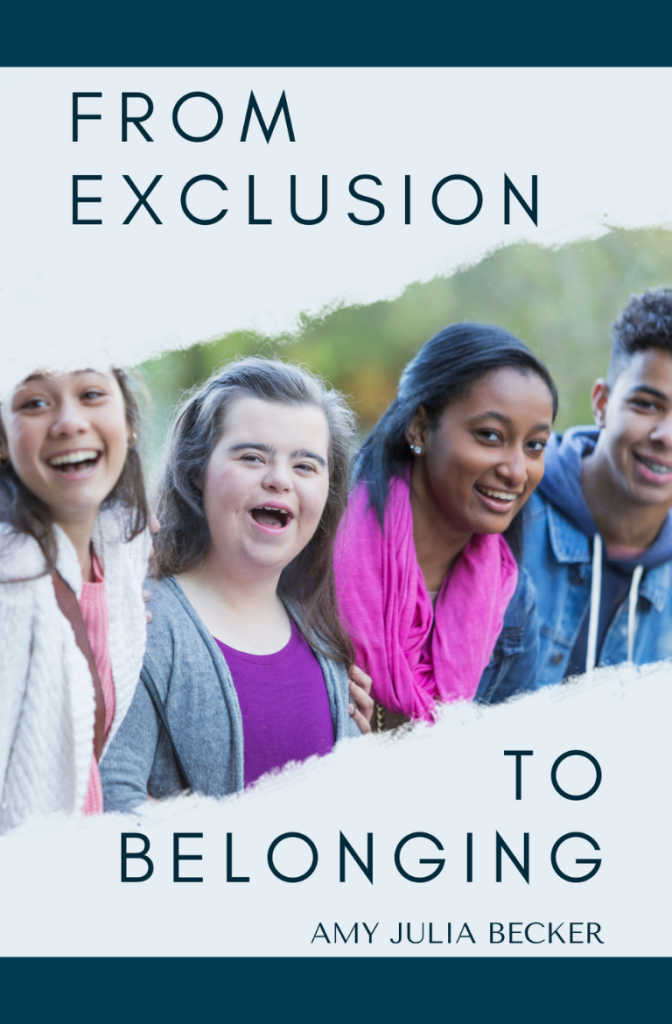
Get the Free Resource!
An illustrated guide designed to help you identify and create spaces of welcome and belonging—download today!