TAKE THE NEXT STEP PODCAST
E21—As the mom of a daughter with Down syndrome, I have felt my fair share of complicated emotions over these past twenty years. And sometimes, as the parent of a child with a disability, I haven’t known what to do with those emotions, especially the ones that seem negative, like grief or fear. I’m talking today with psychiatrist, speaker, and author Curt Thompson about all these things—how we can name our emotions in safe and trusted communities, and the way receiving comfort in the midst of those emotions can also open us up to hope and joy.
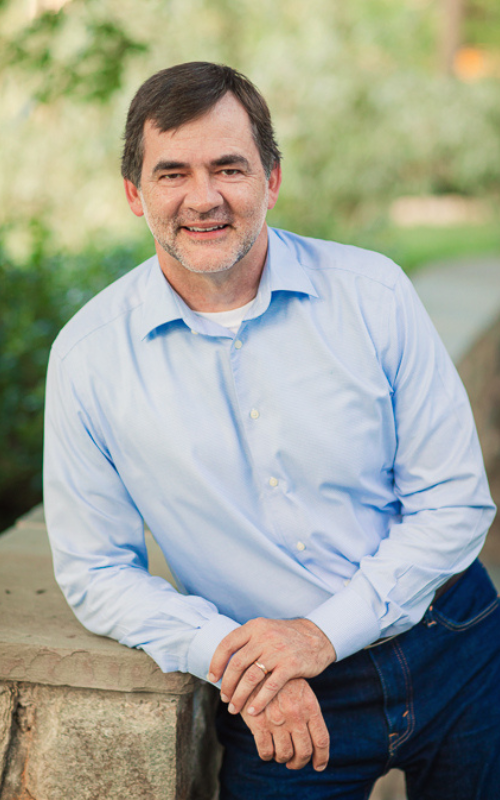
Curt Thompson, MD, is a board certified psychiatrist, author, speaker, and co-host
of The Being Known Podcast. He has been in private practice for over 30 years in
Falls Church, Virginia, graduated from Wright State University’s Boonshoft
School of Medicine, and completed his psychiatric residency at Temple University
Hospital. He strives to help patients develop flourishing lives by telling their
stories more truly, in order to become more deeply known, for the purpose of
creating beauty and goodness in the world. With conviction and humor, he trains
clinicians and speaks at workshops, retreats and conferences, integrating
neuroscience, human relationships and Christian faith. He and his wife Phyllis are
the parents of two adult children and live in Northern Virginia.
www.curtthompsonmd.com
IG @curtthompsonmd
FB@curtthompsonmd
Curt’s podcast: Being Known Podcast
00:00 Introduction to Grief
06:15 The Importance of Naming Grief in Community
11:58 Navigating Grief in the Context of Disability
18:32 Connecting to the Fullness of All of Our Emotions
24:12 Practical Steps for Emotional Awareness
_
WATCH this conversation on YouTube: Amy Julia Becker on YouTube
SUBSCRIBE to Amy Julia’s Substack: amyjuliabecker.substack.com
JOIN the conversation on Instagram: @amyjuliabecker
LISTEN to more episodes: amyjuliabecker.com/shows/
Note: This transcript is autogenerated and does contain errors. Please check the corresponding audio before quoting in print.
Amy Julia Becker (00:06)
I’m Amy Julia Becker and this is Take the Next Step, a podcast for families experiencing disability. We’ve teamed up with our friends at Hope Heals to bring you weekly conversations with fellow parents, therapists, and disability advocates about practical ways to cultivate a thriving future for the whole family. Here at Take the Next Step, we see your family as a gift to our society and to your local community. Your family matters, your child matters.
We need you among us. As the mother of a daughter with Down syndrome, I have felt my fair share of complicated emotions over these past 20 years. Sometimes as that parent, the parent of a child with a disability, I haven’t known what to do with those emotions. And that’s especially true with the emotions that can seem negative, like grief or fear. And so today I’m talking with a psychiatrist, speaker and author, Curt Thompson, about all these things.
If you are like me and have had complicated emotions and not quite know what to do with them, then this episode is for you. We’re talking about how to name those emotions, how to do that in safe and trusted communities, and about how when we receive comfort in the midst of those emotions, we can be even more open to the hope and joy that is available to us. I’m so glad you’re here today, and I hope you enjoy this conversation as much as I
Well, I’m sitting here with Dr. Curt Thompson and I’m so delighted to be here with you today. Thank you for being here.
Curt Thompson, MD (01:41)
Amy Julia, always a pleasure. ⁓ We don’t get to talk nearly enough.
Amy Julia Becker (01:46)
Well, I know. Yeah, so true.
Curt Thompson, MD (01:49)
Thank you so much for having me.
Amy Julia Becker (01:50)
I’m so glad to have you here. As you know, and as listeners know, this podcast is called Take the Next Step. The idea is that we are going to be talking to parents of kids with disabilities about topics that allow them to imagine a good future for their kids, and I should say for our kids, because I am a parent of a child with a disability, and also to try to equip people. There’s an encouragement piece in terms of imagining a good future, but then also an equipping piece to take steps towards that good future.
And within that, it might seem kind of odd, but I’ve invited you here to talk about grief. And so how does a good future and grief go together? That’s what we’re going to be talking about. are a therapist who’ve worked with countless people over many years, including people at Hopeals Camp within the disability community. And so I wanted to start just by asking why we need to acknowledge areas of grief in our lives in order to be able to imagine a good future.
Curt Thompson, MD (02:49)
Well, Amy Julia, first of all, I just want to say this. I am thrilled at the title of this show. Take the next step. The title is not Take the Journey. The title is Take the Next Step. This speaks directly to your question about grief. Life is not lived ⁓ miles at a time. It’s lived moments at a time. And the way my brain works, I can get way out.
over the edge of the horizon. Certainly with my hopes, but especially when those hopes turn out to be something other than what I hoped them to be, my anxieties can also stretch out over the edge of the horizon to the point where it’s really difficult for me or I choose not to pay attention to what is right in front of me and what is the step I can take and it would be good for me to take.
It doesn’t take a rocket scientist to look around and see that our world is fraught and broken and so forth. It’s the way it is. Most of the Bible is a story about how God is trying to pursue us and our wounding of each other. So much of the Bible is about grief. A lot of it is about grief and God’s attempt to get us to actually pay attention to it in order for us.
to take the next step of life. Once you get past the third chapter of Genesis, shame and violence are the dominant ways in which we frame our lives. Grief becomes the primary first response to all ruptures. And so it’s really difficult for us to imagine beauty and goodness. This is, it’s common, Life is, it’s just filled with grief for all of our parents who have lists of grief.
John 9, it’s the story of a blind man, a man born blind. And it’s this powerful story in which Jesus and disciples come along and they see him and they say, like, who’s him? It’s grief. This is the first thing you’re gonna pay attention to. Who’s responsible for this problem? And Jesus is saying.
That’s the wrong question. This man was born blind such that the works of God might be revealed in him. Beauty and goodness is what’s coming. And so in our world, grief is necessary to name. have to see it, to name it. Anytime there’s a rupture, if I pretend the rupture never happened and I move on, even a paper cut, if I have a collection of paper cuts, at some point, this is going to be a problem.
Amy Julia Becker (05:09)
Wrong question.
Curt Thompson, MD (05:37)
And for the human mind, in order for me to get to the place where I can imagine that, ⁓ this is happening such that the works of God might be revealed in me, I first have to name that, ⁓ there is a problem here. There is something here. Then we like to say in our work, we name things to tame things. And so it’s important to name it. One of our problems is that we often don’t name it. We think we shouldn’t, we shouldn’t complain, we shouldn’t grieve.
you this is not what Christians do. Yeah. But it is the naming it and in community that enables us move on to imagine a new future.
Amy Julia Becker (06:14)
what on a practical level, what does it mean to name our grief, to pay attention to it, to acknowledge it? What does that actually look like?
Curt Thompson, MD (06:22)
Very simply, it is a matter of naming things that we feel that are unpleasant. There’s a whole list of unpleasant emotions, right? So, I mean, this is what parents do with children. What do you feel? I feel hurt, I feel angry, I feel this, I feel that, of course. But I’m not just trying to get the child to name it, or in this case, the adult, right, the parents to name it just for the sake of naming it. I want the child to have the experience of them hearing me
Hear them name it. And this is what’s important. We’re not just naming grief for the sake of naming. I’m not just shouting it into the wind. I’m naming it so that Amy Julia will hear it. Because it is in the being present in community with my grief that I am enabled to first begin to imagine something beyond my grief. am not, am, after Genesis three, we are,
Amy Julia Becker (06:59)
Okay.
Curt Thompson, MD (07:21)
unable, unwilling to imagine beauty and goodness in the middle of my grief, apart from someone else imagining it for me while my imagination is trying to catch up. This is what Jesus does. Jesus comes into the world and imagines something for us that nobody could imagine. And this is why naming it is, come unto me, all of you are weary and heavy laden. You bring your grief.
You bring it to me. You’re not just naming it to name it. You’re naming it to me. And so much of what Hope Heals Camp does, it’s not just a gathering of people randomly. We’re here to name things in order for them to be heard so that my imagination can be redeemed. But it can’t happen by myself, which is why I need you to help me do that.
Amy Julia Becker (08:15)
And that kind of brings up the role that I wanted to ask you about. You write about the idea of compassionate communities and confessional communities. And just that sense of like community being so important in any healing work that we’re doing in our lives. Can you just speak to that sense of needing community, but also like why we need them, which you’ve already said a little bit about, but also like how might I, if I’m listening to this and I’m like, ooh,
Curt Thompson, MD (08:23)
Yeah, confessional communities.
Amy Julia Becker (08:45)
I need that because also what you’re saying, you’re saying not just name it, but name it in front of someone who is like a trusted companion, right? Like someone who can carry this with and for you. And so how do we find that? How do we go about that?
Curt Thompson, MD (08:59)
Right, well, first thing to say is like when we say like, why do we need it? It’s kind of like saying, why do we need to pay attention to the laws of physics when we’re building a bridge? Because this is what we have to pay attention to in order to build a bridge. Like, nobody asks that question. Why do we pay attention to physics when we’re building a bridge? We do because the bridge will collapse otherwise. Because we want to build a bridge according to the way the world actually operates. And community, it is the way the world most flourishingly
So it’s kind of like, if you want to like heal without community, it’s like building a bridge, but I’m not going to pay attention to physics. And so that’s what’s necessary about it, but it’s also so powerfully healing. How do we find these? You know, there are different resources, there are different forms, different organizations all over the place these days are doing a lot of work in ⁓ supporting the development and flourishing of communities.
for this role. And you know, in our particular situation, the confessional community is a particular model that creates opportunity for people to tell their stories truly, but not just for the sake of, again, just shouting into the wind or it’s not just a place where I can come and just complain. It is a place with the intention of my being transformed, my being formed into the image of Jesus where I bring my grief in order for that to be changed into the anticipation of
I’m not sticking my head in the sand. I’m not pretending that pain doesn’t happen. I’m not pretending that the suffering doesn’t exist. But when I name the suffering in the context of this community, it draws my attention to that which is beyond my suffering, even in the middle of my suffering. There are a couple of ways that people can find it. Practically speaking, we have a nonprofit, Center for Being Known, in which you can enter into these confessional communities for six months.
And in the course of that six, and these are all, these are done virtually. So no matter where you happen to be, can join them. ⁓ it’s thecbk.org. You can find out more about that. In our practice in Northern Virginia, we also do in-person intensives and we are also training people to learn how to run these groups. People who are not just professional counselors, but also people who are in ministry, people who really want to extend this
model into their community. ⁓ And so that’s at New Story Behavioral Health, which is here in Northern Virginia. And we do this a couple of times a year. We do these intensives along with these training, 10-month-long training sessions ⁓ work that we’re doing with folks. I don’t know if that’s answering the question.
Amy Julia Becker (11:45)
That’s absolutely, and we will certainly put links to those things in the show notes for people who are like, ⁓ I need that and I could do that. I have one more question. Well, a couple more questions about grief. ⁓ What is for me, as I think about grief and disability, it becomes complicated because on the one hand, I feel from our culture like I’m supposed to be grieving Penny’s diagnosis all the time. And that’s not my experience of her on a daily basis. It’s actually to celebrate my daughter. And so I want people to know that.
And yet, of course, grief does still show up in the experience. Honestly, I think of any of us as parents, but particularly for parents of kids with disabilities, whether that’s because of like pain and suffering that our kids are experiencing or because of, you know, expectations we had that are not going to be met or, know, for any number of other reasons, grief feels complicated and sometimes ⁓ brings guilt along with it.
and therefore some shame. All of those things, I think, get in the way of speaking honestly about that grief because it can feel like I am undercutting the love and celebration I have for my daughter and for my family. I’m just curious. I don’t know. Really, how do you respond to that for parents who feel like I do?
Curt Thompson, MD (12:57)
Yeah, well, you know, there is, there’s a lot that we can learn about our adult lives. And when we pay attention to Jesus saying, unless you change and become like little children, heaven is not going to work for you. It’s going be hard to be in heaven if you’re not able to see the world and live the world through the, I know I have the privilege of being a new grandfather. We have a grandson who’s one year of age. And there’s many things in which I’m like reliving parenting, but through the lens of somebody who’s not nearly as anxious as I was when I was a parent.
which means you can see things. You see a lot more things. And one of the things that you you learn about children, toddlers in particular, like if something happens to them when they are grief stricken, right? There’s something about like they’ve fallen down, they’ve done this, they’ve done this, something. They will come to you and you don’t know if they’re gonna wanna be with you for 15 seconds or 15 minutes. You don’t know. Because are they hungry, tired? Like there are lots of different variables.
But there is a particular, and you know, they are unabashed about expressing their, they don’t just come to say, a three year old doesn’t come to me, Mom, can we talk for a second? I’m just, you know, I’m not, I’m feeling a little tired and just, no, they’re crying. Like why do they, what’s up with the little crying? They cry, like, and they’re unapologetic about it. This is how they’re made. And what do we as the parents do? We are with them and we are,
tuning to them about, how long is it? don’t know if it’s going to be 15 seconds or 15 minutes. I’m going to be with them. They’re expressing grief, but they’re expressing it with you because they are, you have developed a relationship with them in which they are confident in which this moment of grief, however long it’s going to be, is going to be comforted. And the comfort that’s going to take place in how long it’s going to take, that child’s nervous system senses you sensing it.
And when it’s done, it will get down off your lap and go. And most of the time it won’t even stop to say, hey, thank you for this. It was really great to have a pit stop. No, you’re right. But this, think this is a picture. This is a shadow, if you will, of what is it like to live in community? What is it like to in the whole, in Trinitarian life? This notion that our grief about these things will find us sometimes. There will be some moments when something is gonna happen.
And who is the person that I’m gonna pick up the phone and say, okay, this just happened and I’m so mad. Or like, I’m just heartbroken. This just happened to my daughter, my son, my this, my that. And I’m gonna need somebody to who’s on whose lap. Gosh, come on, Kurt, I’m an adult. Why do I, I don’t need a, like, unless you change and become like little children. And so what this means, if this is a practice that I developed.
Amy Julia Becker (15:46)
Yeah.
Curt Thompson, MD (15:52)
Over time, it increases my capacity to experience this grief in such a way. So the 15 month old that runs to you, by the time they’re 15 years old, they’re gonna be running to you with different stories. But they’re not going to be crying nearly as much about everything. But not just because their brain is older, but because they have developed in your family a confidence that comfort is always with them.
Hmm.
And so that comfort that develops in early childhood, because you are paying attention to that, develops, extends into their anticipation that, okay, when something happens that is a little, that’s saddening or whatever, I can absorb that because there is a part of me that knows that my mom’s absorbing it with me already. Now, something else will happen that will cross the threshold. I can’t tolerate that and I’m gonna go to mom, I’m gonna go to dad. But mostly,
what I’m gonna experience, even in my grief, my grief is gonna be redeemed. I’m gonna have a redemptive experience. And so joy becomes this ever expanding thing that happens as a byproduct of my having the experience of someone giving me the space to name my grief, to transform my imagination such that ever more so, I’m imagining my daughter mostly as a source of joy. While not-
worrying about when that moment’s gonna come, when grief is gonna show up, it might. And when that does, when the grief shows up, we hear Jesus saying, come closer, come closer. And as I do, it is that developed sense of comfort over time with practice that enables me to begin to more fully live into the awareness of beauty and goodness and joy.
that becomes the dominant way in which I do see all these moments in my child’s life so very differently. I hope that’s.
Amy Julia Becker (18:01)
Yeah, no, and I love I really appreciate that that sense. I love the shorthand of just come closer like Jesus saying, come closer. That’s so beautiful. And I also I want to just have you reflect a little bit more on your using words like joy and comfort, which again, we don’t usually associate with grief, but also I think you’re making a case for naming our grief is what actually allows us to both receive comfort and experience joy like these things actually are related to each other.
Can you say a little bit more about how grief kind of admitting our grief plays a role in experiencing the fullness of all of the emotions?
Curt Thompson, MD (18:41)
Right, well, mean, you one of the things that we, this is a kind of a bit of a, you know, brief little neuroscience trip here. This notion that like, when we talk about imagining our future, ⁓ if the future that I’m imagining is not pleasant, I’m worried about something. I might say I’m worried about, and name the event, I’m worried about maybe the diagnosis, I’m worried about am I gonna lose my job, these things. As it turns out,
The brain is not actually worrying about the event per se. What I am anticipating is the felt sense of what I’m going to experience emotionally. And it’s gonna be a state that I’m anticipating from which I don’t believe there’s gonna be an exit. So I’m anticipating grief is what I’m anticipating.
Amy Julia Becker (19:37)
And kind of anticipating grief without end.
Curt Thompson, MD (19:41)
Exactly. Okay. And the primary reason I do this is because I am imagining a future in which I am alone with it. The reason there’s no end to it, the reason I’m powerless about it is because I don’t imagine that anybody is with
Amy Julia Becker (19:57)
Mmm.
Curt Thompson, MD (20:00)
Jesus was grief-stricken right up to the end. This is Gethsemane. Like one might say, well, Jesus, why are you, like, you know how this goes. You know what the outcome, like, why are you so upset? Like, you know what’s gonna happen in three days. His full humanness though is modeling for us what he himself said to his disciples, come closer. He’s coming closer to his father as the grief gets closer. ⁓
And it is that place, felt sense of I am with you that is helping transform my anticipated future. What I’m trying to do is to pay more attention to Annie Becker being with me in the future than I am paying attention to the painful emotion itself, which is work that I’m doing right here and now. So this is the thing, I anticipate a future in which I’m afraid of a particular emotional state.
If I haven’t had much practice, being able to express it in the here and now. In those children who have secure attachment, they’ve had a practice, they’ve had the experience of being with parents who can name all kinds of things that they feel, and the parents give them latitude for this. And so who are the people in our adult lives? Who are the people who are giving us latitude for naming all the things? Because when that happens and they are received,
Remember, receiving the emotion is not the same thing as receiving my interpretation of reality. I could say, I’m really upset and I don’t think I’m gonna be okay. Well, I’m not gonna be okay is a different thing than just the thing that I’m feeling. And so I need someone who can say, this is really hard. This is really hard. And if I have those people in my life, I have the felt sense that in the moment that it is really hard, it literally becomes less difficult.
Amy Julia Becker (21:56)
right.
Curt Thompson, MD (21:57)
because of the connection that’s happening by my being able to name that it’s really hard. And this is how the brain is designed to work. This is what it means for when God says repeatedly, I am with you. He’s not saying I’m with you like the chair is with you in the room. I am with you, I am attuned to you. I want you to attune to me attuning to you. And that is how the naming of the grief actually gives us the opportunity to.
to experience the entire panoply of emotional states. And all those emotional states eventually, the scriptures talk so much about with Thanksgiving, pray with Thanksgiving. And I’m like, okay, I got to like suck it up and be thankful. The thing is that as I say these things to someone who’s listening and I’m given the experience of, you know, I have the sense of feeling felt, somebody feels what I’m feeling, I become thankful.
I become grateful and I even begin to reimagine what it was that was just happening to me. Because of that withness that others around me are providing that is the essence of Trinitarian life.
Amy Julia Becker (23:01)
Okay.
It’s so good. so as we come to a close of thinking through all of these things, I’d love to kind of try to leave listeners with that idea of like one small step that they can take. ⁓ We’ve laid out, I think, a few different steps, which makes sense. And so maybe it’s like, depending on where you are in the process, ⁓ you’ve mentioned naming the grief. You’ve also mentioned, and we’re going to give the resources towards this of actually ⁓
having a community that can receive that. And then you also, I can’t remember the word you used, but talked about just like, who are the people, who give you latitude, right? Like, so that might even be the first step is just thinking about who is one person in your life who would allow you to say what you’re really feeling and who would be with you in that. ⁓ Is there anything else that you would kind of leave listeners with in terms of just like those small but meaningful ways to move forward towards some
emotional awareness and health.
Curt Thompson, MD (24:11)
Yeah, well, think one nuance I think that’s important is that, you know, that person are those people ⁓ who are our conversation partners, who are listening to us. It’s important that they be people who are going to be ⁓ quick to listen and slow to speak. Yeah. Meaning, I want to be able to, you’re going to want to be able to talk to someone who can hear this and not immediately come to you with solutions.
Yes. Because sometimes when people are hearing other people’s anxiety and distress and grief, they themselves get anxious and so they want to be helpful for you when they’re really just trying to help themselves not be so anxious. Yes. And which is not easy, I mean as a parent, it’s not easy to do, right? I want to solve my kids’ problems so that I’m not anxious.
Amy Julia Becker (24:58)
That is, you just described a lot of my parenting life.
Curt Thompson, MD (25:02)
Yeah,
this is great. mean, I’m parents of adult children. This is, you know, yeah. So that’s one caveat that I think that is important. And here’s another thing I think that’s helpful. And this is, think the other thing why these confessional communities have become meaningful. It ⁓ can strike us that I only need to talk to somebody when I am in the middle of an acute problem, as opposed to…
Actually, you know, I have all kinds of grief that I walk around with. Everybody does. And it’s not just about my child. And so it’s also a matter of practicing naming grief as a discipline. Because if I am willing to practice naming grief, am I, in other words, I’m not just gonna call up my friends when I’d had a moment of grief that I’m aware of.
I am said, I’m gonna make a regularly cadenced practice of being with people with whom naming our grief is just a regular part of what we do. And this is not to become a professional complainer. It’s not about that. this is why we call them confessional communities. The name confessional comes more from Augustan, this notion, our confessions, what is true about the world.
Amy Julia Becker (26:09)
Yeah.
Curt Thompson, MD (26:28)
I’m not just talking about sin. I’m ⁓ like, you know, like the apostles creed is a confession. It’s naming what we believe is true. And what is true is that I have all kinds of places in my life that are grief strickening that I don’t name, but those things that I don’t name, I’m gonna have to burn energy to contain that. And that’s energy that I then won’t have available to parents in the way that I to And so that kind of cadence to practice, I would say. ⁓
helps us be ever more sensitive and aware of when those griefs actually do arise with our children, and gives us greater sense of confidence and ease with which we enter into that practice when we really need to.
Amy Julia Becker (27:12)
That’s all so helpful. And I’m really glad we were able to, ⁓ yeah, uncover some of those final things that you had to say about just ways for all of us as humans to be experiencing the fullness of being human, which does involve a lot of grief, but also when we are able to be honest about that in the presence of trusted and compassionate friends.
And in front of a trusted and compassionate God, right? There is actually both comfort and joy that can come. So thank you for just giving us a pathway there.
Curt Thompson, MD (27:46)
Yeah, and Julia, one last thing real quick. Just to be clear, I use the word grief as a placeholder. We hear that word, and typically when we hear word grief, we think about sadness, which is true. In the work that we do, I use the word grief as a placeholder for all the negative stuff, right? So my rage, my confusion, my perplexity, all the things, my shame.
Amy Julia Becker (28:09)
No.
Curt Thompson, MD (28:16)
my guilt, all this payload of what we might otherwise call negative emotions, those that are unpleasant to us are all there. So just so that when we’re talking about, we’re not just talking about sadness.
Amy Julia Becker (28:29)
But all the things. Well, thank you again. And we will make sure you’ve also written beautifully about grief as a placeholder for all the things and what we can do with it. So we’ll be sure to link to not only the various ⁓ ways people can get connected that you mentioned here, but also to the books that you’ve written and the many tools you’ve given us to ⁓ live in a more full and whole way. I’m really grateful for that.
Curt Thompson, MD (28:30)
All the things, right.
Thank you. Thank you. It’s been great to be in the conversation.
Amy Julia Becker (29:05)
Thanks so much for joining me here at Take the Next Step. This show is produced in partnership with our friends at Hope Heals, a nonprofit that creates sacred spaces of belonging and belovedness for families affected by disabilities to experience sustaining hope in the context of inter-ability communities. We have more great conversations in store. Next week, I’m talking with Shelly Reynolds about planning for the future.
And then we’ve got great upcoming conversations, including one with Catherine Wolf, one of the co-founders of Hope Heals. That’s about how to find and sustain community. Talking with Mike Erie about being a dad and about sibling relationships with researcher Megan Burke. So we’ve got all that great stuff upcoming. You need to follow the show if you’re going to have this podcast show up in your feed. You also, if you want to do us a big favor, can rate or review the show. That way more people know that it is out there.
and makes the algorithm want to tell people about it. And of course, you also can just hand deliver the show by sharing it with other people through your phones or other devices. I’m always open to your questions and thoughts, your suggestions for guests or for topics. You just tap the send us a text link at the end of the show notes or email me at amyjuliabeckerwriter at gmail.com. Finally, I want to thank Jake Hansen for editing this podcast and Amber Beery, my assistant
for everything else to make sure it happens. And thank you for being here. I hope you leave this time with encouragement to start with delight, connect a community, and take the next small step toward a good future for your patient.
Take the Next Step is produced in partnership with Hope Heals Camp. Hope Heals creates sacred spaces of belonging and belovedness for families affected by disabilities to experience sustaining hope in the context of inclusive, intentional, inter-ability communities. Find out more about our resources, gatherings, and inter-ability communities at hopeheals.com. Follow on Instagram: @hopeheals and @hopeheals.camp.
my weekly Substack letter
My newsletter delivered to your inbox that challenges assumptions about the good life, proclaims the inherent belovedness of every human being, and envisions a world of belonging where everyone matters
LET’S REIMAGINE THE GOOD LIFE TOGETHER. SUBSCRIBE TODAY!

Get the Free Resource!
An illustrated guide designed to help you identify and create spaces of welcome and belonging—download today!