REIMAGINING THE GOOD LIFE PODCAST
S10 E6—Is disability a tragedy to overcome, a burden to bear, an inspirational lesson for everyone else? Or is there a different story to tell, and who gets to tell it? Craig Thomas, co-creator of How I Met Your Mother, joins Amy Julia Becker to discuss That’s Not How It Happened, his novel written from nearly two decades of growing up with a son with a rare genetic condition. Together they explore:
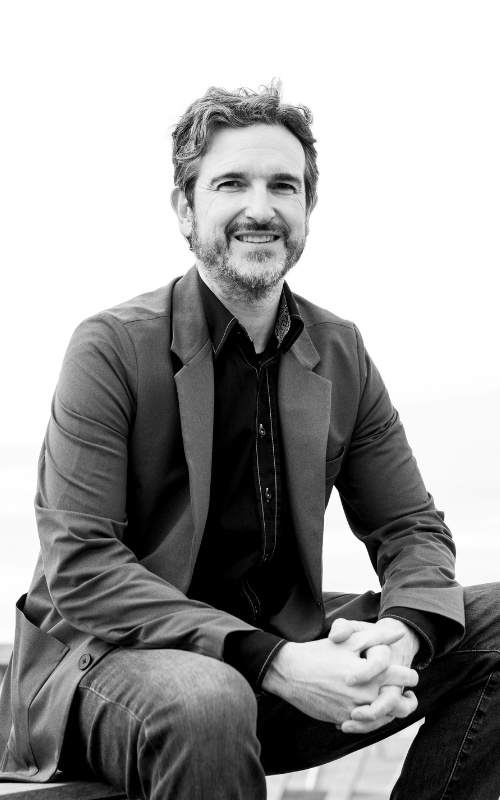
Craig Thomas Photo Credit: Hannah Cohen
Craig Thomas is the co-creator of the Emmy-winning comedy series How I Met Your Mother. His prose has appeared in The New Yorker, The Boston Globe, McSweeney’s, and The Iowa Review. He lives in New York City with his wife, Rebecca, his daughter, Celia, and his son, Elliot, whose unique journey has had a huge impact on his life and work. That’s Not How It Happened is his first novel.
https://www.instagram.com/craigtthomas/ and https://craigthomaswriter.com/
00:00 The Story Behind “That’s Not How It Happened”
08:15 Character Perspectives and Empathy in Storytelling
10:50 Disability and Family Dynamics: Parents and Siblings
15:26 Exploring Agency, Independence, and Shared Humanity
20:55 The Complexity of Emotions in Disability Narratives
27:42 Challenging Myths Around Disability
29:30 The Importance of Authentic Disability Representation in Media
38:45 Reimagining Life with Disability
SUBSCRIBE to Amy Julia’s Substack: amyjuliabecker.substack.com
WATCH this conversation on YouTube: Amy Julia Becker on YouTube
JOIN the conversation on Instagram: @amyjuliabecker
LISTEN to more episodes: amyjuliabecker.com/shows/
Note: This transcript is autogenerated and does contain errors. Please check the corresponding audio before quoting in print.
Amy Julia Becker (00:05)
When a mom writes a best-selling memoir about her family, including her son with Down syndrome, and then her husband is hired to turn that memoir into a screenplay that will be cast with some of the biggest names in Hollywood. That’s the premise of Craig Thomas’ novel, That’s Not How It Happened. And I am talking with him today about who gets to tell the story of disability and how Hollywood represents disability now and how it has in the past.
And why these conversations matter for all of us. I’m Amy Julia Becker, and this is Reimagining the Good Life, a podcast about challenging the assumptions about what makes life good, proclaiming the inherent belovedness of every human being, and envisioning a world of belonging where everyone matters. Craig Thomas is the co-creator of the Emmy winning comedy series How I Met Your Mother. He lives in New York City with his wife Rebecca, his daughter Celia, and his son Elliot.
whose unique journey has had a huge impact on his life and work, and you’ll get to hear more about that. That’s not how it happened is his first novel, and I hope it is not his last, because I really enjoyed it. And I love getting to talk with him about both the myths and the realities of family life. And especially of family life when disability is a part of the story. So without further ado, here is our conversation. Craig Thomas, thank you so much for being here today.
Craig Thomas (01:32)
Thank you for inviting me.
Amy Julia Becker (01:34)
⁓ well, as you know, because I shared this on Instagram and that’s how we got connected, I loved your book. That’s not how it happened. And I think listeners of this show will also love it. ⁓ I’ve been on a quest for many years now for a book that portrays a character with Down syndrome in a full way. And so I liked your book for lots of reasons, but that kind of put it into Gold Star category for me because as the mother of a 20-year-old with Down syndrome, I really resonated both with the
parents and the portrayal of a young man with Down syndrome in ⁓ your novel. So I thought maybe we could start. I’m gonna ask you to introduce yourself a little bit more in a minute, but actually start by giving an overview of the story and the main characters, since I assume many listeners will not know who we’re talking about when I’m asking
Craig Thomas (02:21)
Yeah about them. ⁓ first of all, thank you for having me. I’m thrilled to put my book in front of your listeners. I ⁓ so I’m ⁓ my name is Craig Thomas. I’m a comedy writer. This is my first novel. ⁓ I created the show How I’m at Your Mother. During that time, I became the parent of a complicated child. My first child, my firstborn child, my son Elliot. He’s 19 now, so our kids are very similar ages, Amy. Yeah. ⁓ right it right in that zone of like, now what?
Which is very much what my book is about. and all through ⁓ I co-created the show How Your Mother and co-ran it with my writing partner in TV and film, Carter Bayes. And all throughout that, I was also living this other chapter. You know what I mean? I was that I wasn’t writing about at all. I was living this other life of becoming a quote unquote special needs parent. I talk about it in the book how that’s maybe not a totally optimal phrase all the time. ⁓ there’s probably better ways to say that, but I’m using it in quotes there.
⁓ and I was on this whole other journey that I wasn’t able to write about on a sitcom. Or maybe I could have, but I just didn’t figure it out. I l I lived with a little regret, like, maybe I could have used that bigger platform of the show that was becoming a hit as my son was becoming a toddler. Yeah. And I could have written about that, but I didn’t. I I didn’t put any of that specific material on the show. So in the back of my head, I thought I have to write about this huge part of my life, which which is the biggest learning curve of my life.
There has been no greater teacher in my life than my son. And w without question. And so it it took me all of these years. I try after how much mother I tried to write about it in TV. I pitched TV pilots that were in some way about disability. Yeah. No studios wanted no no networks wanted to make those. Shockingly. Are you sitting down? Believe it or not, studios and and networks think that it’s a niche story for a niche audience and they’re wrong, but we’ll get to that later. ⁓
And then we were trying to write a movie for years and years that was very much based on the events of ⁓ my son’s first six weeks of life in the NICU fighting for his life. He had open heart surgery at two and a half weeks old, weighing three and a half pounds. And it was a life or death fight. And we wrote, believe it or not, I’m Carter Bays and I wrote one of the best things I think we’ve ever done, ⁓ a movie musical. Yes, musical about
those first six weeks. Believe it or not, it was a musical, a drama musical, but with some comedy in it too. Right. Set in largely the neonatal intensive care unit of a hospital based on what my wife and I went through. And it we came very, very close to getting this movie made. And it sort of all fell apart ⁓ in ways that were a huge bummer and had to do with a lot of Hollywood things happening. All all I’m telling is a long answer because all of these are disappointments in ways that it didn’t work out.
To write about this huge part of my life in Hollywood. Right. The the the Phoenix rising from those ashes, the lemonade made of those lemons was is this novel, which is called That’s Not How It Happened. It’s my first novel. It is very much 18, 19 years in the making, ⁓ which I just give you a little sense of with my way too long answer. And ⁓ I’m so proud of it. It’s it’s really ⁓ one of my favorite things I’ve ever written, if not my favorite.
⁓ and and so much of my journey with my son Elliot is in there. And so much, so many of the amazing other people, other families, other wonderful, unique children I’ve met, many a bunch of whom have Down syndrome. My son does not have Down syndrome. He has a different genetic condition called Jacobson syndrome, which we can also get to. But ⁓ that’s that’s the backstory of the book. And the book, the book is about the process of
The plot of the book is about a movie being made about the real life of a family, kind of like your family and kind of like my family. Yep. Maybe. ⁓ and what happens? What what are all the cans of worms that get opened up when Hollywood decides to come and make your story, your family’s story? Well, whose story is it? Whose perspective is it? Yep. Who who is really telling that story? What is that story?
And I I use this idea of a movie being made about a family, which again, I was very much trying to to do that with my own family. I used the the the the colossal crash and burn of that experience not working out to write this novel that I hope is very funny because there’s there’s a Hollywood satire element, the absurdity of how do we tell our stories, right? How does a family tell its story? But also ⁓ I I hope also I did justice or I tried to do justice anyway, to the
The pain and the poignancy and the drama of what again, you’re in my journey and so many journeys of families like ours. ⁓ there’s so many overlaps, right? There’s you have a d we our two kids have two different chromosomal syndromes, but I bet we really speak the same language, is my guess. Like we really are just slightly different dialects of the same language. Yes. And that’s I was able to harness so much of my Hollywood life and so much of my disability parenthood life and get it into this novel. But again, I hope it plays largely like a comedic novel.
Because there’s so little funny content about this topic of disability. And I think that’s what makes it seem inaccessible to people who are not in the disability community. Like, it’s gonna pla this is all gonna be lima beans and vitamins and take your medicine, or it’s supposed to be so inspiring all the time. Or it’s supposed to or it’s so dark and heavy. And none of those are really the truth of the tone of our lives, right? Right. Our lives are still funny.
Their still lives are still ridiculous and we’re still just families, right? Yeah. And I that that’s the tone I was going for in this novel. And I could not be happier that it spoke to you because you are right. You are the target audience. You have a 20-year-old ⁓ child with Down syndrome. ⁓ so like the fact that the novel played as ⁓ authentic to you means the world to me. Thank you for telling me.
Amy Julia Becker (08:15)
Well, thank you for writing it and thanks for giving some of that backstory because certainly reading it, it’s clear that Hollywood you have some insider knowledge and we’ll get to that in a minute. But ⁓ I also loved going back and forth. And I wonder I wanted to ask you about this. So in the story, just for listeners who haven’t read it, there are four main characters, the four family members. So you have Rob, who’s a dad who is somewhat of a kind of washed up screenwriter, and then you have
Craig Thomas (08:41)
Don’t read into that too much. It’s that’s not me.
Amy Julia Becker (08:43)
Page, who’s a mom who has written a memoir ⁓ that is going to be made into a movie and Rob says, let me be the screenwriter, right? Like so that that you’ve got that dynamic. Then you’ve got Emmet, who is the older brother with Down syndrome, trying to kind of make his way in the world, but with and we’ll get back to this with some overprotective parenting happening. ⁓ and then Darcy, who is a young woman, teenager in high school, senior year.
⁓ also trying to figure out herself. So in some ways they are all coming of age, even though the parents are much older, there’s still that happening. and each of those perspectives, on some level, you were taking a risk to, in my view, as a writer, in saying, I’m sure all of us will let you be Rob, right? But like, and now I’m also as a writer going to write from the perspective of ⁓ a
you know, married woman from the perspective of a young teenage girl and as and the perspective of someone with Down syndrome. So ⁓ I’m curious how it felt to take those risks of kind of telling those stories and also whether ⁓ fiction offered you something that nonfiction would not have in doing that. Yeah.
Craig Thomas (09:52)
No, great question. I I think the greatest gift that reading and writing gives us is empathy ⁓ and jumping into other people’s shoes, right? Yeah. And so that I had a lot of fun making Rob by far the most flawed character. The character closest to me. This is not my family exactly. There are little echoes of of all members of my family. My son Elliot, again, he’s he’s nine just turned 19. ⁓ my daughter Celia is 10. But there’s a little, there’s a little bit of all of us in all of these characters.
But it was fun to take the the character closest to me and make him the most absurd and flawed. And he’s creating the most problems. some friends and family, and thank God my wife all read it and were like, You’re not nearly as big a jerk as Rob. You’re really throwing that character at the bus. I’m like, no, it was fun to take the one closest to me and make and then to really try to make that empathetic leap to the to everybody else. ⁓ it’s such a hard thing raising a complicated kid. right. We were so young, my wife and I were we’re we’re
Like 30 years old. We it is our first kid. A lot of our friends had not had kids yet. Same in Los Angeles. And right out of the gate, it was like, we are throwing you into the deep end of the parenting pool here. Yeah. That’s what the universe has served up. That’s where we are. You are gonna figure out how to swim in that deep end, or you’re in trouble. But you’re playing triage that whole time, right? No one’s it is it is survive way before it is thrive, I think. And
⁓ my wife had to put my wife is a very creative person. She’s a dancer, she’s a choreographer, she’s brilliant, she’s a great writer. She was teaching dance, and she had to put all of that so much more on hold than she had planned to be this disability super mom to keep our son alive at first. That’s not an exaggeration. Right. and the way the sheet doesn’t fit the bed in a family, right? And I and I my TV show was becoming a hit, and it was paying for our health insurance.
And it was going to, if it stayed a hit, hopefully pay for the enormously and overly expensive lifelong enterprise of raising a child and then a a young adult or adult adult with a disability. There are many flaws to to that in this country. I don’t think we’ve nailed that as a society. And it’s really scary because you you you look ahead and you think this is not well, twenty once you’re hit twenty one, you’re on your own. It’s like this is a lifelong endeavor.
And it is it is underfunded and it’s very complex. And there is this feeling that after a certain age, we all call it the cliff, right? they turn 22 and we’ll fall off a cliff. What’s the rest of life? Yep. ⁓ what do they do? How do we pay for it? How do you like all these huge questions that we should really have better answers for? And that’s part of what I’m writing about in this book. ⁓ but I wanted to make the empathetic leap into my wife’s shoes and what th things I knew she was thinking and feeling. ⁓
As a person who had to redirect so much of her brilliance and creativity into the very, very worthy ⁓ but very all-consuming task of keeping at first keeping our son alive and then second making him thrive. ⁓ which she did both brilliantly and he is thriving at 19 years old. I should I’m gonna flash forward my TV show flashback and flash forward all the time, how much mother I was so I will jump around in time and just say, 19 years old, he’s living away from us at a residential school.
For young adults with disabilities in Cape Cod. It’s amazing. He’s made he’s made a kind of leap over at least the first part of that cliff. There are many cliffs, but ⁓ he he’s come so far and so much of it is because of everything my wife poured in. But I wanted to write about so Paige ⁓ as a character, the character of Paige. ⁓ she was a writer and she gave up her career to to to meet Emmett who their their son Emmett’s needs from birth through his two heart surgeries he had in my fictional version of
You know, they’re parts of Elliot and Emmett. They’re they both have knee names. I couldn’t even come up with another letter. But it’s not Emmett. It’s not exactly my family. I wanted to make that leap into what what was my wife really going through all of these years? I know it. We’ve talked about it a lot, but sitting with it and existing in that character’s perspective taught me a lot. It really did. I it really sp spending two years thinking about that.
And then jumping around the perspectives of first of all, it’s very fun to jump perspectives. Every few pages in my book, you can’t get bored reading my book, I think. It’s a page turner because each section is short and you jump perspective to perspective and see how they have very different takes on what’s happening. And it’s very fun to see the interplay between those four POBs, which I’m sort of toggling through all the time, ⁓ to meet my own low low attention span. I won’t even talk about the low attention span of readers. I’m like, if I can keep myself from from becoming bored, I will keep the reader from becoming bored. ⁓
But jumping into the perspective of Darcy and the neurotypical kid who just in my 19 years in the disability community, I’ve met a lot of the neurotypical, quote unquote, easy sibling. Except no one’s easy. No one’s uncomplicated. Right. And those siblings are forced to understand at a young age that they have to sometimes take a back seat to bigger needs.
And as hard as you we try as parents to make sure they know they’re just as important, they’re just as loved, it’s very hard when when you’re when you’re very young, you know, your your earliest memories as the quote neurotypical sibling. I think you’re you’re you’re ingesting this feeling that there’s a bigger emergency than you a lot of the time. Yes. And I wanted to give empathy to that character for my daughter’s sake. And I wanted to get inside where Emmett is at, as he’s he’s a little bit older than my son. That’s me imagining my son’s next.
Few years, and where he might be going, what he might be thinking and feeling about, and watching his personality grow up to the point where he has stronger opinions about things. My biggest goal in this novel, in some ways, was to give Emmett agency and charisma and vision. And he had ideas and plans that are different from what his parents think he’s ready for. And I really wanted to explore that and make that leap into his shoes.
Amy Julia Becker (15:57)
Loved that part, especially because you have on the one hand, ⁓ these parents and especially this mom, Paige, who could be seen as heroic, right? She’s sacrificed her career, she’s made so many things possible for Emmett, right? She’s like established a business for him. Like she is like making his life happen. And yet we also get a sense pretty early on that he’s starting to be like, but what if this is not the life that I actually want? Yeah. And what if, on some level, because of how you’ve raised me.
To believe that things are possible for me, I’ve started to think that I want possibilities outside of what you’ve imagined. Which I’m I will add, our daughter Penny is 20 and has very much had not just parents, but also people in the school system and whatever who very much said you need to believe in yourself and in your possibilities. And so she recently has and listeners to this podcast might know this, like has announced to us that like she has plans to go to Clemson University to the Clemson Life program. She may or may not get into that program.
But she’s like, yeah, I am not living at home when I’m vision. And so we’re like, wait a second, that wasn’t our place. You know, and it’s like, how do we as parents, like, ⁓ certainly there’s a role of being you know, properly protective, but it’s so tempting to be overly protective. And I think you captured that dynamic really well. Yeah.
Craig Thomas (16:59)
Yeah, I love it.
It’s
hard to police ourselves in doing that, I think. It’s really hard, right? It’s like I think part of it is this thinking error, and I try to explore this in the book of we talk about when our kids turn 22, that’s the cliff. You know, that’s the cliff we’re gonna fall off. That’s and and in some ways it is, right? School runs out, certain supports and services run out, things change about disability benefits, and all of it, it’s very complicated. It is a cliff. But the idea that there’s one cliff.
There’s one and only one cliff and you can somehow solve it forever. In the book, Paige Paige does she’s very proud that she solved. She creates two amazing things for her son. She creates a group home for him. Yep. And she she says, Rob made the money with his big successful screenwriting career that’s not as successful as it used to be, but it paid for this to happen. Yep. And he now lives in a group home with a few of his friends that he works with at her other great creation, which is she didn’t see a good place for her son to work. So she created one.
It’s this cafe called Cafe Everyone, where most of the employees have some type of disability. This is based on real people I know who did this in the Berkshires in in Ma in Massachusetts, and I can talk about that. and she fancies herself that she solved the this cliff. And she’s not ready for Emmett to decide there’s another cliff only a couple of years after that, that he’s ready to take some other leap off of and see if he can fly to go find his next cliff five years later, whatever that’s gonna be. And I think it’s
That that’s one thinking error. And the other thinking error I think I was exploring in the book is all of these characters think Emmett’s the guy on the cliff. But the big reveal of the book, or the deeper understanding I hope, that comes across in the book is all four of these characters are on some type of a cliff. Yes. All of them are at some identity inflection point. Yeah. And it’s just I was going, I was trying to capture the the shared humanity. I think we some we can be so othering of disability in this culture. We can be so
We can put it off in some other zone where it’s like, well, this person with a disability really has this huge leap to make coming up. Yeah. No. We all our life our lives are all a series of leaps and they keep going. And just when you think you solved one, there’s another one coming coming down the pike to you faster than you thought. And that’s what’s happening here. Paige thinks, well, I’ve solved this. And Emmett has an idea that that now complicates it. That he and his big idea is he wants to marry his girlfriend.
Whose name Amy. Yes. And he wants he he has lived in this group home for a couple of years and worked at this job for a couple of years. And he now feels ready to make another leap to begin another chapter, that it will be a greater degree of independence and will complicate all kinds of things financially, legally. There’ll be all kinds of complexity. And Amy’s p mom and Emmett’s mo parents, Rob and and Paige, none of them think the that they’re these kids, and they keep on using the word kids. Right.
And they keep on having to catch themselves and say, No, well, I they’re young adults, but right they still see them as kids, which is really hard. Yeah. And I think we probably both struggle with that too. I don’t want to speak for you, but I do. ⁓ and yeah, I I I was I was interested in how juicy and complicated that is, and how in the end, we’re all on our own cliffs. And I I I try to erase the diff the difference between the disabled character and the other characters and just saying, no, no, no. They’re all just characters.
And we all as people, we all we’re all the main character in our own story. The book is very much about storytelling and who you know and who has agency and who tells the story and whose story is it. And Emmet Emmet thinks it’s his story and he’s right. Right.
Amy Julia Becker (20:57)
So I w let’s talk about storytelling. So this is ⁓ okay, so Paige early on is talking about the movie that her husband Rob wrote ⁓ about kind of based on their own romance with some tweaks. And then she says the movie I wanted to see now was the one that happens after the credits, after the big proposal on the center field jumbotron, after the charming lighthearted characters get hit by a real life wrecking ball, shattered, pulverized, forced to gather up the tiny pieces of their former selves and glue them into something new.
Letting go forever of the perfect lives they’d planned on having. That’s the movie I wanted to see. But Hollywood doesn’t make that kind of movie. So I wrote it as a book instead. Yeah. So I just that’s a little bit of a way into this conversation of what are the stories that we are willing to tell about family life and family life with disability? ⁓ you know, and why does it matter that we tell the real story?
That we tell the sanitized version of the story. yeah, how we tell the story. I have a few more questions I’ll get back to, but I would love to hear you just start talking about that.
Craig Thomas (22:01)
Yeah. ⁓ no, it’s a great question. It’s we do I think disability is is portrayed, I I referenced this earlier, but it’s it’s often portrayed in this way that is supposed to be very manageable and inspiring. Look what this person has overcome. Have you seen that 30 second clip on Instagram as you scroll? It’s a kid with Down syndrome scoring a touchdown. And it’s like that is your that that is the allotted amount of disability most people might get in their day that aren’t and in whose lives aren’t really touched by it. And it’s like
⁓ so disability is there. I there’s I did not coin this term, but that term inspiration porn. The idea that the way people who don’t understand disability are supposed to be okay with it is that it’s supposed to always be inspiring or sweet or cute and or touching. And then there’s also this feeling that ⁓ well, one of so I pit I sent this manuscript. It’s my first novel. I sent this manuscript to two different book agents. One of whom became my book agent entirely got.
what the book was. And it is it’s been wonderful and I couldn’t be luckier that I found her. Unfortunately, I heard back from the other one first. And the other person did not understand this book. And I’m I’m this I’ll I I think this will help answer your question. I hope it does anyway. Here’s the note that that person who does not understand the disability community, she gave me this note on the book. She said, I just think the whole book plays too light because Emmett is too happy.
most of the time. Meaning I love your face when I said that.
Amy Julia Becker (23:31)
Which is so interesting.
Like I
Craig Thomas (23:36)
If you’re listening to this audio, go to the YouTube and look at Amy’s face. Just watch the video when I say that because her face just exploded. Big reaction.
Amy Julia Becker (23:43)
Because what’s so great about Emmett is that he is like a lovely happy person for sure. And he has like very deep real emotions, whether that’s there’s this whole thing about a video of him as a kid being upset that has a pl but also in the real moment of like having this situation where he realizes that his parents are like micromanaging his life and he doesn’t want that and that his girlfriend’s mom is doing the same thing. I mean, he is like devastated. But in a again, in like this very appropriate
Craig Thomas (24:10)
Yes. Thank you.
Amy Julia Becker (24:12)
appropriate way to his character. I mean that’s not to mention the idea of like playing it light what you were saying earlier about just like we also have like fun and good normal like just average interaction. I don’t know. That is really fascinating
Craig Thomas (24:17)
Yeah and and I would
Can also be funny. Yeah.
What I meant when I said I think we’re conversant in the same language, even if they’re slightly different dialects. ⁓ because everything you just said is how I felt. I felt so the manuscript wasn’t that different than the finished novel. It the novel got better and better. It’s my first book. I had a brilliant editor. Again, I wound up at the right book agent who said, I will find you the right editor who will understand this tone. And all of that happened, and it was lovely. But this one first and unfortunately was the first reaction besides like two friends that read the book.
Yeah. one of whom was a mom with Down syndrome with a kid with Down syndrome who had founded this the inclusion school my son went to in New York, who was another inspiration for Paige. The people that opened up Ca the the sort of version of Cafe Everyone, and this woman who founded she didn’t see a right school for her son, so she invented one. And my eventually my son got to go too. So I’ve met some we meet amazing people on these journeys, don’t we? We meet amazing people on these journeys. We did not sign up for these journeys.
But if you keep your eyes open, you’re gonna meet the greatest people you’ll ever meet on these journeys. There’s all these hidden gifts and this thing that when it first happens, it does not feel like a gift. It feels like a challenge, it feels hard, and it is hard. And then there are all these gifts. And that’s the tone of my book, and that’s the tone of Emmet as a character. That’s why I didn’t like that note, because that note ⁓ the reason I said the manuscript wasn’t that different, Emmett still had the full emotional arc you read in the book.
In the manuscript, you know, in that draft. Meaning he had highs, he had lows. He is devastated at times in this book. Emmett is. He’s also at other times incredibly joyful and charismatic and fun. And that’s because that’s who my son is. Yep. And that’s because that’s who the the founder of the ideal school or my son went, Audra, her son Max, that she she co-created the school so Max would have a school that would really see him. Max, who’s a few years older than my son.
He’s this amazing drummer. And I he’s the one in sp that inspired me to teach my son the drums. I’m a drummer too. And I said, I didn’t think my son could play the drums, but watching Max as a role model four or five years old in Elliot made me realize it’s I I’m gonna try. And I did, and my son’s a kick-ass drummer now. And the joyfulness and the natural like charisma, like the stage presence when then when Max performs, and now my son performs on stage in front of hundreds of people playing drums. And the idea that
To this person that read my book and didn’t want to represent it or wanted me to change it so she would represent the book or whatever it was, what I felt she was not seeing was that all of this can be true at the same time. It doesn’t only have to be dark, it doesn’t only have to be inspiring, it can be funny. ⁓ and I just felt like this was someone that didn’t understand what I was going for, but I but it it actually made me more passionate to put the book out there. And this is my answer to your question, which is to say,
I think we’re not even this very literate, smart person who’s a book agent and I’m sure is a wonderful person did not understand the tone I was going for with this book at all. And it just makes me feel it actually gave me confidence in the end that this book should exist in the world. Because if more books like this exist and show that you can have levity and you can have comedy and you can also have real poignance and real sadness, that this is just it’s humanity. It’s not disability humanity, it’s humanity.
Amy Julia Becker (27:42)
Right. Well, and I do think you like one of the things I think I particularly appreciated about the book is I think of there being four myths around disability, all of which, of course, have some truth to them, but they become these all encompassing stories. So you’ve got the tragedy story, you’ve got the burden story, you’ve got the joke, like we’re just gonna use disability as an insult or a joke, ⁓ and then you’ve got the inspiration.
Yeah. And all of those, again, we could take some truth from all of them, but none of them are actually in any way like the whole picture. And I think you were both poking at those ⁓ kind of tropes.
Craig Thomas (28:19)
All of that is in my book. Yeah, I’m sure
Amy Julia Becker (28:22)
But also really ⁓ doing a great job of humanizing in lots of different directions. I do find as a nonfiction writer who writes a lot about our family that it is very A it’s tempting to tell the inspirational story. because I like that story. I would like for that to be our story.
Craig Thomas (28:39)
Right. It
is it’s very seductive to want to tell that story because there is that. But there’s that can be that can be very limiting to to feel to feel like we have to serve up our story that way so it’ll be palatable to people. doesn’t give the full picture to to
Amy Julia Becker (28:57)
And
then on the flip side of the moment, I feel like it’s not always my story to tell if something is going hard, like if it’s not going well. And so I’ve had to try to figure out like a way to convey this is not all roses and sunshine. And if you are someone who is having a hard time in your family, you are not alone. And but I also don’t want to convey it’s such a burden to be a parent of a child with disability. I don’t feel that way.
⁓ and I do think so so it I just think again the book did a great job in all of those. ⁓ I also want to make sure I talk to you about like disability representation in Hollywood. So y this again is like a theme of the book and yes, major, major plot point and goes in lots of different directions. Yes. But I think about, you know, these ⁓ well, there’s a place where ⁓ so the book
Craig Thomas (29:38)
Yeah, that’s
Amy Julia Becker (29:50)
The memoir that Paige has written is going to be turned into a major Hollywood movie and everyone is being played by different actors. And Darcy, the ⁓ the teenage daughter, is at a table read for this new s you know, screenplay. And at the end of hearing the ⁓ non disabled actor who is meant to be portraying Emmet, ⁓ she s characterizes it as an important performance in quotation marks, dedicated not to Emmett.
But to Oscar. Yeah. And it was just this like great kind of pithy line that she has to basically say, like, what are we doing here? Why and this is a big plot point of like, why are we not casting someone with Down syndrome to play someone with Down syndrome? which again, I’ve I grew up on movies with non, you know, autistic or not whatever adults.
Craig Thomas (30:43)
It still happens. It still happens. Like versions of that are still happening ⁓ fairly regularly.
Amy Julia Becker (30:47)
I guess what I wanted to ask is like, can you talk about just for listeners who are like, wait, I never knew that was a problem? You know, like w why is it a problem to ⁓ not represent like what the way that we represent disability? What are the problems that come up when we’re thinking about that and why does it matter?
Craig Thomas (31:05)
Yeah, I mean there’s a great phrase by that I I I I wish I could give exact credit, but but in the disability community, which is not about us without us. Mm-hmm. ⁓ that it’s that simple. You know, if if you’re gonna portray our stories, yeah use use use artists that have disabilities. You can’t portray someone visually that doesn’t have that. You know, you have to do it right. And without getting into the very many weeds of when I was trying to make a movie.
⁓ about my inspired by my son’s early days in life. There were characters in that movie who had disabilities and there were discussions from the people financing the movie. And again it all fell apart. ⁓ an actor quit at the last minute. They’re a very famous actor. You definitely know who she is. I’ll t I’ll tell you off off mic maybe. boy. I’m not quite bitter enough still to like name names on ⁓ I was very bitter at the moment a few you know five years ago when fell apart because we came
Insanely close to making this very unlikely, but I think wonderful movie. And an actor kind of actored out and quit because of their own personal things. And the I we could never put it back together again. It was just one of those, like it blew away like dandelion spores in the air. Yeah. but during that process, we were coming so close. We were about to go location scout in Vancouver to shoot. It was like we had money. There were debates about casting certain fairly key roles that should have been people with disabilities played by actors of people with disabilities as perhaps.
with an actor that did not have a disability. Yeah. And this was it was amazing to me that this was, you know, four or five years ago and we’re still in this debate. And I was saying, no, no, it can’t be that. And the money people didn’t understand that. Well, what if that per what if we cast natural with a disability and it’s a musical and they can’t sing well enough? Said, No, no, it’s gonna be okay. They’ll sing how they sing. And it’s, you know, it’s th this this is what the movie’s about. And I it was very it was there were debates and arguments and it wasn’t easy. And again, it all kind of fell apart anyway.
But it was that blodged in my brain is like, my God, it’s the 2020s, and we’re still talking about this. And obviously, the very simple answer is if you can’t have an opportunity to give an opportunity to an actor with a disability, that opportunity means so much more to that actor than any other actor, right? Yeah. It it it’s there’s just so many fewer opportunities. You have to take the leap. Again, we all have leaps and
Casting directors and studios and networks and financiers, we you need to take the leap of realizing you you can’t fake the the humanity of that journey. And you have to do it right. Jumping way ahead, flashing forward again. I’m very proud of the audiobook of my book. Yeah. in addition to two of the actors from How I Met Your Mother being Rob and Paige, the Parents, Emmett is voiced by an amazing young actor named Kevin Ayanucci.
Seen this great movie called Champions with Woody Harrelson, where like Kevin, Woody Harrelson, and Caitlin Olson from It’s Always Sunny are the champions great. And Kevin, I saw Kevin in that movie. And so did my audiobook producer, wonderful audiobook producer Jennifer Lopes at ⁓ at HarperCollins. And we both were so enamored of Kevin and his just natural charisma. Like he just he he was Emmett to me. ⁓ and we offered him that job and he took it. And he’s the voice of Emmett in my audiobook. And my pr the audiobook producer Jen, she said.
Amy Julia Becker (34:02)
Thanks so much.
Craig Thomas (34:27)
I want you to know, I’ve been doing this for like twelve years. I’ve never once gotten to cast an audiobook narrator ⁓ who isn’t is an actor with Down syndrome. This is the first time that’s happening. This is a groundbreaking moment for me. And she’s been doing it a dozen years, or maybe it’s more. Maybe it’s fifteen years. I don’t know. And that meant the world to me. Because that was my book. This is before the book came out. The book has come out and it has gotten great reviews and it has sold well and it’s been amazing.
But I that if it hadn’t have done any of those things, but I still had that one moment. That moment, I just I was able to step outside of life for a second and say, the book just made the thing happen that the book is about. Somehow it gave a job to an actor with Down Center who never had that opportunity and was not going to. And he crushed it as Emmett’s so great in the audiobook. And people are really loving that audiobook and loving him in it. So that that for me, that’s why it matters. It matters because
An audiobook producer had never who does that for her living had never gotten to offer that job.
Amy Julia Becker (35:29)
Well, and I get again back to this idea of reimagining the good life, but of like shaping the imagination of our entire culture. Like and then sure, this is like a little way, but it’s also a big way to be whether it’s the film champions or the audiobook of That’s Not How It Happened, there’s an easy way for anyone in your position to now be like, No, look. Like this is a great movie. This is a great audiobook and
Look who was and I’ve I’ve heard after I posted about loving your book, I heard from a couple of people who had listened to the audiobook and were like, Yeah, you have to listen to the audiobook. It is so well done and I would imagine brings even more life to the characters.
Craig Thomas (36:08)
It does. It’s fantastic. It’s I love it so much. It it it won a prize from Kirkus. The Kirkus Audiobooks gave it a gave it a an earphones award. It’s like what it’s like an exceptional audiobook award. And then they featured it on their Kirkus podcast. And like I think that’s all because of how amazing. I I l I Josh Radner and Kobe Smoldiers How Much Mother are two of my favorite actors and humans. They’re amazing in the audiobook. And the young actress Marley Watson, who’s the voice of Darcy, is amazing.
But to me, just like Kevin is so amazing and charismatic. And he grounds the book and gives it this dimension, the audiobook, and makes it this real, this whole other experience, I think. ⁓ and I’m so honored by that. And to me, the I was nervous writing that character. I w writing that character. I am the parent of a a child with a different syndrome. I also was a a person without a who does not have a disability writing a character with a disability. I was nervous. I really wanted to get that right. I really tried to attune to
who my son is, who all these amazing kids and now young adults that he’s gone to school with for all of these years. ⁓ and again, I went to the school that was founded by three fierce, wonderful Down syndrome mamas. Yep. That that one of whom is Audra and her son is Max. And like these were people that I had the benefit of just sponging up their energy for, you know, my son went to that school from kindergarten until age 18. And I just had this is this was a story I wanted to tell, but the mo the thing I most wanted to get right was
that voice. And when I hear Kevin performing that role in my audiobook, I just feel like he, he brings so much to it and he removes all of my fears. I can listen to it like someone else wrote it and just enjoy it as a performance. And I that I I really love that. So I hope I hope people check that out.
Amy Julia Becker (37:48)
Well, I still haven’t listened to the audiobook, so that is next on my list because I would love to, yeah, kind of read it again, but in that way. So I that’s I love that that happened. I also ⁓ I wanted to make sure that I included just this very short quotation from Emmett in the book saying he says, Sometimes real life is better than a movie. and I don’t want to give away the ending of the book, but ⁓ I did wanna ask you just about that line because it seems like it might sum up
some a lot of what we’ve been talking about and of what the book is about in terms of just that sense of complexity and of ⁓ as much as we like our happy endings and as much as we ⁓ like our three part dramas and they’re not I mean sometimes we can even see our lives in those ways. ⁓ at the same time that idea that sometimes real life is better than a movie, I wanted to ask you to just like kind of reflect on that a little bit.
Craig Thomas (38:45)
Yeah, there’s it’s a great question. I mean and and I love I love the name of your podcast. I love reimagining the good life. I d this is about reimagining. This book is asking people to reimagine what life looks like for a young adult with disability, but what life looks like for everyone around them that helps create an inclusive space in the world for them, and then honors that space and and takes the step back to let
Robin, Robin Page need take a step back and let Emmett explore the space they’ve created. They’ve created enough space that he’s now creating his own space. He’s out he’s going Christopher Columbus on them and he’s going, he’s he’s starting to go sail the world. Yep. And it’s there’s reimagining is a very good verb, I think, ⁓ for what we all need to do. And we we we need to think beyond what we’ve grown up seeing in pop culture and now what we’re seeing in social media too, because
20-second inspiring clip is not a whole human life either. No. and I think what I don’t want to give away the ending of the book either, but what Emmett is saying there is even people who love me can imagine my life for me. And Hollywood can pretend that it’s going to make my story and it’ll be some big inspiring movie. But none of that really matters because the most important.
Opinion on my life is my opinion on my life. Yeah. And I Emmett have have the final say at what about what my story is and what my next chapters are and what the cliffs look like and what the leaps look like and what the falls look like and what every part of it looks like. That’s my story. And I think if we can learn to honor those stories, those of us who do not have a disability ⁓ yet, right? If we live long enough, we’ll all figure out.
How our abilities will change, ⁓ which makes disability a very universal experience. And again, to come back to something I said early, this is not a niche audience. Stories about disability are not a ni are not niche stories. These are these are stories about humanity. And ⁓ the largest minority in America, taken aggregately, is a disability community. Absolutely and again, there’s lots of different versions, there’s lots of different dialects, but it’s kind of a shared language, I would argue. And it’s an enormous audience. And now talk about all the people who love somebody.
Who has a disability, either they were born with it or they develop it. And now we realize that we really have to tell these stories and that ⁓ that we have to create space for those stories to happen and grow and take twists and turns that maybe we even we as parents maybe twists and turns that we didn’t think our kids could or should do. But we have to, we have to let them try and we have to create the space for that. And I think when Emmett says sometimes real life is better than a movie.
He’s saying you can keep your movie version, Hollywood. And my parents, I love you. You’ve got me a long way. But I got I have to take it from here and I have to keep building out my own story. What does an adult life look like with disability? I’ll show you, is what Emmett’s saying there.
Amy Julia Becker (41:50)
Hm. Well, I think that is where we’re gonna end this conversation because it’s a perfect place, ⁓ even though I could talk to you for hours. And so ⁓ thank you. Thank you for your book, thank you for joining me here today. It’s been such a treat.
Craig Thomas (42:01)
it’s a pleasure. Thanks for having me.
Amy Julia Becker (42:07)
Thanks as always for listening to this episode of Reimagining the Good Life. I’m excited for the upcoming conversations you will get to hear with Dania Ruttenberg and Brian Brock and Brian Trapp. I hope these conversations resonate with you. They certainly do with me. If they do, I’d love to invite you to subscribe to my Substack newsletter. It’s also called Reimagining the Good Life. It extends this same work.
Over there we also challenge assumptions, proclaim belovedness, and envision and build a world of belonging where everyone matters. You can find the link to that in the show notes. And if you’re enjoying the show in general, it is always a tremendous help for you to follow the show, rate it, review it so others can find it, share it with someone else by a text or email or a word of mouth, and send questions or ideas or feedback anytime using the send us a text link at the end of the show notes.
As we come to a close, thank you to Jake Hansen for editing this episode, to Amber Beery, my director of content for producing the show, and thank you for listening. Let’s all keep reimagining the good life together.
my weekly Substack letter
My newsletter delivered to your inbox that challenges assumptions about the good life, proclaims the inherent belovedness of every human being, and envisions a world of belonging where everyone matters
LET’S REIMAGINE THE GOOD LIFE TOGETHER. SUBSCRIBE TODAY!
Get the Free Resource!
An illustrated guide designed to help you identify and create spaces of welcome and belonging—download today!