REIMAGINING THE GOOD LIFE PODCAST
S9 E6 — In a season of parties and entertaining, it’s good to remember that hospitality means something very different—welcoming the stranger and caring for one another. As Kevan Chandler explores in The Hospitality of Need, hospitality isn’t perfection, but proximity, generosity, and mutual care. Born with a progressive disability, Kevan cannot live alone, yet dependence has expanded his life: from hiking to an Irish monastery on friends’ backs to forming deep community at home. In a season of jolliness, his story reminds us of the reality of our human neediness, just like the neediness of the baby lying in the manger on Christmas morn.
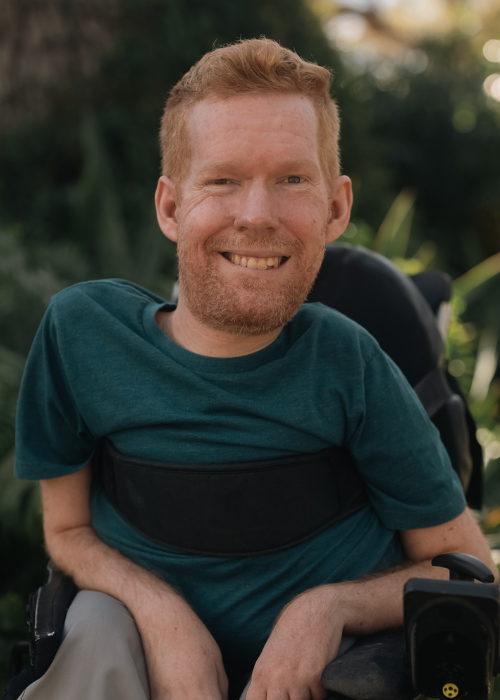
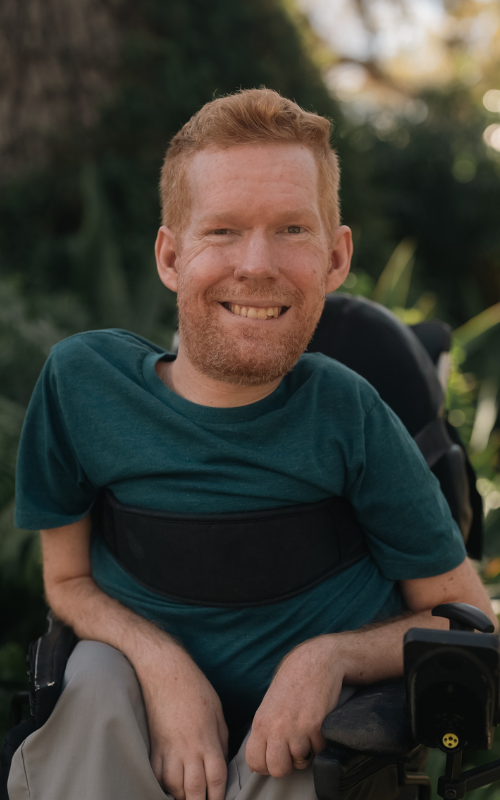
KEVAN CHANDLER is the founder of the nonprofit organization We Carry Kevan and speaks worldwide about friendship and disability. He and his wife, Katie, enjoy doing everything together, including growing vegetables and reading to each other.
Kevan was the second of his siblings to be diagnosed with spinal muscular atrophy, type 2, a rare neuromuscular disease. In 2016, he and his friends took a trip across Europe, leaving his wheelchair at home, and his friends carried him for three weeks in a backpack.
An avid storyteller, Kevan is an author and speaker worldwide about his friendships and unique life with a disability, being a featured speaker for Tedx and Google, as well as various conferences, pharmaceutical companies, and universities. His latest book is The Hospitality of Need.
_
WATCH this conversation on YouTube: Amy Julia Becker on YouTube
SUBSCRIBE to Amy Julia’s Substack: amyjuliabecker.substack.com
JOIN the conversation on Instagram: @amyjuliabecker
LISTEN to more episodes: amyjuliabecker.com/shows/
Note: This transcript is autogenerated and does contain errors. Please check the corresponding audio before quoting in print.
Amy Julia Becker (00:05)
friends, I’m Amy Julia Becker and this is Reimagining the Good Life, a podcast about challenging the assumptions about what makes life good, proclaiming the inherent belovedness of every human being, and envisioning a world of belonging where everyone matters. If you are listening to this episode in real time, you are in the thick of the holiday season and so am I. And I am excited for you to hear this conversation with Kevin Chandler about his book, The Hospitality of Need.
In a season marked by parties and entertaining, it can be really good to remember that hospitality can mean something very different. It means welcoming the stranger in, it means caring for one another in community. It’s about simplicity and humility and neediness. And in a season filled with jolliness and twinkling lights, it can be helpful to remember the reality of our human neediness, like the neediness of a baby lying in a manger many, many years ago.
Kevin Chandler is my guest today. He’s also the founder of a nonprofit organization called We Carry Kevin, who speaks worldwide about friendship and disability. I talked with them a few months ago on my other podcast, Take the Next Step, and we just had so much more to talk about that I asked him to join me here for another conversation. So you will get to hear more about him as he tells his story here today. I am so glad that you get to hear this conversation.
Kevin Chandler, thank you for joining me here today.
Kevan Chandler (01:38)
Yeah, thanks for having me.
Amy Julia Becker (01:40)
Well, I interviewed you a few months ago for my other podcast, Take the Next Step. And I loved that conversation so much that I wanted to talk more. And I also wanted to introduce you to this audience here at Reimagining the Good Life. So thank you, first of all, for conversation number two. But I also thought maybe we could start with even that concept of reimagining the good life, because in some ways your life embodies.
a reimagined good life. And maybe you could start by way of introduction to you just by explaining to our listeners what I mean when I say that.
Kevan Chandler (02:14)
Hmm. Yeah, I actually the title jumped out at me. It’s like ⁓ yeah, this is great. I’m excited about this so Yeah, a little bit of background and I’m sure some of this is recap for people who read the other interview, but ⁓ I Grew up with a neuromuscular disease called spinal muscular atrophy. ⁓ It was onset
basically from birth and so I’ve been in a wheelchair, power wheelchair my whole life and fully dependent on others and it’s a progressive disease so that that dependence becomes more and more and and that that could be it’s tempting to see that as a bad thing as a hindrance to the good life and yet and yet ⁓ what the Lord has shown me ⁓
through His Holy Spirit and through friends around me and through my family that ⁓ actually interdependence and inviting people into your need is ⁓ a really wonderful thing that can lead to deeper relationships with one another as well as a deeper relationship with the Lord and ultimately, you know, ⁓ a glimpse into what we get to experience.
for eternity in the kingdom. And ⁓ so that’s the big picture. ⁓ In 2016, ⁓ even though I had lived my whole life of inviting people into my need, in 2016 I kind of got this extreme encapsulation experience of that when my friends and I went to Europe and
For three weeks we left my wheelchair at home and they carried me in a backpack. And I mean, how much more dependent do you get than that? And yet it led to having these amazing experiences together, overcoming a disability in unique ways and inspiring other families with disabilities to ask all the questions of where’d you get this backpack?
Where’d you get these friends? And so we started a nonprofit called We Carry Kevin. And the goal of that is to come alongside families with disabilities to help them think outside the box when it comes to disability and community. And part of that is offering the backpack to families to be able to see the world. And it’s fun because the backpack is just
⁓ a tool, it’s an instrument to get something done, but it’s really, it’s the start of a conversation about inviting people in and thinking differently about ⁓ how you’re going to see the world and be part of things and invite people into being part of that with you. So that’s what we get to do and that’s where we are. ⁓
I’ve been doing that for eight or nine years and got married five years ago to the love of my life, Katie. She’s out running errands, otherwise I’d bring her in on this. But yeah, we get to have that adventure together of coming alongside these families and also sharing the story of those three weeks in Europe, but also
the rest of my life. I was re-invited people in and what that looks like. So that’s our life.
Amy Julia Becker (06:12)
Yeah, and again, I think that idea of reimagining ⁓ for families and again, yes, this is about disability, but I think it’s for all of us as humans who see our needs as limitations. And it’s not that they’re not limitations. You obviously, as you said, you’re like, how could I be more dependent than being in a backpack, you know, not even having the wheelchair? And on the other hand, that opens up this experience that is almost I mean, was like.
hard to really believe that you went for three weeks to Europe with friends, especially in some of the adventures you described, which I think we’ll get to eventually in this conversation. But for me, when I was reading your book, I was thinking about our daughter Penny, who has Down syndrome, so different disabilities than what you’re experiencing. it really did force me to question, are the things that the limits I’m placing on her that are not necessary, that really just have to do with me not imagining her life being
filled with other people, not dependent upon me. Yes, dependent, but dependent not just about me, but other people. And that idea of like also being able to actually go places, not having to live in my house or very, very close by to me. Your book really helped me to shape an imagination for something.
more for her, even though I don’t know exactly what that will look like. So and I guess have I even mentioned this yet? You have co-written a book with Tommy Shelton and it’s called The Hospitality of Need. And I actually I also wanted to talk about that title. And we’ve mentioned already the idea of neediness. But I thought we maybe could start there because one of the things you write about is we can be people who deny our needs. That’s a very human. ⁓
Instinct, perhaps, to deny our needs. You also write that our needs can become idols, like something that we focus too much on. So could you talk about both of those ends of the spectrum, like denying our neediness, idolizing our neediness, and kind of what you mean by that, and also how we can maybe approach need differently?
Kevan Chandler (08:15)
True. Yeah, well, I mean, you just said it great, I won’t say just like you said, but, know, we are a culture of pendulum swings, right? We tend to feel strongly about something until we feel strongly the other way about it. And we go back and forth and… ⁓
What I’ve realized with need is that ⁓ there are these two drop-offs of seeing our needs or others needs. So let’s just say need in general, like either seeing need as a burden, something to be ashamed of, something to hide away or as you said, deny. And then the other drop-off is seeing it, ⁓ holding it up as an idol and saying, ⁓
your whole world should revolve around my need or my child’s need or my friend’s need. ⁓ This is the end all be all ⁓ and to the neglect of others needs. ⁓ And there’s this ⁓ kind of tightrope narrow road in between in which we see our needs as tools.
to serve others and opportunities to care for one another and grow in our fellowship with one another and toward the Lord. And so I feel like that is where God has called us to live and it’s a healthy view of our needs that it’s a reality where, yes, we have needs. We’re not going to deny that, but…
We are going to put others first. ⁓ And sometimes that means putting others first in the process of inviting them into ours. And so as I ask a friend to help with the restroom or get me up in the morning or go on a road trip, I see it as, ⁓ you know, there’s the obvious they’re helping with this, but also ⁓ how can I serve them through that? ⁓ Well, I can serve them through
the quality time that I can give them my full attention or I can give them a break from whatever else they’re doing or ⁓ I can entrust them with me and with my needs and that’s an empowering thing. And sometimes it’s just, my needs being met so I can turn my attention on you and what you need and so. ⁓
It makes me more aware of how I can care for you in the process. And so, it’s such a ⁓ kind of delicate ⁓ road to walk. ⁓ even the idea of I’ve been asked, ⁓ I hope I’m not getting ahead of you, but because you might ask this, but people have asked like, ⁓ what’s the difference between asking for help and inviting someone into your need?
because that’s a terminology that I’ve tried to be really intentional with and I would say the difference is your posture. Are you seeing this person as a means to an end or are you seeing ⁓ them as a three-dimensional person that you are ⁓ inviting into your home, into your life, into your deepest things and you…
⁓ recognize that as you invite them in, they have their own home and life and deep things that they’re bringing with them. And you get to participate in caring for them at the same time in this mutual vulnerability and care for one another. So yeah, it’s two easy drop-offs that I think most of us end up in at some point or another. know that I’ve
I’ve struggled with both over the years and by God’s grace and the Holy Spirit and ⁓ the friends that he’s put around me, I’ve not stayed there but been able to ⁓ come out of it and stay back on that road of caring for one another.
Amy Julia Becker (12:52)
So you’ve kind of touched on this, like the ways in which need and hospitality relate. And I think that shift you articulated between asking for help and inviting into need maybe even already points towards hospitality. But ⁓ I want to just hone in on that for a minute. Can you say what you mean even just in the word hospitality and how need actually is a part of hospitality?
Kevan Chandler (13:18)
Yeah, yeah, I would say that, ⁓ you know, there is an element of hospitality in our needs. ⁓ by that I mean, and mind you, we can ignore that, we can deny that, and that’s very possible. what I’ve seen in my own life is that ⁓ I have needs and ⁓ just naturally…
those needs are hospitable because I can’t fulfill those needs on my own. ⁓ They have to involve someone else. And so ⁓ I like to see need as a door that opens into ⁓ a life that we can walk through together, shoulder to shoulder. I’m not just asking you to come in and fix my thing, but I’m asking you to…
come with me into a situation and we address it together and ⁓ see what happens as partners in this rather than a transaction. And I talk about this in the book, typically when we think of hospitality, we think of hosting, right? We think of inviting someone to a dinner party or
or opening your home to someone that needs a place to stay. so when we do that, when we invite people in as a host, what we’re saying in a sense is, ⁓ give me your time and your attention for your sake. typically what we think of when we ask people for help, when we have a need and we invite them in,
Typically, ⁓ what we’re saying in our own mind is, give me your time and your attention for my sake. Right. And I wonder if that doesn’t actually have to be case. It’s more like, let’s give each other our time and our attention for one another’s sake and for the sake of the world to see the gospel lived out and ⁓ for the sake of our relationship with the Lord.
And so that, I mean, the word from which we get host and guest is actually the same word. It all boils down to hundreds of years ago. ⁓ The same word and it was as far as we can draw back. ⁓ Or I should say as far as much smarter people than me have drawn back. ⁓
It goes back to nomadic tribes that wandered around and when they would come across another nomadic group, ⁓ this was the word that could be used. ⁓ it’s really the idea that you wander and you come across other wanderers and you can give each other supplies or resources or information about the area.
in that case, who’s the host and who’s the guest? Yeah. You know, and it’s really a delineation that has only come about in our more recent cultures that ⁓ we think that I, you know, I’m the one serving or I’m the one hosting and you’re the one being the guest or the one in need. And ⁓ I don’t really think it actually needs to be that way.
Amy Julia Becker (17:12)
Yeah. Yeah, I love the kind of thread of mutuality that runs throughout what I’ve, ⁓ you know, listened to and read of what you’ve done. ⁓ That sense of, as you said, not transactional exchange, but mutual relationship that evokes something, kind of gives and receives like both of those things simultaneously. I wanted to read something that you wrote.
and talk about it together. You wrote needs shake us, whether they belong to us or someone else. If we are in proximity, needs can change us. They can cause us, force us to slow down or keep up, to think and act differently from our norm. They can pull us out of our comfort zones and disrupt the ideal rhythms by which we usually function. They can either set right the broken or break the too perfect. There’s so much in there to talk about. ⁓
But I wanted to begin and for people who are listening and not watching this, your sweatshirt has the word proximity on it as we speak right now. So I want to begin with this part. If we’re in proximity, needs can change us. What’s the what’s the deal with proximity? Why does it matter?
Kevan Chandler (18:24)
⁓ Well, and that goes back to, know, when we were talking about the pitfalls and saying, we’re not just talking about your needs or my needs, we’re talking about ⁓ needs in general. so proximity to need is ⁓ that it might be your child or it might be someone at your church or in their work. ⁓ Or it might be your own. when you’re, you know, proximity
tends to, the word tends to have this connotation of connection. ⁓ you know, so you, your neighbors are in proximity to you, right? They can look out their window and they can see you leaving your house or they can go for a walk and stop by to say hi. There’s, there’s a connection, ⁓ because of, ⁓ physical closeness, ⁓ or relational closeness might be another, but so.
So being in proximity to need, ⁓ it’s kind of, you know, you, how are you going to respond to that? Because you can either, ⁓ run away from it, not be in proximity to it anymore. Or you can say, well, this is part of my world. And, ⁓ and when it is part of your world, it’s gonna, it’s going to change things. ⁓ And you know, what that change is.
⁓ is really dependent on each situation and each person involved. ⁓ but things aren’t going to stay the same. ⁓ and I, I think that paragraph that you shared comes right after, ⁓ quoting Rich Mullins and talking about, ⁓ in one of his songs, he says, ⁓ that God takes by this world, ⁓ that God takes by the
corners this old world and shakes us forward and shakes us free. And so I think one of ways that he shakes us is through need. And so yeah, it’s, God’s gonna shake things up and need is one of the ways in which he does that. And you know, we live in this culture of social media and the information age where we can watch the news or
read a blog or see a post about a situation across the world ⁓ and see a need across the world. And we actually can, to some extent, be involved in it. But maybe for the sake of our conversation, we’re talking about proximity in the physical sense ⁓ or relational sense. All right, we get shaken up.
Amy Julia Becker (21:13)
Well, and
Yeah, and I guess and I think there might be because sometimes when we just see it and we aren’t in physical proximity, we get shaken without being able to kind of participate in that mutual giving and receiving. I guess we can send money, but it just still feels very transactional. it’s not to say we should be dismissive of the needs that are not in our physically proximate places. I think
There is something to that, which actually brings me to my next question. realized I’d like for people to hear about what you have, ⁓ I guess, both come to understand in like an abstract way and experience in a very concrete way, ⁓ which is this idea of the hospitality of need. And you’ve given us the example of three weeks of like a trip around Europe. But you’ve also got this very day in and day out description of your life that you give us in the book through something that you call peer to peer caregiving.
Could you explain just what that is and how it’s different from many people who are experiencing conditions like yours as far as disability?
Kevan Chandler (22:25)
Yeah, and I think it takes us back to what you were saying about your own family and about Penny and wanting her to have a life, not just in the home, but outside of it and in community and wherever the Lord might leave her in the long term. And my experience is that I have these friends who don’t just make my life
possible, ⁓ but they make it abundant. They make it flourish and they make it in such a way that ⁓ I don’t just get out of bed, but I want to get out of bed in the morning. ⁓ I think Johnny Erickson Tata has talked about that as well, which is really thankful for that example growing up. ⁓ Not to get sidetracked, but yeah, so my…
what that looks like for me. ⁓ And this has changed over the years and my situations. You know, I lived with my parents and part of my college years and a little bit here and there afterwards. And so we just had guys that would come over and get me up in the morning or take me to class. then when I lived away from home, I had guys that stayed over at night and got me up every morning and checked on me throughout the day or.
took me to work or whatever the case may be or took me to class. And now, well, and I also always had roommates, usually more than one, a handful of roommates all at the same time. So they would be part of the process as well. If the guy that gets me up on Monday morning got sick, then whoever was my roommate was like, ⁓ I’ll get you up before work.
no problem, you know. So there were always these kind of built-in safety nets and the guys all knew each other, they still do. And then now that I’m married, you know, the needs are different. I don’t have one of the guys staying over at night because I have my wonderful wife. And they don’t need to help out as much with making meals because Katie and I are…
here together and we can do that together. ⁓ But we do have a handful of guys that come and take turns coming in the morning to get me up and ready for the day and help with the shower and things like that. We still travel sometimes with guys or either we travel the whole time together or they meet up with us and help out with things. ⁓ And, you know, again, now that
I’m married and we own a house, then we have guys that come in and mow our lawn or help with the clogged sink or whatever it may be. They are just a part of our life and in a way a part of our home and our marriage. And so it’s more than even in that because of our relationships, it’s more than just practically
making my life possible, but they enrich it. I hope and I pray that through the process their lives are also enriched.
Amy Julia Becker (26:03)
was really struck by in your book was you write about neediness ⁓ being a gift not only to the people you just described to your friends, but also to some of the strangers who you meet along the way. And I was thinking especially of your time in Europe and ⁓ one hike to a monastery and then actually the kind of descent coming back down from that. ⁓ And I’m wondering if you could describe that scene and what happened and what happened as far as just kind of the strangers who were affected by
you and your friends coming down, ⁓ at least it seems to me, coming down a mountain or a cliffside or something like that. So, yeah, will you tell us that story?
Kevan Chandler (26:40)
Yeah, so at the end of our trip we went to Skellig Michael, which is an island off the coast of Ireland about seven miles out and ⁓ at the top is a very old monastery. Not like you would typically think, it’s not like a castle, it’s just a couple of huts that are up there in a small garden, a graveyard, a chapel and things like that. But it’s very small and it’s up ⁓
a winding treacherous staircase that was built from stone a long time ago. And ⁓ so we took a boat out there and the guys were carrying me and we wanted to get to the top and see things from there, ⁓ especially because it was ⁓ established by a group of Christians who
had been chased out of Ireland. This was long, long before St. Patrick and the Christians were being chased out and ⁓ they found this island and realized that ⁓ on a clear day you could see the mainland and so ⁓ they settled there ⁓ to pray for the country that had just chased them out and pray for their salvation and sure enough, mean, the Lord did that.
much later, ⁓ long after they were gone, but others had come there and continued the legacy. But the Lord did that through Patrick and through others. And so we wanted to go to the top and see the mainland from there, which was a remarkable experience. ⁓ But these friends were carrying a foreground.
dude on their back. their hike is going to be a different pace from all the other tourists that are there and there’s only one way up and it’s the same way back down. And ⁓ so on our way back down, also anyone who’s ever used stairs, which is not me until the backpack, but anyone who has used stairs knows that if you’re carrying something, you need to be careful.
And so you might actually be slower because you need to be more thoughtful, more intentional. And so, and it’s a narrow stairway. And so people were piling up behind us and we all had boats down there that were waiting for us. And I don’t know about them, but our boat captain said, if you’re not back in time, you’re staying. Like, I’m out of here at this time.
The clock was ticking ⁓ and so there was part of me that was stressed about this but again my friends, know, Philip and Tom were the two that were taking turns carrying me at that time. ⁓ They were present and they had, because they had to slow down, they had to take breaks, they had to watch their step. ⁓ Whoever wasn’t carrying me had to kind of spot the other, you know.
And so they had to go slow and as a result, they took in the world around them and they, by God’s grace, enjoyed that. They really settled into that. And it caused me to also slow down and pay attention and take in the ocean around us and the mossy rocks on either side of us and the puffins sticking their…
heads out of their little holes to see what was going on. then, yeah, everyone was piling up behind us, going slow, trying to get to their boats, but they started paying attention too. And what started as, you know, hey, sorry, are you able to get by us? No, no, don’t worry about it. Kind of this apologetic, you know, nicety.
It was real, it was brief and just being kind to one another turned into cheering for one another. you guys got it. You’re doing great. Take your time. And then finally turned into almost a parade of we’re all doing this together. We’re all at the same pace together. And it’s just an amazing experience where due to the proximity of
of my need, all these people got to stay on this island longer than they would have. Otherwise, they would have been like, oh, I got to get back. I got to get down. But they got to really be present. And I think it’s in that same chapter. It’s like you met the proximity to my needs shakes up the world of those around me. And I’m thankful to
Amy Julia Becker (31:43)
Yeah
Kevan Chandler (31:59)
It doesn’t always feel good in the moment, but I’m thankful to be part of those moments and to be ⁓ kind of a conduit for people noticing the world around them and hopefully noticing the good God who made it and the savior who wants a relationship with them. So yeah, and ⁓ as a side note, we did all make it back to our book.
Amy Julia Becker (32:26)
Yes, that’s an important, that is important side note. Well, and I, I’m glad you mentioned just the kind of slowing down as a way of noticing not just the like hilarious puffin or the moss or whatever, but actually the what’s behind all of that, because I do think that your story confronts some ideas. And we’ve already mentioned this around American individualized individualism as a goal or an ideal.
And your story also elevates this aspect of our humanity, as we’ve already talked about, that we often want to deny. ⁓ I think part of what you’re getting at here is this ⁓ countercultural message that is also connecting us to a spiritual reality. Although it feels like really hard and like nobody wants to do this, there’s also a sense of like when we embrace neediness.
in ourselves and in others, there’s something like deeply good and true and beautiful that gets opened up. I recently did a teaching ⁓ from the Beatitudes, so that ⁓ opening passage of Jesus’ Sermon on the Mount, in which Jesus basically says the good life belongs, that’s one way I’ve heard blessed in that passage being translated, the good life belongs to those who know that they are needy, whether that is hungering and thirsting for righteousness or
being meek or mourning. These are all different aspects of our need, poor in spirit. ⁓ And thinking about that idea, the good life belongs to these, that they’re again being like a statement of spiritual reality. Like this is just true. And I feel like you’re, I guess there’s an interplay here between an understanding of what is like the really real or the truest truth and understanding your own need. And I was just curious if you could speak to that a little bit.
that deeper spiritual reality that perhaps your own, not just your experience of your own need, but your experience of this interdependence and mutuality when it comes to need, ⁓ what that’s revealed to you about, yeah, the life of the spirit.
Kevan Chandler (34:31)
Hmm. Yeah, I often like to say that I get to spend my mornings with Jesus because these guys coming and sacrificing their time and their life to give me up and make my life ⁓ again possible and rich and ⁓ wonderful. ⁓
what Jesus does, right? He steps into our discomfort and our awkward and our need. He steps into our sin and he says, I got it, I’ll take care of this. And so ⁓ I think, you know, being in a wheelchair and depending on others has definitely, over the years, ⁓ it’s a physical
reminder, it’s manifestation of what’s going on inside which is my need for him. ⁓ That I can’t do this on my own and the good news is I wasn’t made to do it on my own. ⁓ so he has called us to live into something deeper, us to live into ⁓ a community with others but…
also community with him and that’s what broke in the garden and that’s what we are longing to get back to and that’s what Jesus made possible by his death and resurrection. in 1 John, I love how it starts because John says, I’m paraphrasing a lot here, but he basically says, I want to tell you about what
I experienced, what we experienced with Jesus because it turned our lives upside down and I want it to turn yours upside down too. Or maybe right side up, right? And then he says, ⁓ I want to share this with you so that we may have fellowship. And indeed our fellowship is with ⁓ the Father and His Son Jesus. And isn’t that it? It’s fellowship with one another and
and with the father with his son. it’s just, that’s the good life, right? And that’s what we’re supposed to be living into and moving toward and pointing one another toward. And I think our needs can help us do that in a really profound way.
Amy Julia Becker (37:16)
Well, and I love the, you again gave what might sound like a very abstract idea, right? Like, isn’t the good life in fellowship with, you know, the Trinity, creator of the universe, right? And the answer is yes. But also I think about the way in which you described that you began with, you know, a guy who shows up at my doorstep on Monday morning. So there’s a very embodied and
promise there really that again, I think we find in Jesus’s ⁓ own words saying, yeah, you’re going to find me in your midst. You’re going to find me showing up in those who have been created in the image of God and especially in the most vulnerable ⁓ moments of those human lives. So that’s just really, really helpful to hear you think about that. was just wondering as we come to a close and we’ve said some of this already, so this might be summarizing, but if you want to add anything, that’s great too.
I’m wondering whether listeners who are listening to this and who are not experiencing ⁓ some of the more obvious to the world ⁓ need that we have discussed in this podcast. ⁓ I’m wondering how we can become more attuned to our own needs, to the needs that we have and how we can become people who both express those needs and experience the hospitality of need. Like, how can we live this out in our
⁓ everyday lives. Are there any things you want to kind of offer us as we finish here?
Kevan Chandler (38:46)
Yeah, yeah, I think a few thoughts on it. First, I would say start small. ⁓ Start small with what those invitations look like. You know, I think there’s ⁓ what comes to mind is two schools of people ⁓ who are ⁓ striving for independence. One is those who think that they don’t.
have any needs and the other is those who ⁓ have needs but they are, ⁓ you know, they see others with greater needs, you know. Or I guess a third is, and I see this a lot in the disability community, is they do have needs and they’ve kind of found ways to manage ⁓ and it’s not through community, you know.
And but they they’ve striven for either way and all three independence is king and an independence is actually I would say alive that our world’s believed from from start to finish like we That’s something that is even
profoundly embedded in the church. I went to a church once to share about this idea of the hospitality of need and they were even prepping it by having a sermon about ⁓ community and interdependence and they gave that sermon after about four or five songs that were all I, I, I and me, me, me. And they were like, wait a second, this is…
You know this is here, right? And we just live in this culture of independence as the most important thing and a sign of success and a sign of strength. And that’s the opposite of what we’ve been called to. And so as we push back on that, in whatever degree you are independent or feel independent or striving for it,
As we push back on that, I would say to scale the requests, to scale the invitation, to say, you know, if you think that you don’t have any needs or you do, but you’re afraid to invite others in, start with, hey, can you open that door? Or I’m going to the grocery, do you want a tag along? you know, something like that.
It doesn’t have to be big, it starts to build those muscles. And for those, would say ⁓ those who think that they don’t have any needs, well, maybe it starts with ⁓ inviting people in to things that you could do by yourself, but why not? You know? I can put this new desk from IKEA together, but…
I could also ask my neighbor to come and do it with me. know? And ⁓ so, so yeah, start there and, and let it grow and build those muscles so that ⁓ over time you can invite people into bigger things or deeper things. Or I was talking with someone recently who ⁓ they feel very independent and they feel like they don’t have needs. ⁓
but that’s only the case until it all falls apart. And so you don’t want to be trying to learn how to do this when you’re in the deep end. ⁓ So it prepares you for that. And recognize that by doing this, it’s an opportunity for others to be blessed and cared for. I mean, I think we’ve all, to some degree, experienced, ⁓ you know, whether we…
had a hard shift and someone brought a meal to us or you’re in the hospital and someone came to visit. Or on the opposite end, we’ve done that for others. Just think about how it blessed you and realize that that’s at bare minimum, ⁓ as CS Lewis would say, at bottom, that is what you get to give to others when you invite them in.
And so, yeah, I would just start there. then the other thing I would say about that is when we do that, because we are a culture of pendulum swings, when we start putting our focus on, all right, I have needs, how do I invite people into this? We got to be careful not to fall off that other side of making it an idol. So as you invite people in.
be intentional in your own heart and mind to realize that, I’m inviting these people in. I need to be aware of what they need. I need to be paying attention to them. And it’s not just going to be about inviting people in their mind needs, but stepping into others needs as well. And it’s definitely a, it’s a mutuality. It’s a two way street. And, ⁓ and, and so.
Yeah, I would keep all of that in mind. And, know, I would just end with the idea that ⁓ there is an element of hospitality in our need and God’s going to use it whether we participate or not. think we might have talked about that on your last podcast. ⁓ All of this talk that we’re having about
being intentional with your needs and inviting people in and paying attention to their needs. It’s all just so that you can participate in what God’s going to do right now. So it’s the good life that He’s invited us to, that He’s called us to, that He created us for. ⁓ people step into your need, He’s going to use that to bless them and work in their hearts.
Do you want to be a part of that or not? it’s up to you. And so this is ⁓ his invitation and I think you and I would say it’s our invitation to this audience to ⁓ reimagine what that good life can be like because that’s what he wants for us.
Amy Julia Becker (45:54)
Thank you for all of that really and truly, but also for a very, very compelling final word. And I do love that idea of being invited to participate in the real good life ⁓ and to do that. I mean, what’s so freeing to do that as we are as needy humans, you know, and just show up as we are ⁓ in these small acts of hospitality and need and get to see the beauty ⁓ that comes from there. So.
Thanks again, Kevin, just for your time and for the ways in which your life is bearing witness to that goodness.
Kevan Chandler (46:27)
Thank you.
Amy Julia Becker (46:33)
Thanks as always for listening to this episode of Reimagining the Good Life. I’ll be back in two weeks for a conversation with Justin Early. It’s a great one for anticipating the new year, thinking about habits of the body that we want to carry into our 2026 in order to be ⁓ healthy and whole. Happy holidays to all of you who are listening. Thank you for being here.
Thank you to Jake Hansen for editing this podcast, Amber Beery, my social media coordinator, for doing all the hard work to make sure it happens. I hope this conversation helps you to challenge assumptions, proclaim the belovedness of every human being, and envision a world of belonging where everyone matters. Let’s reimagine the good life together.
my weekly Substack letter
My newsletter delivered to your inbox that challenges assumptions about the good life, proclaims the inherent belovedness of every human being, and envisions a world of belonging where everyone matters
LET’S REIMAGINE THE GOOD LIFE TOGETHER. SUBSCRIBE TODAY!
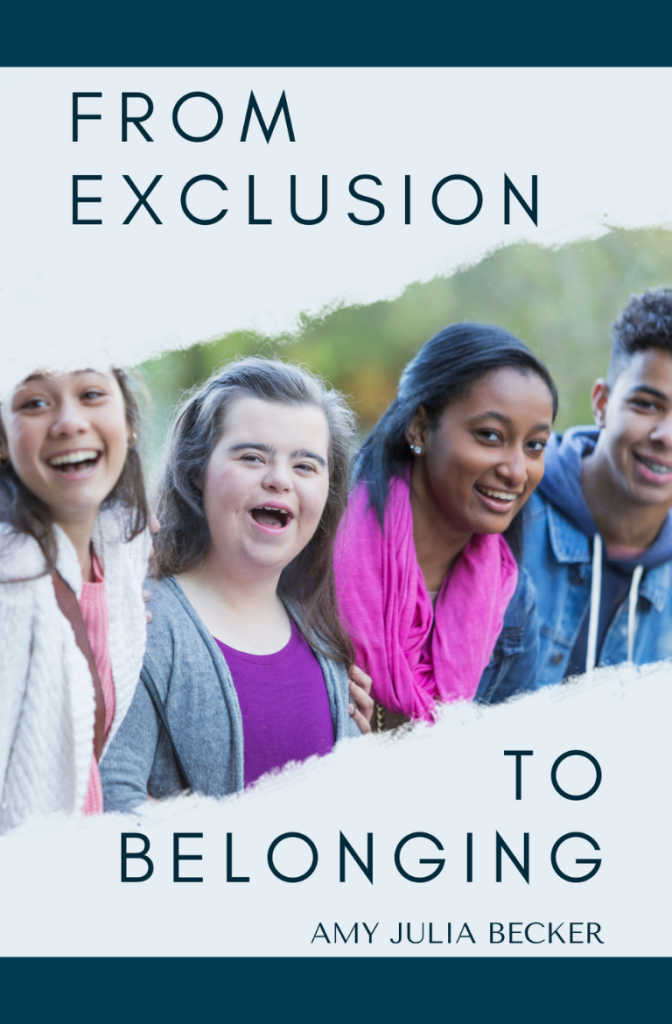
Get the Free Resource!
An illustrated guide designed to help you identify and create spaces of welcome and belonging—download today!