REIMAGINING THE GOOD LIFE PODCAST
What if disability isn’t a problem to solve, but a way of revealing what it means to be human? Disabled scholar-practitioner Amy Kenny, author of My Disability Is Divine, joins Amy Julia Becker to challenge ableism and consider what it means for all humans to be created in the image of God—without caveat. They talk about how access, belonging, and interdependence can lead us toward more joyful, interconnected lives.
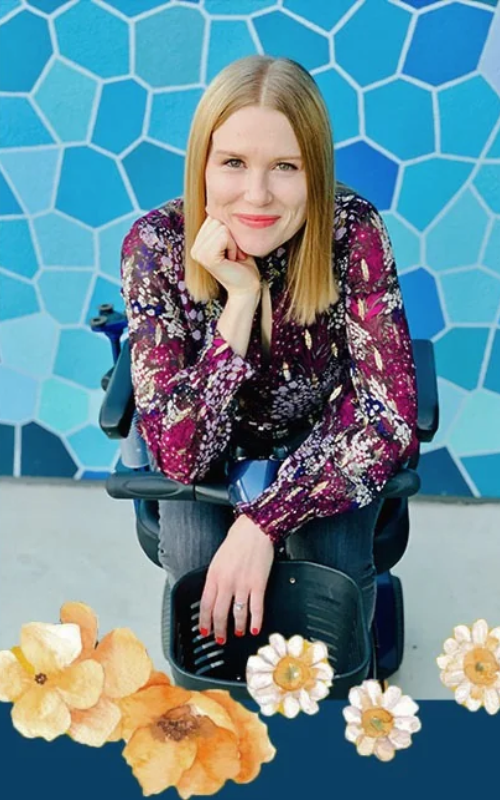
Amy Kenny, PhD, is a disabled scholar-practitioner and the founding director of the Disability Cultural Center at Georgetown University in Washington, D.C. She is the award-winning author of My Body Is Not a Prayer Request, and her work on disability has appeared in Teen Vogue, Sojourners, HuffPost, The Mighty, and Shondaland. Kenny has served on the mayor’s Equity, Diversity, and Inclusion Task Force in California and with the Freedom Road Institute for Leadership and Justice. She also cofounded Jubilee Homes, a housing initiative for people experiencing homelessness.
Instagram: @DrAmyKenny
00:00 Introduction to My Disability Is Divine
06:40 What is Ableism?
09:11 Joy and Humor as Resistance to Ableism
14:38 What Nature Reveals About Disability
20:32 How Disability Helps Us Rethink What It Means to Be Human
23:42 The Expansive Nature of Access Needs
33:08 Stories of Communities Where Everyone Belongs
38:16 Reimagining the World Through Disability
LINKS IN THIS EPISODE:
Note: This transcript is autogenerated and does contain errors. Please check the corresponding audio before quoting in print.
Amy Julia Becker: 00:04
What if disability isn’t a problem to solve, but a way of revealing what it means to be human? I’m Amy Julia Becker, and this is Reimagining the Good Life, a podcast about challenging the assumptions about what makes life good, proclaiming the inherent belovedness of every human being, and envisioning a world of belonging where everyone matters. Today I’m talking with disabled scholar practitioner Amy Kenney. Amy is the founding director of the Disability Cultural Center at Georgetown University and the author of My Disability is Divine. We’re talking today about what it means for all humans to be created in the image of God without caveat. And we’re talking about how access, belonging, and interdependence can lead us toward more joyful, interconnected lives. Here’s my conversation with Amy Kenny. Amy Kenny, thank you for joining us again.
Amy Kenny: 01:02
Amy Julia, great to be with you. Thank you for having me.
Amy Julia Becker: 01:05
I want to start our conversation with the title of your most recent book. So the title is My Disability is Divine: A Joyful Witness That Defies Ablest Nonsense. And I need to tell you, my husband came through and saw that I had this book on my desk, and he was like, A joyful witness that defies ableist nonsense. He’s like, I love that so much. So um, so I wanted to start with the title because I feel like it might be a way for us to get a little introduction to you. We do have another episode with you, and we will link to that in the show notes. But for anyone who has not heard us have a conversation before, um, will you talk about who you are, but also about what you mean when you say my disability is divine?
Amy Kenny: 01:44
Well, thank you for co-signing the title. So I’m Amy Kenny. I’m a disabled scholar practitioner. I am Australian, American, and uh a third culture that’s both in neither of those tapestries of experience. I don’t really like small talk, but I love big ideas and I’m more at home in the water than I am on land. So that’s a little about me. The title, My Disability is Divine, is an invitation for readers to think about disability as divine. When I say divine, I mean that disabled folks are created in God’s likeness. I grew up in a household that taught me that I was made in the image of God and I had the audacity to believe it.
Amy Julia Becker: 02:37
I love that. You um write this really early on in the book. You say, when I say we are divine, I mean we are of God, created in God’s likeness. And I feel like that’s a statement that shouldn’t be controversial. And yet I know, both from your previous book, um, which by the way has also has a fantastic title, My Body Is Not a Prayer Request, just for anyone who’s curious about that. Um, I know from both that book and this one that you’ve received pushback on this idea that um to say disability is divine, there’s like uh from within like a Christian context, there’s pushback on that. So why do people push back? And why did it feel like, you know what, making this statement is important enough that it’s going to be the title of this book?
Amy Kenny: 03:18
Well, that brings us to the subtitle, A Joyful Witness that defies ableist nonsense, because there is indeed so much ableist nonsense, whether we recognize it or not, whether we intend it or not. This idea that disabled folks are made in the image of God, as you say, should not be controversial. And yet, for many, it’s really difficult to come to terms with that. Probably because somewhere along the lines, folks have inherited this idea that they are invincible or independent. And the idea that disability and disabled folks are made in the image of God is really difficult for some people to come to terms with. The book is a spiritual meditation and sharing of some of my stories to invite people to rethink some of what we’ve been taught about the disability community and of course about ourselves.
Amy Julia Becker: 04:18
I love the way you framed that, that some of us have been taught that we’re invincible or um just or independent. And what that can then lead to is if you’re in a non-disabled body-mind, to look at those with disabilities and say, oh, okay, you are not invincible, but I am, right? Like you are not independent, but I am. And yet certainly one of the things that I have learned, partially through having a child with a disability, but partially just through like growing up as a human, is like, I am neither invincible nor independent. And I’m also not considered disabled by our culture anyway. Um at the same time, I don’t feel as though we always mature into that place of recognizing I’m not invincible and I’m not independent. And yet we do kind of like, as humans, I think we bump up against that. Like it, it it can be harmful, I guess, is what I’m saying to think of ourselves as invincible and independent because we’re not. And so I’m just curious what I don’t know, did you do you feel like you had an experience early on in your life of recognizing I’m neither invincible nor independent? And that doesn’t actually mean I’m broken or should be excluded or any of these other things. Do you know what I’m saying? Like I’m just wondering how whether that was, I don’t know, a good thing to recognize these truths about yourself in a way that maybe someone like me growing up in my body mind had to come at like a lot later or with more, I don’t know, pain and loss of a sense of self or something.
Amy Kenny: 05:50
It seems like so few people actually want to be human. We want to create a God in our image, and we want to become godlike or impenetrable. And we just know that isn’t true. We we know that all of us are interdependent, that we’re all interconnected, that none of us are invincible or independent simply by virtue of being human. And I am so grateful to be a human. So often us disabled folks are the ghost of Christmas future in that we’re reminding everyone that we’re all human and there’s no hierarchy of humanity. We’re all interconnected and we’re all interdependent.
Amy Julia Becker: 06:39
So let’s pause for just a minute because we’ve used this term already because of your subtitle. But um, I just want to make sure that listeners know what we’re talking about with the word ableism. That is a word, again, that um even once I had a daughter who, you know, was diagnosed with Down syndrome, I still took me a while to be like, wait, what is ableism? How does that function? What does that look like? Um, could you either, well, maybe give us a definition, but also some personal examples of experiences of ableism?
Amy Kenny: 07:08
It turns out I’m just one kale, kale smoothie or essential oil away from becoming non-disabled in a lot of people’s minds. And as the title of my first book would suggest, folks are constantly coming up to me and projecting their limited ideas of disability onto me. Take when a stranger asks, can I pray for you? And I share something that I might want prayer for in my life, in relationships, at work, in my day-to-day, and they resist, only willing to pray for my disability and to pray that my disability be erased. Or when someone immediately conflates disability with a lack of worth, a lack of capability, a lack of dignity. Whether folks mean to or not, these actions are rooted in the idea that some body minds are better than others, or what we might call ableism. A system that places value on people’s body minds based on what we’ve decided is normal, smart, capable, or excellent. It’s connected to other systems of oppression, of course, and it tells us that there’s this hierarchy of humanity. Of course, we know that all of us are made in the image of God. There’s no asterisk or caveat to that that doesn’t include disabled folks. And yet sometimes when a stranger is trying to pray me away, or when someone is offering me some sort of prayer or potion to get rid of my disability, that that experience is something that I really want people to rethink. And I want to hold true to the theology that we are all divine, regardless of whether we identify as disabled.
Amy Julia Becker: 09:11
We’ve already gotten to some of these examples of people, often Christians, who say and do things that can disregard or diminish your humanity, your giftedness, your right to participate in a community, the full humanity of other people with disabilities, this kind of long list of um really offenses. And yet the other part of the subtitle is a joyful witness. So I wanted to talk there that or ask you about that as well. Like, where does a joyful witness come from and what does it look like amidst, you know, ignorance and prejudice and even outright abuse that you’ve received?
Amy Kenny: 09:45
I really practice joy as for myself, for my own spiritual formation, for the way that it cultivates a type of patience and kindness and levity in me. It also allows for me to not take myself too seriously, which I think is always a welcome invitation. Whenever joy is left out of a conversation, we can be perpetuating the ableist nonsense of thinking that disabled folks are lacking or are slacking in some kind of way when we’re using productivity as a measure of worth. Sometimes in conversations about disability and faith, disability is thought of as sinful, as we’ve already identified. Other times, disability is thought of as super pious and proper and saint-like. And that’s an issue too, because we’re humans and we have all of the mess and muck that is part of being a human. Maybe this is why it’s so difficult for non-disabled people to recognize the quality of life and the vibrancy of disability. For me, jokes are a joyful resistance to the idea that my life is not worth living. Joy acts as a community builder, it connects us to one another, it invites people in instead of canceling people out. That’s my hope at least, that joy can be a way to build community and to invite people to experience some of disability other than in those ableist categories.
Amy Julia Becker: 11:37
You write about your humor, um, and you write with humor also. Um, but just the ways I was curious because on the one hand, exactly what you just said, like, you know, we don’t like disability is not all seriousness, and it there is a levity and a lightheartedness that is possible and delightful in this life. And um, as my friend Catherine Wolf says, like, don’t wait to celebrate. Like, here we are right now, as we are, let’s do it. And I love that. And you also, though, write about how part of your own like defense against the ableism in the world has been humor, that it’s been this way of like, hey, since you’re not going to take me seriously or pay attention to me or regard me as a human, maybe if I’m funny, that’ll get your, you know, that’ll get your attention. Like, so can you talk about that tension between humor as both like a part of who you are that’s like delightful and fun and invitational, and also the sense of like, okay, maybe if I use my wit and my humor, I’ll actually be seen as like more human than you would otherwise.
Amy Kenny: 12:44
Well, thank you for saying I write with humor. That’s that’s delightful to receive. So I’m glad this is being recorded. That’s very kind. Take this example that I shared before of someone asking to pray for me. And often I’ll share something I need prayer for, and there’ll be resistance, and they’ll respond, no, I want to pray for your disability, or I want to pray for your wheelchair or something like that. So then I ask, okay, well, you can pray for me, but only if I can pray for you first. And then I will pray for God to heal their ableism. It works every time. I do that as a way to use humor to take some of the sting out of the ableism of that moment, to hold true to the theology that we know to be true, that I’m made in the image of God, and to not resort to a lecture or a liturgy or uh some words I don’t want to use to folks in that moment. Humor allows for me to take a situation that’s often weaponized and disarm it. And it allows for us to make a joke about an experience where I’m not the butt of the joke. Allowing for us to laugh together can build a bridge, but it also sets a boundary to say that we’re not gonna laugh at my disabled body mind, or indeed the disabled body minds or attributes of other folks in our community, but we can laugh together about something that is silly or a joke that I make about mobility devices or about my life.
Amy Julia Becker: 14:38
Yeah, yeah, I appreciate that. Um, this is kind of a different tact, but I did want to ask you about you wrote um nature is delightfully disabled. And that’s been one of the things, again, that I feel like I’ve learned from your writing in both My Body is a Prayer Request and hearing you on some podcasts as well as um here in My Disability is Divine. Can you just speak to like the ways in which you see disability in nature and how that has, or might I don’t know if it’s changed your perspective, but it certainly might change some of our perspectives on um disability if we have eyes to see the ways in which you’re seeing uh the nature out there.
Amy Kenny: 15:13
I spend time in the community of creation every day intentionally to learn from the wisdom of the community of creation, to connect and often to take a breath in the midst of chaos. I’ve noticed in doing that how much of the community of creation displays attributes that if in humans we might use disability as a context for description. In the book, I talk about how deep beneath the ocean surface an octopus has arms growing out of their head and can camouflage to hide from predators. They’re masters of disguise and they’re changing their tint and texture to replicate nearby coral and rocks. And that physiological change reminds me a lot of the fluidity of dynamic disability or sometimes called episodic disability, which describes this experience of access needs fluctuating from day to day. Sometimes I need help getting dressed, sometimes I don’t. But on old days, I can knock your socks off. And this idea that I resonate with something that the octopus experiences or showcases is something that we see throughout a lot of the community of creation. I’m from Australia, as you know, and kangaroos don’t walk backwards. Yet they’re awesome. They hop and bop, and they’re they’re fun and adorable and exciting. And no one talks about kangaroos as feeble because they can’t walk a certain way.
Amy Julia Becker: 17:13
Yeah.
Amy Kenny: 17:13
No one mocks sharks for communicating without speaking. I’ve never heard anyone mock an ostrich or claim that an ostrich is weaker than an Oreo because it cannot fly. There are so many examples of disability throughout the community of creation. And I think that can be a lesson to us to really rethink the hierarchy we’ve created of body minds in humans.
Amy Julia Becker: 17:44
Yeah. I’m thinking also this is a different example because it is not from creation, but it’s similar to that sense of um, we’re not mocking, you know, an ostrich for not flying. We’re also not mocking human beings for not flying, you know. But one of the things you point out is that um virtually everyone, at least who lives in America and other like similarly developed countries, uses wheels to go from one place to another every single day. And yet sees someone in a wheelchair as uh problematic somehow. Like the instead of being like, yep, that’s we can sit around. Yes, make it make sense. Yeah. I just think that sense of like having a mindset of deficit, of seeing what is like quote unquote wrong or not able, disabled, as opposed to that mindset of like, what an amazing creature. Like, and what is distinctive and beautiful and fun and life-giving about this creature, we do that when it comes to the natural world. Um, what would it, what changes when we do that for one another? And do not assume that there is a normative way of being, whether that’s body, mind, spirit, but actually that um this diversity of ways of being is actually part of the the giftedness and part of the being made in the image of God, that we are each reflecting all sorts of aspects of um of who God is and how um we are only able to actually know who God is in and through understanding each other in love in that diversity, I think. Yeah.
Amy Kenny: 19:23
Yeah. And how much can we learn from one another and accompany one another in expanding who we know God to be from interacting with the biodiversity of the community of creation? I it’s never made sense to me that we, that many of us use wheels to propel forward motion and get somewhere quickly. And we call it a bus, a bike, a car, a train, and that’s totally fine. But when it comes to my wheels, my mobility scooter or my wheelchair, that’s somehow negative or lacking. Make it make sense. So, really inviting folks to recognize some of the stigma that we’ve inherited and some of the ways that we’ve constructed this notion of disability and decided how we’re applying it. And often we’re applying it rather inconsistently and in a way that doesn’t adhere to some of what we say we believe.
Amy Julia Becker: 20:31
Totally. Um, and and I think again, that’s part of why your work is so helpful. And it brings me to this uh next quotation I wrote down disability is a culture and an embodied experience that shifts over time and can teach non-disabled people what it means to be human. And honestly, for me, that is um, I think the center of the work that I do is basically saying, yeah, I learned how to be human through my daughter with Down syndrome. And that’s not because I have Down syndrome. It’s not because the only way to be human is to have Down syndrome, but it is because the magnifying glass that um I had essentially because of her under trying to understand her humanity reflected something that was deeply true about me that I needed to understand. So I would love to hear you reflect also on how it is that we learn to be human through the culture and embodied experience of disability.
Amy Kenny: 21:23
Thanks for sharing that with me. So often, whether we admit it or not, many of us are caught up in our accolades and accomplishments. And we seem to conflate that with our worth. We think that that is what equips us with dignity and worth. And we just know that that is not true. And I’m so grateful it isn’t true because all of us are made in the image of God. When I talk about disability as a culture and an embodied experience. Experience that shifts over time. I’m thinking about how disabled folks are some of the most innovative people that I know because we live in a world not made for our body minds. Everything from the electric toothbrush to texting to the potato peeler to the Snuggy was invented by and for disabled folks.
Amy Julia Becker: 22:25
Amazing.
Amy Kenny: 22:26
These assistive technologies we now don’t even recognize as assistive technologies because they support everyone’s thriving. That’s what I mean when I say that disabled folks can teach non-disabled people what it means to be human. We live in a world not built for us. And so often disabled folks are innovating, sometimes even on the fly, solutions to problems that not everyone even recognizes. Imagine if we could create a world together where everyone could thrive, where we recognize that we all have access needs and that we’re all human. And we stop apologizing for that and celebrate that. Imagine if we could create a community where we didn’t have to earn rest, we didn’t have to perform our worth, a place where access invitations, ASL interpreters, digit spinners, visual descriptions, captions, and ramps run rampant. Don’t you want to live in that community?
Amy Julia Becker: 23:42
Well, let’s talk about that because I think that, well, let’s first of all, you’ve given some examples already, but for people who don’t necessarily know what an access need is, um, again, will you just like spell that out for a minute? And then I want to talk about um the expansive nature of access needs, how those might apply differently to you and to me, and they’re relevant to both of us. So, but let’s start with like what is an access need? What are we talking about?
Amy Kenny: 24:11
An access need is anything that someone needs to fully participate in a community.
Amy Julia Becker: 24:17
Okay.
Amy Kenny: 24:17
It can be related to the built environment in both physical and digital landscapes. It could be related to language, communication, social media. It could be related to lighting, pace, processing, temperature, food, rest, and much more. These are all part of the same song, just different verses. We all have access needs. It’s just that non-disabled folks are often used to having their access needs met without critique or condemnation.
Amy Julia Becker: 24:55
Yeah, and without a sense of, I mean, I feel like the word inconvenience or that’s too much, right? Like you had a this is a great line. We can’t expect an old building to be accessible because it was constructed before we considered disabled people a part of the community. So you’re writing about um kind of a historic building in which the only way to get in is stairs, for example. Or maybe you can get in through a ramp, but the only way to get to the bathroom is by using stairs. So, okay, so we can’t expect an old, this is something someone might say, we can’t expect an old building to be accessible because it was constructed before we considered disabled people a part of the community. Did I get that right? Somehow I’ve never heard the same argument for indoor plumbing, air conditioning, or Wi-Fi. In other words, access, if we need indoor plumbing, air conditioning, and Wi-Fi, and we put that in, but we don’t think about it as an inconvenience or an access need, and yet a ramp is, then we are, again, as you’ve said, like demarcating who we see as belonging in this space, which tends to also mean who we want in this space and who we value in this space, right? Um, so and and then you also, I loved this too. All of this is by design. You’re talking about stairs. Stairs are not naturally occurring. Humans put them there. There are no stairs on the bike path, on the train tracks, or in the bus lane. Like, and again, I think for people like me who don’t think very much about going up and down stairs, I’m sure there will come a point in my life when I do, but at the moment I don’t. And actually, there have been points in my life where I when I’m carrying babies, right? That stairs have been a different thing than they are at this moment. But regardless, I don’t think about them that much. So I have, it has to be pointed out to me that stairs are not naturally occurring, that humans put them there. And so we also didn’t have to put them there. And so I just would you talk a little bit more about like how do we undo the ableist assumptions about access, right? Like what what do we need to um, I don’t know, what do we need to learn? What do we need to experience? How do we undo that?
Amy Kenny: 26:57
We all need somewhere to pee, am I right? And you are right. This idea that that is an access need for some and not others is just silly. And yet it has very serious consequences and implications for so many of us. I love this story in scripture where to get to Jesus, five folks dismantle a roof of a house, seemingly without permission. And I think that is an example for us of if you want to create a community where all can get to Jesus, then start tearing down roofs, literal and metaphorical, start tearing down structures that bar us, that create inaccessible environments that takes a lot of humility, it takes care, takes a commitment to one another over a commitment to what has been. And I think that it’s something that so often as you’re sharing, people aren’t even cognizant of because there’s this assumption that this is just the way things are. But what if we could create a new way of proceeding where we all get to co-flourish?
Amy Julia Becker: 28:19
I have two things I want to say in response. One is just um I’ve been really spending time with that story about the friends who um make a hole in the roof in order for their friends. And they come, they’re trying to just come and get to Jesus. It’s not as though they come with, like, ooh, let’s tear down a roof in mind, right? Like they just want to get to Jesus and there are too many people and they can’t get in. And so they do that. And I just was for the first time um struck this when I read that recently. I guess I probably had also recently read that the Americans with Disabilities Act does not apply to church or religious uh communities. And so for churches, I mean, of all places to be accessible, it you don’t have, I mean, law does not say you have to do it. So you would only do it by virtue of decisions to, you know, create access and to um be welcoming and um clearly open to people using all sorts of you know ways to get in the door. Um and yet I just was so struck by the fact, as you said, that Jesus, I mean, he doesn’t say a word about the fact that the roof just got pulled off. All he says is, your fate like has done a great deal of good here. God is at work. Like he he just essentially praises them for having dismantled the access barrier, right? And it, I don’t know, it just made me think about, again, as you said, like being a little more disruptive in you, you give so many stories of the book of people who are like, yeah, yeah, yeah, I understand that it would be better if we changed the structure, but we’re just gonna have to wait on that. It’s gonna cost too much, it’s gonna disrupt too many people, it’s not relevant for that many people, you know, all these kind of excuses. And it just strikes me that with that story in particular, um, Jesus is implying just the opposite, which is to say, like, yeah, it’s worth it for that one guy to get in here. And for you all to be a part of making that happen. Um, that is something that is very praiseworthy and that kind of like unleashes some of the power of God.
Amy Kenny: 30:20
And that everyone’s strength, everyone’s faith is strengthened by that one disabled person being a part of that community. Everyone gets to experience that.
Amy Julia Becker: 30:30
Right. It’s it’s like it’s like when you see this as a my gosh, we’re we’re doing this only for that one person. It’s like a very warped way of seeing. And it’s like, no, no, no. We’re doing this for the entire community because that one person now gets to be here. And that’s not just for that one person, it’s for all of us. Um, and I yeah, I just I appreciate those ways of kind of flipping the script. I um participate, our family does in a camp um in Alabama called Hope Heels in the summertime. And we’ve been going for a couple of years before I realized that the only way to get through the front door of every building is accessible to everyone. In other words, there are some stairs. Um, there are some other ways in, but those are the side doors and the back doors. If you’re everyone goes in every building on that property through the front door together. Um, and I had never noticed, which again means that like the design is not feeling awkward or hard. It felt very natural. And then I realized that my friends who are using wheelchairs could always just roll right in next to me. There was never a sense of like, oh, I’ll meet you there. I’m gonna go around to the ramp, or I’m gonna figure out the elevator, or I’m gonna, you know. Um, and it just was this beautiful experience, again, of like we get to walk in together. And um, we can design that way. And, you know, you might not even notice it uh because it is so intentionally done.
Amy Kenny: 31:58
Yeah, I talk in the book about this example of a church in my neighborhood that has a had a big sign out the front for a while celebrating accessibility and how I have never seen that at a church before. And it was a big sign that said, celebrate accessibility. We can now welcome everyone through the front door. And it was celebrating that they had put in a ramp to this pre-ADA building. And this idea that we all are welcome through the same door that you’re sharing, and that this church was celebrating, is something that is often missed by folks who are used to going in the front door. And for those of us who so often have to find an entrance around the back by the trash with the rats, it is really meaningful to be welcomed through the front door. And it means something other than just the ramp itself, just the infrastructure. It becomes a maca of belonging and an invitation to fully participate.
Amy Julia Becker: 33:08
Um, you also share some stories of situations that began with a lack of access and with tension within a community. I mean, you share some and where it stays that way, but others where it became an opportunity for change. And I wondered if you’d share one or two of those stories and just talk about what it takes for a community to become a place of welcome for people with disabilities, because it’s not like always just, oh, a light switch goes on and now we have ramps everywhere, or, you know, play that out in other ways. Um, but yeah, could you share some of those stories and just talk about what it takes?
Amy Kenny: 33:39
I share those stories in the book that start out with ableism, whether intentional or not, and don’t end that way, deliberately to invite folks to replicate that journey in their own contexts. So often when we talk about ableism and when people are unlearning ableism, it can feel really overwhelming. If this is something that you haven’t lived through, experienced yourself, or you are just learning how to understand fully in the world, it can feel like yet another thing that we have to think about or burden that we have to change. And I recognize the way that that can be really overstimulating and overwhelming to people. Yet change is possible. And I wanted to share some experiences of that, even though change hasn’t always been the outcome in everything I’ve experienced. One of those experiences is I’m go, I’m going to the movie theater, and there’s a disability film playing, and we’re all really excited to see it. And more of us who are using wheelchairs and mobility scooters show up than there are wheelchair accessible seats. So there’s over 20 of us using wheelchairs and mobility scooters who are there, and the theater can seat six of us. And 20 is more than six. So it becomes a very cramped, claustrophobic, and unsafe situation very quickly. And that building is that theater is ADA, and yet that’s a floor, not a ceiling. And instead of brushing that off or dismissing that, well, the theater’s ADA, so what did you expect? I was very grateful and pleasantly surprised when the folks who organized that were actually willing to learn and to change for the future. And this led to a series of community discussions and access coordinators and folks to change this for future performances. In my experience, being willing to adapt is more important than being right. Being open to learning is more important than being knowledgeable. How we live our lives is more important to me than what we proclaim our doctrine is. And in so many ways, I have experienced folks not being open to learning. So I really want to celebrate when people are.
Amy Julia Becker: 36:29
Do you feel like it’s changed at all over the course of your like adult life, kind of whenever you started paying attention? Um, do you feel like there’s, you know, kind of the same amount of um barriers to access and ableism that you encounter, or um that that has actually shifted at all in our culture?
Amy Kenny: 36:48
That’s a great question. I think I think there has been change in certain ways and not in others.
Amy Julia Becker: 36:55
Okay.
Amy Kenny: 36:57
I think that it’s still really difficult for people to think of accessibility and creating a culture of access as a mutual responsibility and something that we can all create together.
Amy Julia Becker: 37:13
Mm-hmm. Yeah. And I think we get um really stuck on time and money in ways that um certainly from a spiritual, like Christian perspective, are not really sensible in the sense of just believing that we uh follow a God of abundance and provision. But even from a um, you know, we live in the here in America, we live in like the richest country on earth that’s ever been conceived of, you know, and it’s like actually we have money. Like that we we really do. And I know that there are lots of areas in which we don’t seem to, but that is because of how we are um choosing to deploy it, not because it doesn’t exist.
Amy Kenny: 37:53
Budgets are moral documents, you know, and they and they reveal what we value, what we consider part of our our values, mission, and practices. And folks in our communities are often excluded because we haven’t created a culture of access.
Amy Julia Becker: 38:15
Yeah. Well, I wanted to um end with another quotation from the book and ask you to close out our time just with some comments about it. You write, disability is a creative force that invites us to reimagine the world as we know it. And I wanted to ask just how um disability has been a creative force inviting you to reimagine the world as we know it. Like, what do you what do you reimagine? What do you see as possible or what have you seen become possible with that act of reimagining um this world?
Amy Kenny: 38:46
We’ve spoken a little about how resources, money and time can often be deterrents for folks to create a culture of access. And in my sanctified imagination, I think of time as a construct. We we know that love is older than time. We know that humans didn’t always evaluate or schedule their lives by the clock. And so often our calendars become a type of idol to us because we’re scheduling our lives in 30 or 45-minute increments, and we’re on this hamster wheel of hustle culture. I’d love to imagine a world where we have more freedom to rest, create, dream. There’s something that connects us in those activities and reminds us of our shared humanity despite our differences. And I’d love to imagine a world where we’re not having to explain or earn needing to rest, and where we recognize that we move, think, and communicate in a variety of ways. So I’d love for us to really rethink this idea of how we treat time and recognize that time is a construct.
Amy Julia Becker: 40:22
I’m gonna hold on to that comment you made that love is older than time. Um there’s something more deeply true, um, something that I think calls to us and calls to our humanity. Um, and yet I think it’s probably true that the faster we move, um the more uh likely we are to ignore or deny that reality, that love is older than time. I love that. Um thank you so much for so much wisdom, including that as a as a kind of capstone to this conversation and to all that you um are bringing into the world through the work that you do. Thanks for spending time with me today. My pleasure. Thanks as always for listening to this episode of Reimagining the Good Life. If you’re enjoying the show, please follow, rate, review it. I would love for other people to also find these conversations so you can share it with a friend, send questions or ideas to me anytime. Um, just be in touch. I love hearing from you. There’s a send us a text link at the end of the show notes. Thanks always to Jake Hansen for editing this episode and to Amber Beery, my director of content, for producing the show. And thank you for being here. Let’s all keep reimagining the good life together.
my weekly Substack letter
My newsletter delivered to your inbox that challenges assumptions about the good life, proclaims the inherent belovedness of every human being, and envisions a world of belonging where everyone matters
LET’S REIMAGINE THE GOOD LIFE TOGETHER. SUBSCRIBE TODAY!
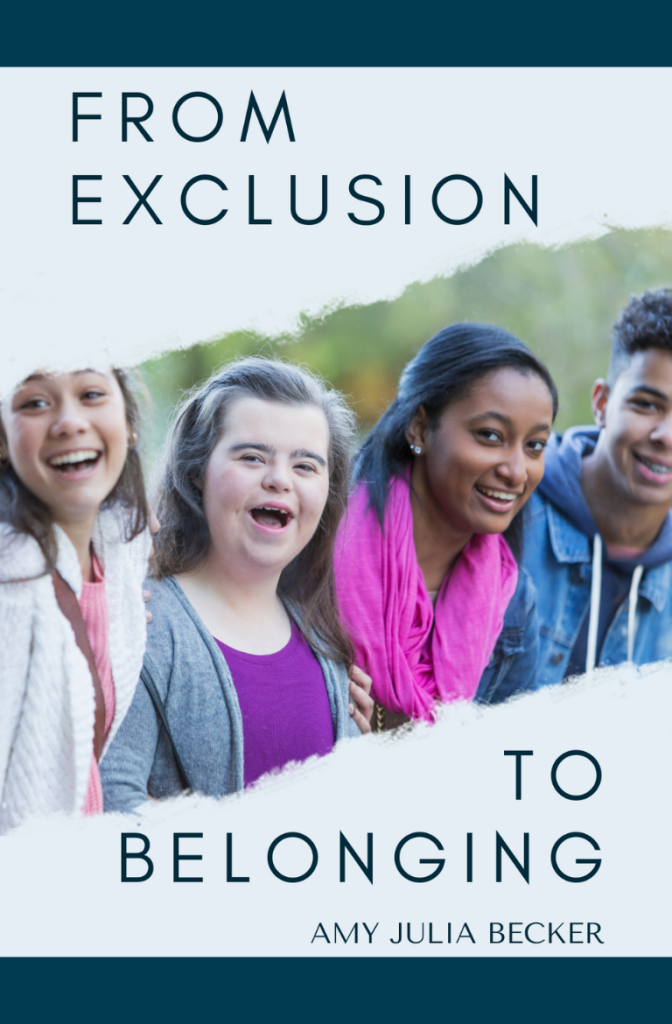
Get the Free Resource!
An illustrated guide designed to help you identify and create spaces of welcome and belonging—download today!