
TAKE THE NEXT STEP PODCAST
E33 — Will your child with a disability truly belong at church—or simply be accommodated? How can you recognize genuine welcome? How could a church rethink accessibility, Sunday school, and worship so your family can fully participate?
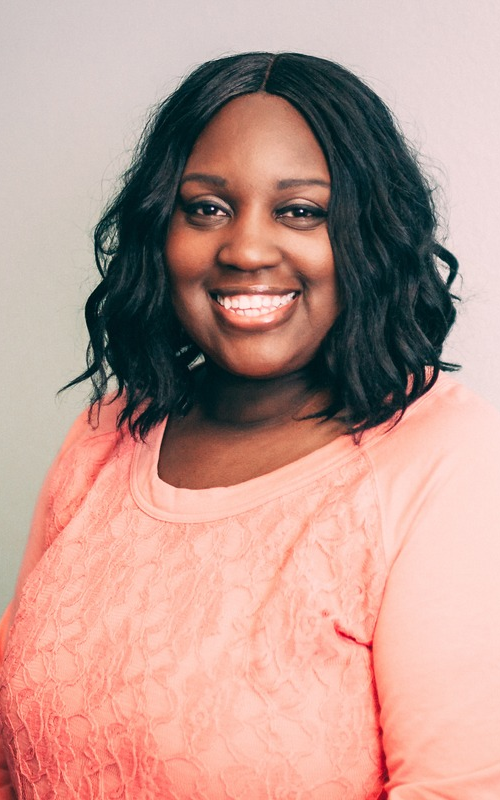
Nakoa Dantzler Merritt, the Community Engagement and Partnerships Coordinator for With Ministries, joins Amy Julia Becker to offer practical advice and real-life examples for families and churches. She invites families to approach imperfect churches with grace while still looking for a heart posture of welcome.
Nakoa Dantzler Merritt is the Community Engagement and Partnerships Coordinator for With Ministries. She is also the Board Secretary for the Black Down Syndrome Association and an Advisory Board Member for the North Texas Disability Chamber. She combines professional leadership with lived advocacy to advance accessibility, inclusion, and equitable services both in churches and across communities. Nakoa is a devoted mother of twin boys and an advocate at heart. She enjoys encouraging others, spending time with her family, and creating meaningful opportunities for people to connect, contribute, and participate fully.
FB/IG: withministriesorg
00:00 Nakoa’s Story and Advocacy
04:14 Questions to Ask about Welcome
07:03 Understanding and Designing for Accessibility
09:00 Examples of Churches Moving Toward Welcome
10:18 Adapting Sunday School for All Abilities
13:23 Designing Worship Services for Accessibility
17:09 Starting Points for Families in Unwelcoming Churches
21:24 Practical Tips for Families Navigating Church Challenges
Links:
Questions for families:
Questions for churches:
_
SUBSCRIBE to Amy Julia’s weekly Substack newsletter: amyjuliabecker.substack.com
WATCH this conversation on YouTube: Amy Julia Becker on YouTube
JOIN the conversation on Instagram: @amyjuliabecker
LISTEN to more episodes: amyjuliabecker.com/shows/
Note: This transcript is autogenerated and does contain errors. Please check the corresponding audio before quoting in print.
Amy Julia Becker: 00:06
Will your child with a disability truly belong at church, or will they simply be accommodated? How can you recognize genuine welcome? How could a church rethink accessibility, Sunday school, and worship so your family can fully participate? I’m Amy Julia Becker, and this is Take the Next Step, a podcast for families experiencing disability. We’re part of the Hope Heals Network, bringing you weekly encouragement and practical next steps to help your family thrive. Your family matters, your child matters, and we need you among us. I’m joined today by Nakoa Dansler Merritt, the Community Engagement and Partnerships Coordinator for WID Ministries. Nakoa is also the board secretary for the Black Down Syndrome Association, an advisory board member for the North Texas Disability Chamber, and mother of twin boys, one of whom has Down syndrome. Nakoa is here today to offer an invitation for families to approach imperfect churches with grace while still looking for a heart posture of welcome. Here’s my conversation with Nakoa Dancler Merritt. Nakoa, thank you so much for joining me here today. I was hoping we could start just by asking you to introduce us to who you are and your family, but also to the work you do with ministries.
Nakoa Dantzler Merritt: 01:26
Sure. So my name is Nakoa, and I am a mom of a set of twins. We had a birth diagnosis for one of my kiddos of Down syndrome, and it was the happiest surprise I’ve ever had. Um this was definitely a shock, and everybody was kind of walking on eggshells into NICU, and I was kind of like, what’s the big deal? He’s here. I’m super excited to just be a mom, right? And so I was like, anybody gonna say congratulations? Because I’m excited he’s here. And so my journey um as a mom of twins was wild, but a mom of one kiddo that has Down syndrome and the other one that doesn’t um has been wild as well. Um, finding spaces and places and opportunities for both of them has been tricky to navigate, but it’s also taught me that from the very beginning, I have got to advocate, right? And I’ve got to show up and say, hey, have you considered a lot of times. And so in that I was looking for a church home that would keep my kids together and make sure that there was faith formation built into the recipe of how they did children’s ministry, and I wasn’t finding it, right? And so I ran into with ministries because I thought it was a church or a parachurch, or I wasn’t 100% sure even what it was, but the language is what captivated me. And um, I sat down and had a cup of coffee with our executive director, and that cup of coffee turned into a two-hour conversation right in the middle of her looking for a person that she didn’t fully think existed. And so our cup of coffee turned into her about to go on vacation and pulling apart job descriptions and coming back and saying, Well, what do you think about this? And me saying, and what do you think about me? And so right from the very beginning, we started very transparent, uh, very all in, very considering my kids from the very, very start. And that was my journey from there to here.
Amy Julia Becker: 03:42
So, what is your like official job with with ministries these days?
Nakoa Dantzler Merritt: 03:46
So I do community engagement and strategic partnerships. So that equals, hey, you’re a church, that’s great, or hey, you’re a bank or a business, hey, that’s great. Let’s see how our missions can come together and how we can work to kind of move things forward, whether it’s through programming or resources or an event, and what does that look like to present solutions to families in a larger way?
Amy Julia Becker: 04:14
Within that, I know you work with a lot of churches to become help them become spaces that welcome families affected by disability. And so I wanted to start with like the questions that maybe churches could ask in order to become places where families like ours know that we belong. So I wanted to ask you both about the questions they might ask, but then also actions they might take.
Nakoa Dantzler Merritt: 04:36
So the churches’ questions or the parents’ questions. Why don’t you do both? Tell us both. Oh. So family, usually mom, but sometimes that picks up that cell phone and is like I was at a certain point and is like scroll, scroll, scroll, scroll, scroll, scroll. I’ve got seven minutes to do this in between PT and picking the next kid up from school or whatever it looks like. I’ve got minutes, moments. I’m scrolling. I need to know immediately that this is a place where my family is welcome, right? And so is my family welcome is a question that can be asked. Is my family considered is a question that can be asked by the families, right? But on the flip side of things, church can say, hmm, how can we let families know that we are a church that is for everybody of all abilities, right? How do we set up our front porch, so to speak, um, in a way that a family would know? Like if we have a heart for people of all abilities, how do we let families know immediately? And some of the answers are as simple as, you know, hey, not for nothing, but reach out and say, we need some photos. Do you guys have any photos? Right. Or, you know, saying something like, hey, there’s a family here. Let’s wrap around that particular family and see how they feel about becoming a part of what we’re attempting to build because we need to hear their voice and their needs, right? And so then they’re intentionally building a ministry that included the thought processes and the input of a family experiencing disability from the very beginning. And so I I think that’s that’s kind of where they they need.
Amy Julia Becker: 06:23
Yeah, that’s great. Um, I’m also aware that um websites can communicate. I mean, photos, you obviously were kind of hinting in that direction, but I do think that websites, one of the reasons we are at the church we are where we are, is that on the homepage of the website, or or at least very quickly into um learning about the church, there was a um statement about a commitment to families with disabilities and seeing them as like a gift who need to be a part of the church. And we were like, oh, we don’t see that every day. Like, here we go. So that’s something that I know, as you said, like in a really quick, like I’m just kind of glimpsing uh what is available to us as a family. That was something that made a big difference. So I want to talk about the idea of accessibility, like what it is, first of all, but then also how both spaces and programs can become accessible for people of all abilities. So I’m curious if you could just like define accessibility for us, but then also talk about how we can design towards accessibility.
Nakoa Dantzler Merritt: 07:24
So accessibility equals the ability for a person to participate in a thing. Whatever the thing is, there’s an opening, there’s an entryway, there’s a doorway, there’s a portal, um, there’s a site, there’s a something that will allow a person to be able to participate, right? And so if a person shows up, they’re in a wheelchair, can they get in the door? Accessibility. If a person shows up with sensitivities to lights and smoke machines and cameras and all the things, can they fully participate? Is this accessible for them? Or if a person shows up and they’re blind and everything is on a screen and there’s nothing that’s going to communicate and nobody’s communicating over the microphone that, hey, this is Pastor Jim, and he’s standing up and he has on a white shirt and like accounting for people’s different abilities, then is it really accessible? So accessibility is so much more um than just universal design. It’s can a person show up? Did they have transportation? Um, is there somebody to meet them? What’s their journey from the time of thinking about attending through I’m already attending and am I able to participate? So that’s that’s a definition of accessibility. Can I participate the way that I show up?
Amy Julia Becker: 08:44
And have you seen examples of a church community that has moved from a posture where the answer to that question might be no to a posture where like the answer would be yes? Like how can you just kind of give us a little an example of a church that has actually made a transition in that?
Nakoa Dantzler Merritt: 09:01
So we have a church that we’ve worked with through our cohort that had an amazing Easter this past Easter. And this past Easter, there were people of all abilities that were doing different things all the way from handing out programs at the door and leading worship. And somebody made the statement, oh my gosh, it’s so nice that on Easter, the folks with fill-in-the-blank disability were allowed to participate. And the pastor was like, not allowed. We don’t use that language. We’re all, it is all of us, and we are all here. And so um the biggest example of that was like because they were intentional and because they were learning, they were able to gently correct somebody else that was a part of the congregation that just wasn’t quite there yet. And even the correction was a beautiful thing, but on the flip side of things, everyone was included on an Easter Sunday, and not as like a gimmick, but like as, hey, it’s your Sunday. Are you ready? You’re gonna serve? All right, great. And you’re a part of the life of the church and you have an assignment and you have a calling and you have a destiny and you’re here, and it’s your Sunday to volunteer. So here’s your land, your buddy, go. So that’s a that’s a really good example.
Amy Julia Becker: 10:19
And so, how about like let’s let’s talk about a Sunday school class? What does a Sunday school class look like? And what are, again, some of the things that maybe need to be taken into consideration for a Sunday school class of, you know, young children, let’s say elementary school, to welcome kids with disabilities alongside their typical peers?
Nakoa Dantzler Merritt: 10:38
So that equals heart posture of church, right? And so is the church a place that always is in the heart posture of everybody belonging, right? Is it something that the lady or the guy that’s behind the pulpit most of the time is like, hey guys, we are a church that does the following, even if it’s in just a light anecdotal kind of way, is belonging, being communicated from the top, and then you get into kids’ mid and it’s just normal. Like it’s just normal. Um, it’s just a kid shows up a little bit different. This is our friend, right? This is our friend Joey, or this is our friend Elias, which is my son’s name. And here’s what Elias needs. And usually his need is a nap, usually his need is a bag of goldfish. And so um, I think that the bigger thing is ask the parent. So the Sunday school class can look like whatever it needs to look like to teach kids Moses and Noah and Mary, right? But for kiddos that kind of show up and have some additional needs, it could equal, hey mom, can we chat? And mom not just defaulting to no, it’s okay, we won’t, and then you see them start to retreat. Maybe it’s no mom, I really want to lean into what your kiddo needs. Let’s let’s have that conversation. Maybe not now, but maybe we can text or we can voice memo, and the church is just kind of flexing it, right? We’re being flexible because we want that family to come back, right? We want to be able to wrap around that family. So sometimes it’s more along the lines of how can we support your family so that you come back? And so then how committed are we to Moses, Moses, Moses, Mary, Mary, Mary, Noah, Noah, Noah? When there’s a little boy in the corner who’s asleep, not for any other reason other than he just needed to take a nap, and we’re like, get up, wake up, and trying to correct something we feel is disruptive when it’s not. He just needed, he was tired. His energy level is just set up a little bit differently. And so the Sunday school class of my dreams would equal um it’s set up in a way that my typical kiddo could get some motion going on um so that it’s not perceived that he’s running around. He’s not, he’s fine. And my not-so-typical extra chromosome baby could have snacks whenever he’d like and not just at 11:15 he gets hungry.
Nakoa Dantzler Merritt: 13:04
Yeah.
Nakoa Dantzler Merritt: 13:05
And at 1218, he might need a nap. And so let’s have those conversations. So the Sunday school class of my dreams would be based on conversations and a little less rigid and a little bit more like how our lives are, where we have to pivot, pivot, pivot. Sunday school class could benefit from taking that approach, is what I like.
Amy Julia Becker: 13:25
And then how about in um thinking about like a worship service in terms of just are there any, you know, obviously again, one of the things I hear you emphasizing is the particularity of individuals and their needs. I’m also thinking about anything that we can do that’s um, you know, broadly communicating welcome and acceptance. You’ve already said leadership from the top and from the front, saying and demonstrating that. Are there other things for um congregations to keep in mind when it comes to um designing a worship service and making it accessible?
Nakoa Dantzler Merritt: 14:00
So I would say we’ve got friends that are non-speaking, right? And so um, let’s lift our voices to the Lord. Well, you’ve now isolated a group of people, but their heart is there, their body is there, the spirit is there, and they want to connect. So, what can you do? So, what we model in Worship is one, which is um a service that we have of people of all abilities that caps a pastor’s conference. It’s like the piece de resistance at the very end of it. Um, for our friends that are non-speaking, we give them streamers, or would you like an egg shaker? Or what would you how would you like to express when they say sing, what would make your heart sing? Or what would make you best able to demonstrate to God like your worship and your praise? And here’s a basket full of things, and if that’s not gonna work, what do you feel like bringing? Right? And so sometimes to the eye of a congregant or a parishioner, it’s kind of like there’s somebody over there with streamers, and the response when you’re getting it, it should be isn’t that beautiful, she’s worshiping the Lord, yeah, right? Or to our friends that are that are blind, right? Okay, hey, I’m the pastor, and I’m gonna let you know by what I’m saying, or even um I have somebody that can accomp uh accompany you, but this is going to be overcommunicated so a person who’s blind can then have a picture, right, of what’s going on. Because so many times we forget about that and they’re like, oh yeah, you know, braille is our default, right? Or if our friends have hearing loss, okay, ASL, yes, but there are so many other ways that our friends communicate, AEC devices, gestures, all of those things. And so I think the best approach is leadership, being educated, being trained, but the heart posture, right, is is the bigger thing because if my heart isn’t there, it feels like a task, or it feels like, oh my gosh, it’s something else to do, or I’m already stretched so incredibly thin. But like, are we best including our friends that show up differently? And so a worship service could look a little bit more colorful, it could look a little bit more rowdy. Um, for some of our emopers that might be in the room. The pastor could know them by name and say, hey, that’s Caleb. Caleb’s on a run. You know, it just just like the life of the church is so much more robust with us all in the room. And there it’s Caleb over there, and everybody knows what to do. And Caleb is being raised, knowing that he’s important to the body and important to the church. And I could go on and on, but it it stirs within me because like houses and homes are are are messy, right? Like, oh boy, we’ve got somebody’s got a food allergy, or we’ve got somebody who decided to become vegan and we accommodate, right? Well, we’ve got somebody in the house that’s non-speaking, and we’ve got an eloper over here and we accommodate. Okay. And it could be just that easy.
Amy Julia Becker: 17:10
So if I’m a parent or caregiver of a person with a disability and I’m in a church community that feels is inaccessible or unwelcoming, the first thing I want to ask is whether, you know, where you would start if you’re like, okay, I want to try to stay here and yet it’s not going well. And then I also want to talk about like when it might be time to walk away. So the first question is I’m in a place, I’ve got a child with a disability and it’s not going well. Where do you start?
Nakoa Dantzler Merritt: 17:40
So if I feel like we always communicate at the child level because so many families are showing up at the kidman child level. And so I’ll address that part first because kidmen, right? And so usually there’s an intake form or there’s something that’s gonna grab information about that family. And so a lot of families are very comfortable going through an art meeting or an IEP meeting, and we know, we know what’s at the front of our what’s front of mind or what’s at the tip of our tongue to communicate about our kiddos, right? And so I think from the very, very, very, very, very beginning, um, it would be a worthwhile exercise to have kids men set up to ask questions like, okay, so what’s special about your kid? What’s something that might be a showstopper for your kid? Because I have a typical kid on, I’ll tell you what’s a showstopper for him. You change his schedule and it’s a showstopper for him, right? And so having the conversation pretty early on, and if the church is not willing to have that conversation, then you have to look at the dynamic of your family. Do you have the bandwidth then to retrain an entire eight-year-old class? Or do you have the heart bandwidth to correct volunteers who use words that are antiquated, right? Um, when addressing your children, do you have the bandwidth for that? Ask yourself the very hard questions ahead of time so you’re not coming back like I need to hold their feet to the fire. You don’t have the time for that. You don’t have the bandwidth for that. You’ve got an IEP meeting on Thursday, right? And you’re not, you don’t you’re here for spiritual formation, right? You’re here to pray, you’re here for fellowship. So, I mean, we’ve got options, right? And if people are willing to look at other options, then that’s available to them because sometimes we just quite frankly don’t have the bandwidth to correct and train and teach. Um, and so if you find that there’s a church that’s like, oh my gosh, we feel like we’re getting it wrong, say, okay, well, let’s have a cup of coffee. A cup of coffee can solve so many problems. Yeah. Matcha, fill in the blank, right? Um can solve so many problems and get us to the human-to-human um interactions that really can define where we need to go and what we need to do. And so the quicker you can get to the human-to-human interaction, the quicker usually kids’ ministries can say, Oh, so that’s all it is. Okay. So your kid needs a smoothie or the lights were too bright. Like it takes us $10 to find light covers, or, oh, yeah. We didn’t know. You know, and so conversation and the human-to-human connection gets us there faster. But also, as a parent, figure out where your bandwidth is. Figure out if it’s worth the fight. Your kid is definitely worth the fight, but like you, parent, are you willing to get into that fight fully for that reason? Ask yourself the hard question.
Amy Julia Becker: 20:57
Yeah, because it’s exhausting to be in a situation where you are constantly correcting or feeling like you need to train. And it’s also exhausting to find a new church. So there’s some hard decisions there, but I do think that sense of if you’re working with a within a system that says we want to know, um, and it maybe is on us to find out. Like, do you want to know? Like, do you want to know what would actually work well? Um, and some people do, and some people honestly don’t. So I I appreciate that. Um, I’m thinking as we come to the end of our time, just about some of the, I think, overall um insights you’ve given us on the parent side, just to be asking the question, like, is my I like to the way you put it. Yes, is my family welcome, but also is my family considered? Like, are we a part of the decision making process, the implicit decisions that this church is making in terms of how things are set up? Um, also like leading with within a uh, you know, Sunday school context or something like here’s what’s special about my kid. Um, not here are the problems you can expect or the Behaviors you should look for, which doesn’t mean those conversations shouldn’t also happen, but helping to alert the community to why it’s really significant that my child is a part of what’s happening here for everyone’s sake. And then on the church side, again, like asking the questions like, how can we let families know that they’re welcome? It can happen from up front. It can happen from a one-on-one conversation and asking, how can we make sure we serve you well? Um and it also can, yeah, just be providing a way for people to participate. I loved your example of the streamers and the egg shakers, right? Like just communicating. We do not expect everyone to do this in the same way, but we do want everyone to know that they are a part of it. So I loved all of those um both kind of big picture ideas as well as the more like granular um, yeah, uh, streamers as a way to worship. I love it. So is there anything you would add just as we come to a close for families who are really trying to navigate a church landscape with um a child with a disability?
Nakoa Dantzler Merritt: 23:06
So doing the work that I do, um, my eye is very fine-tuned when I go into churches or we try a church, and I’m like, come on, boys, we’re gonna try again. Um, and so we walk in with hearts full of grace and just open-minded and all of the things. And that would be the thing that I would just mention to parents is just heart full of grace. Like, if you can find a parking spot and stop sweating when you walk through the door, you’ve gotten there. Like, like you’ve done it, mama, you’ve done it, dad. Like nobody saw the meltdown in the minivan, and that’s okay, but like a heart full of grace, right? Because the guy that died on the cross did it for all of us, right? Including the well-meaning misspeaking, oops, volunteers and all of the things, but he did it for all of us. And if we come in the door with a heart full of grace and say, Hey, we are willing as a family to show up, are you willing to meet us halfway 14% of the way, 8% of the way? Um, are you willing to meet us where we are? Because we’re coming with a heart full of grace. And so if we can keep that front of mind, it changes so much in how we approach everything. Um, and also if it’s the case that you find a soft spot in somebody in children’s ministry, you can be the one that says, Hey, I’d like to kind of inform you about a few things. No, I do not want to build and uh special needs, special angels, or whatever folks are calling stuff now. Um, but I do want my kid included in what you’re doing now. And so here’s how that can happen, and here’s how my kiddo can participate. Let’s chat. I’m all about chatting. Jesus chatting.
Amy Julia Becker: 24:56
I love it, and I hope we’ll get a chance to chat again. Thank you so much for all of this practical wisdom. I really appreciate it.
Nakoa Dantzler Merritt: 25:04
Thank you, Amy and Julia.
Amy Julia Becker: 25:09
Thank you for listening. If this episode was helpful, please share it with another parent or caregiver who might need to hear it. Take the next step is a resource from the Hope Heels Network, a collective of thought leaders offering honest and hopeful wisdom to help people flourish in the good and hard parts of their stories. To learn more about the work of Hope Heels, visit Hope Heels.com. I want to thank Jake Hanson for editing this episode and Amber Beery, my director of content, for producing the show. And thank you for being here. I hope you leave this time with encouragement to start with delight, connect to community, and take the next small step toward a good future for your family.
Take the Next Step is a resource from the Hope Heals Network, a collective of thought leaders offering honest and hopeful wisdom to help people flourish in the good and hard parts of their stories. To learn more about the work of Hope Heals, visit hopeheals.com or follow @hopeheals on Instagram.
my weekly Substack letter
My newsletter delivered to your inbox that challenges assumptions about the good life, proclaims the inherent belovedness of every human being, and envisions a world of belonging where everyone matters
LET’S REIMAGINE THE GOOD LIFE TOGETHER. SUBSCRIBE TODAY!
Get the Free Resource!
An illustrated guide designed to help you identify and create spaces of welcome and belonging—download today!