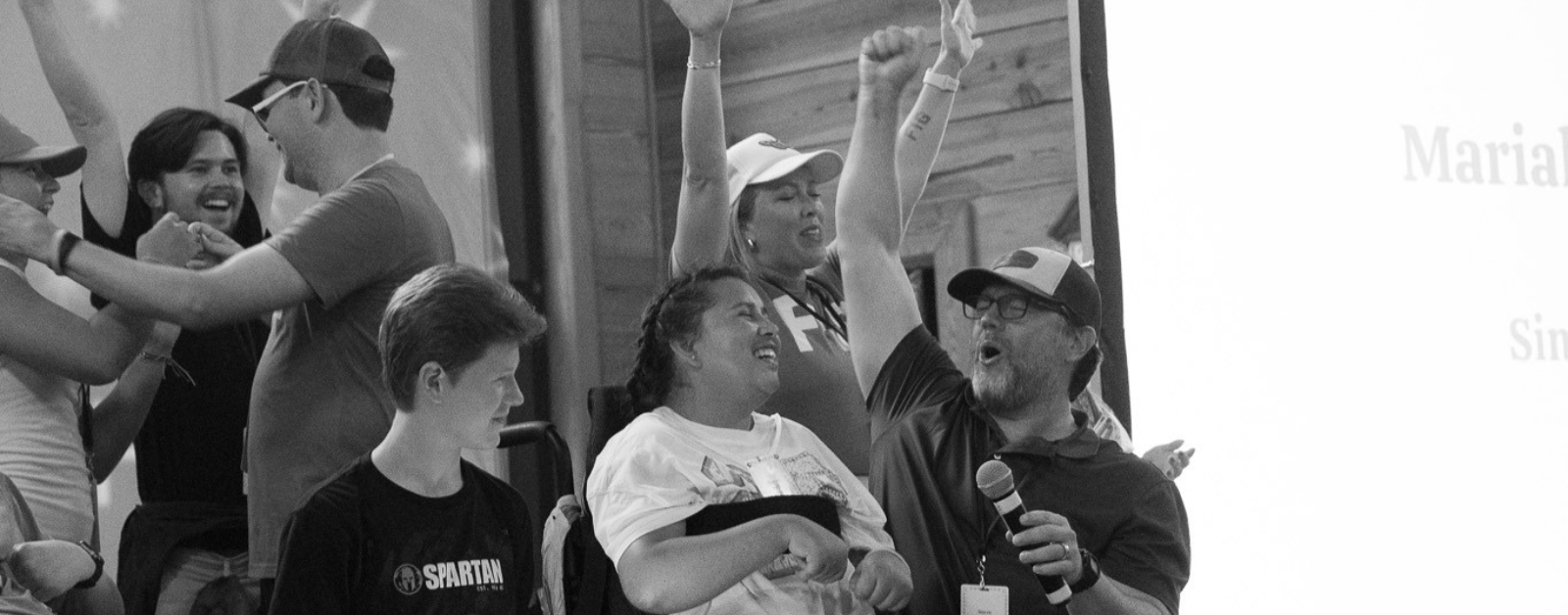
I always return from Hope Heals Camp and struggle to convey our experience in words. I walk away with all sorts of stories, and I will share some of those in the weeks to come, but I also walk away with a renewed understanding of the truest truths and realest reality. I want to try to write about that reality today, even though I know that words will be inadequate.
Sometimes we say that this world we live in, with all the shiny things and all the successful people and all the stress and striving, is the real world. And then we enter into a place where every person we encounter is seen as beloved, where the gifts of each one are celebrated and the sorrows of each one are held with compassion, where no one is looking for a reward or an increase in social status. It’s there that I realize that a life without ego, a life without posturing, a life without rushing, is real life, life with God.
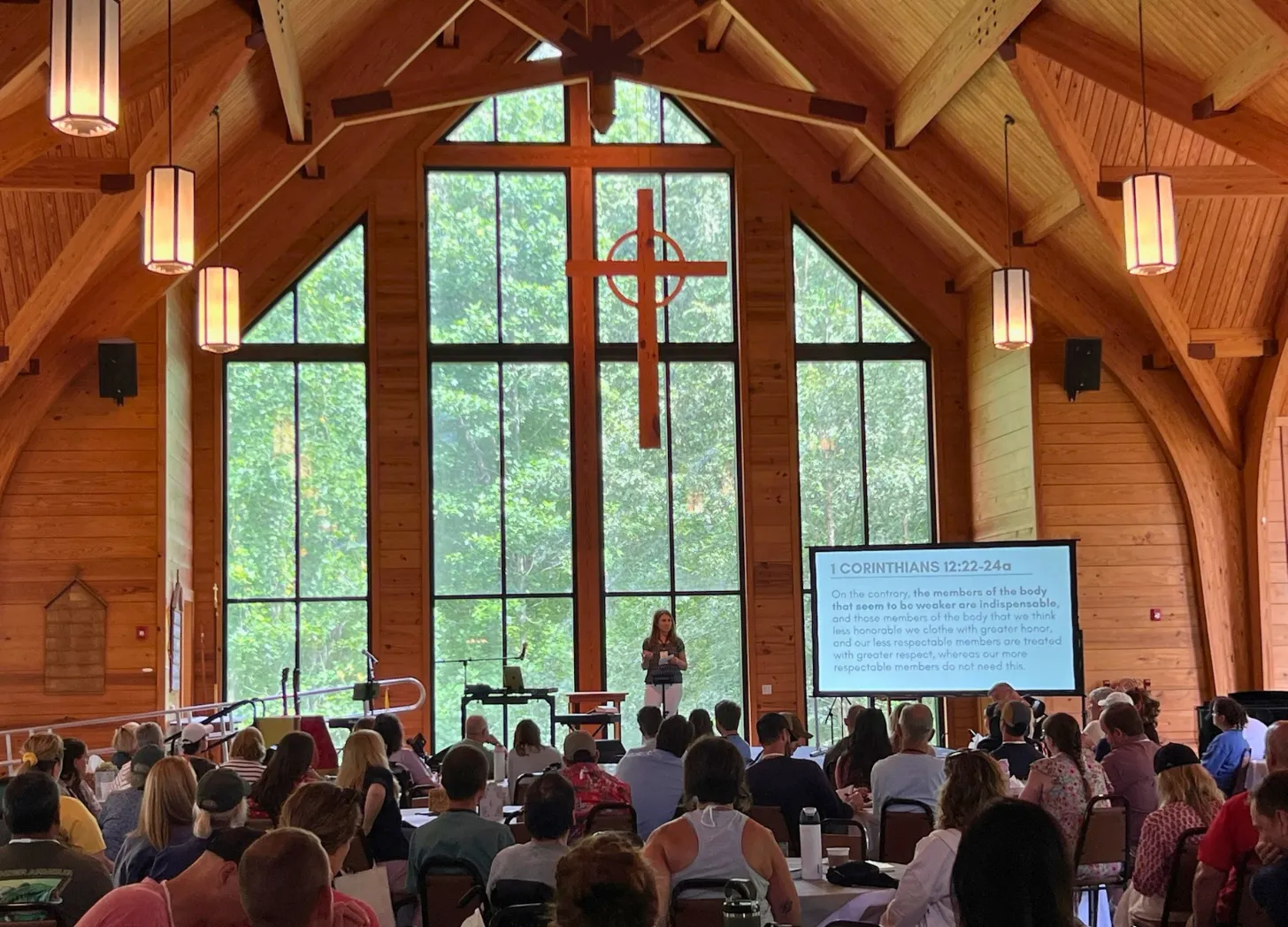
My role this past week was to be the camper pastor, which meant I spoke to the adult campers during our morning gatherings. I spoke about the Beatitudes as a point of orientation by which Jesus invites us—yes, us, the ones who know we are needy and weak and vulnerable and who long to live in God’s presence—into the good life and also by which Jesus sends us out into the world to be salt and light, as we are.
I’ve been reading a book by George Hunsinger on The Beatitudes, and he writes:
“The proper distinction, theologically speaking, is not between the real and the ideal, but between the real and the unreal. Only the kingdom of heaven determines what is truly real, because only the kingdom enjoys ultimate reality before God. The world of sin, poverty, and death represents the unreal world that is destined to pass away.”
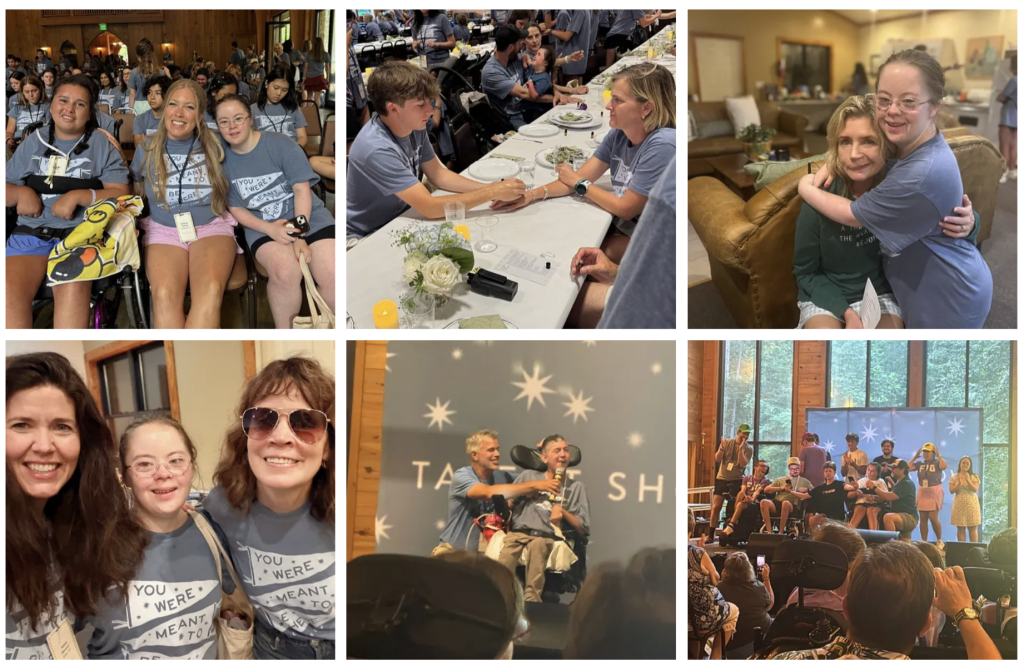
Hope Heals is not a world of the ideal. People come with their real suffering, and often that suffering is not alleviated by being at a camp in northwest Alabama for a few days. They come with their failing marriages and broken hearts and painful story after painful story. They come in wheelchairs—both visible and invisible. They come as they are—broken, and beloved.
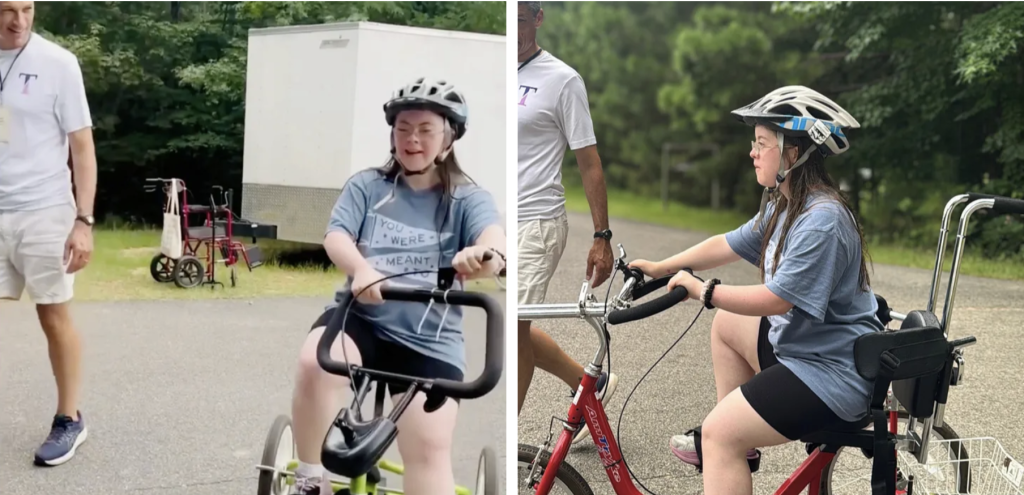
But being at Hope Heals Camp puts me in greater touch with the real than anywhere else. I’ve never experienced the same beauty as seeing a grown man with cerebral palsy sing Jesus Loves Me from his wheelchair for the talent show. Or the joy of watching kids (including Penny) try different adaptive bikes and expand our imagination for what is possible (short video here).
Or the blessing of a four-year-old little girl who took a vial of oil and made the sign of the cross on my skin as her mother pronounced the words, “I am with you, I am for you. God is with you, God is for you.” (Hope Heals Camp on Instagram has beautiful photos of the week here.)
Every time I had free time, every time I went back to my room, I didn’t know what to do with myself. I didn’t want to check my email or respond to text messages or read the New York Times. I didn’t want to do anything that would take me away from exactly where I was and exactly who I was with. I just wanted to stay there.
So, those are all my words to try to tell you about a beautiful experience that will orient our life as a family for the year to come. It will be easy to forget everything we learned, everything we received, everything we gave and saw together. But if we stay connected to the source of the really real and the truest truth, if we stay in close proximity to the poor in spirit, then we have a chance of walking in these ways all year long. In other words, the truest truth of Hope Heals Camp is available to me—and to you—every day. If only I have eyes to see it and a heart to receive it.
SUBSCRIBE to my Substack newsletter: amyjuliabecker.substack.com
JOIN the conversation on Instagram: @amyjuliabecker
LISTEN to my podcasts: amyjuliabecker.com/shows/
CONNECT on YouTube: Amy Julia Becker on YouTube
Amy Julia Becker desires to challenge assumptions about the good life, proclaim the inherent belovedness of every human being, and help us envision and build a world of belonging where everyone matters. Amy Julia invites people to reimagine the good life through her writing and speaking on disability, faith, and culture. She is the author of several books, including To Be Made Well, White Picket Fences, Small Talk, and A Good and Perfect Gift. She is a guest opinion writer for national publications and hosts two podcasts: Take the Next Step and Reimagining the Good Life. Becker is a graduate of Princeton University and Princeton Theological Seminary (MDiv). She is a member of the Disability Ministry Network and the Alliance for Disability Justice and Ethics in Reproductive Genetics. She lives with her husband and their three children in western Connecticut.