
REIMAGINING THE GOOD LIFE PODCAST
S10 E10—What holds us when life doesn’t turn out the way we hoped? Poet Christian Wiman joins Amy Julia Becker to talk about suffering, joy, doubt, and the lifelong hunger for God. Together, they explore a faith honest enough to hold both questions and hope.
Glimmerings: Letters on Faith Between a Poet and a Theologian
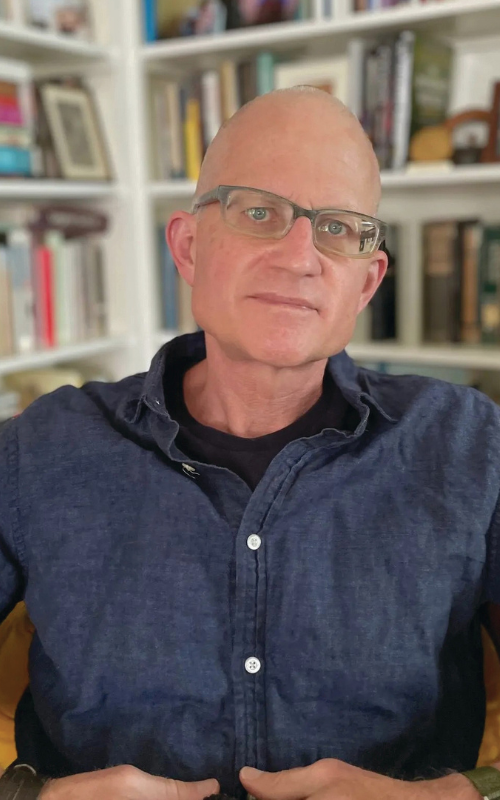
Christian Wiman is the Clement-Muehl Professor of the Arts at Yale Divinity School. He is the author, editor, or translator of fifteen books, including Zero at the Bone: Fifty Entries Against Despair and Hammer Is the Prayer: Selected Poems. His work appears regularly in Harper’s, The New Yorker, and Commonweal.
More about Chris: https://divinity.yale.edu/profile/christian-wiman
Glimmerings: Letters on Faith Between a Poet and a Theologian
00:00 The Genesis of Glimmerings
04:41 Navigating Differences in Faith
12:24 The Role of Personal Encounters
18:45 The Intersection of Suffering and Longing for God
23:33 The Relationship Between Love, Suffering, and Hope
36:37 Sustaining Faith in Everyday Life
39:53 Cutting Through the Noise: Faith Beyond Differences
Note: This transcript is autogenerated and does contain errors. Please check the corresponding audio before quoting in print.
Amy Julia Becker (00:05)
I have wanted to have a conversation with Christian Wiman for over a decade now, ever since his first book of prose, My Bright Abyss came out. Wiman’s honesty about his experience of faith and doubt and God and love bring me so much hope. If you are someone who has questions about whether God exists, if you’re someone who longs to know God personally, if you’re curious about spiritual reality and whether that actually is a reality, this conversation is for you.
I’m Amy Julia Becker, and this is Reimagining the Good Life, a podcast about challenging the assumptions about what makes life good, proclaiming the inherent belovedness of every human being, and envisioning a world of belonging where everyone matters. Christian Wiman is the Clement Mule Professor of the Arts at Yale Divinity School. He’s the author, editor, or translator of fifteen books, including Zero at the Bone, Fifty Entries Against Despair, and Hammer is the Prayer, selected poems.
His work appears regularly in Harper’s The New Yorker and Commonweal. And here is my conversation with Christian Wiman. I am so delighted to be here today with Christian Wiman. Thank you so much for joining us.
Christian Wiman (01:21)
thanks for having me, Amy Julia. Great to be here.
Amy Julia Becker (01:24)
Well, I’ve been a longtime reader of your work, starting with My Bright Abyss, which I don’t know, did that come out about ten years ago? Is that about right? Or long
Christian Wiman (01:32)
A little longer. Almost almost four fourteen years, I think. Okay.
Amy Julia Becker (01:35)
Okay.
All right. well I’ve been following along with what you’ve written in the meantime, and I’m really grateful for your latest book, which is called Glimmerings. You wrote that in conversation with your friend and former guest of this podcast, Mir Slav Wolf. So I just thought maybe we’d start with talking about how this book came to be. Maybe that’ll introduce listeners to who aren’t familiar with your work to you, but also to the contents of what we’re gonna be talking about today.
Christian Wiman (02:02)
Yeah, I’ve been at Yale Divinity School for the for fourteen years and Miroslav was one of the first people that I met here. I met him through his wife, who took the f very first class that I took and the that I taught. And we hit it off and we began having meals and taking walks together and eventually the walks became a regular thing and we would do it.
every other week or so take a long walk around New Haven and just catch up with each other and and inevitably those conversations were heavily focused on theology. I have no background in theology and I mean it’s kind of an odd place for me to end up at Yale Divinity School. No I never went to graduate school at all. and at one point
So that went on for a number of years. And Mirislav I’ve and I’ve taught classes together, we’ve done projects together and become good friends. And then at one point I was sick and we were unable to take walks and we had this email exchange, which was just a very brief thing, a logistical thing we were taking care of, and it and it became something longer.
And ’cause we were asking, you know, I asked him, what does it mean to you to love God? This huge but I just did it as an aside. And and then he wrote a response and and that became the germ of the book because w it became quite engaging to both of us. And and we just talked to each other and said, What would happen if we made this a project? And we just emailed each other for, you know, there would the only rule was it can’t be a burden. So
You know, you don’t have to do it every week or something. You just do it when you’re when you’re moved to and and so it was a way for us to stay in touch over a period of about eighteen months. Mm. And we would send those letters to each other.
Amy Julia Becker (04:09)
But so in other words, fairly quickly into that correspondence, you knew this might someday be kind of edited into something that other people read.
Christian Wiman (04:20)
from the minute we started because we’d left out all those early the early exchanges which were just full with clutter and stuff. yeah, once then we talked and we said, Well, what if we make this a project to sort of figure out where what we think about w what faith means to us right now in our lives?
Amy Julia Becker (04:40)
Well that’s where I wanted to go next, actually. So there’s early on, Mirsav characterizes your faith as an intense hunger for God that animates your entire life. And I would say that you characterize his faith as one that’s like more steady, with fewer doubts. He writes also, I am less reaching for God than recognizing at times that God is holding me. So I wanted to ask you about that,
those distinctions, the in how you each experience God or how you experience faith, because it’s runs through the book in a really, I think, compelling way as a reader, as far as like, okay, where do I line up and how do these two men who have these different experiences of faith and of God and yet are somehow helping each other to know that God and to trust that faith in a more robust way. So I wanted to hear you talk about the differences and what those mean to you.
Christian Wiman (05:36)
Yeah, well we both surprised each other. I don’t think this is in the book. It it happened on a podcast actually that we were doing together and where he said he was envious of the hunger that I have for God and that shocked me because envious of the calm that he has that he seems to have placid faith and each of us wants what the other has. Yes.
Amy Julia Becker (06:00)
Yeah, and that comes through in the book without it ever being maybe said in quite such a distinct way.
Christian Wiman (06:05)
Yeah. so yeah, I think that’s I mean that’s you know, one one reason for our friendship, I think, is that we each see something in the other that we admire and want and trust and and the friendship enables us to participate in it, to s to see it reflected back in us. You know, and and yeah, that that was a it’s hard for me to imagine writing that book with anyone else, having written that book with anyone else actually than Miroslav. Mm-hmm.
Amy Julia Becker (06:36)
Thinking about living in like such a polarized world, especially when it comes to some of these questions or these biggest big questions about faith. and it seems to me that it ca maybe has become even harder to be honest about the differences that we have, to say maybe I don’t read the Bible the way you do, or I’m actually not completely certain about that, you know, premise around God or God’s existence. And yet it seems to me in reading.
that you and Mirsov had a strengthened friendship through, I don’t know if characterizing it as disagreements is it even the right way, but certainly seeing things differently and at times saying, no, I don’t agree with you, right? And it s felt like you were, and you kind of described this just a second ago, heartened not in spite of your differences, but actually because of them. And so I was just wondering if there’s anything that you found like ke that kept your relationship
safe and trustworthy in the midst of not necessarily seeing some of these most crucial matters in the same way.
Christian Wiman (07:44)
Yeah, that’s interesting. ‘Cause there were I mean, we do say things to each other in the letters that I think we might not have said in person, or they would be they would be gentled by expressions and you know that that it they would happen in a different way. There are a couple of moments in the letters where it gets a little bit that some friction comes in. Yeah. but I wasn’t ever worried about our friendship or anything. I I
I mean I f I felt I’m thinking of one moment in particular where I felt affronted by something he had said and and but I just told him straight out. Yeah. And I wasn’t I knew he wouldn’t be bothered. I knew he wouldn’t respond with aggressive he wouldn’t take it that way, you know, and I mean basically I just trust I trust him and and I think he trusts me and and and so it makes those disagreements possible. I mean we come from some
shared ground of faith. where like there’s not there’s a difference between how we perceive God in our lives and a difference between how we relate to tradition. But but at a fundamental level we’re after the same thing and we believe in the same th the same God. And I think that makes it you know not as risky as it would would be otherwise.
I think a lot of the noise that goes on in Christianity, the public noise of it, has actually very little to do with one’s own faith. That it’s just it’s it’s just this noise going on. And it’s always been going on. we’re not unique and and and I think Mirislo and I were genuinely trying to figure out where we stand with regard to ourselves and each other. Right? How do we articulate this to one
To a person who’s your friend. And I was very conscious of I mean it’s not a not like a book I’ve ever written, because I was very conscious of addressing one person. I mean, we thought we’d publish this, but we didn’t care. I mean, honestly, we thought we’d do it in a small edition, maybe with Yale, it’d be an academic book or something. And that was our expectation. but I mean we didn’t we didn’t care at all. And we were just addressing each other.
Amy Julia Becker (10:06)
Well, I wonder I’m curious what you think about the form of letter writing rather than direct conversation. On the one hand, as you said, you can’t give a gesture or a facial expression. On the other hand, you do have some distance. Like you can read the words, react to it without writing something back, measure your own reaction. Is that really what I think? How do I want to say this? You can edit yourself, you know, like I just wonder about
even as we think about some of the challenging, you know, conversations we try to have right now with other people, I wonder whether the speed of our communication and the kind of rapid back and forth inhibits actually some of that trust and honesty. I don’t know. I’m just thinking that based on you saying like maybe some of this had to do with the fact that we were writing instead of speaking to each other.
Christian Wiman (10:59)
absolutely. I mean, I’m old enough that writing letters was a huge part of my maturity. In my twenties and thirties I’ve had significant long correspondences with other writers and which where I did a lot of my creative work in those letters and who knows what’s happened to them, but yeah. But but they were really important to me. And and that was a big loss and when when the internet took over and that was slow adapter.
But it I think it’s been a huge loss and we yeah, we respond quickly. We’re upset if somebody doesn’t respond quickly. You know, it it it it sped up everything. I don’t know how to slow it down, but but that slow it down for us, I have to say.
Amy Julia Becker (11:43)
Well, and maybe that is a little kind of gem in addition to many others in this book, is just that thought of w w are is there one or are there one or two people in our lives where we might slow down our communication in order to actually get some depth and breadth and trust within it, because I see that happening between you two and it really is, I guess, an invitation to all of us to consider that, you know, just like how might I
engage because it because you can’t do it with that many people, right? Yeah. but at the same time, the richness and depth that might come of it seems w worth considering. I also was struck, this is towards the end of the book. you write about drowning in despair, being in a just moment when you were drowning in despair and you bumped into Miroslav on the street and you wrote, Rather than offer consolation or disputing my assessment of the situation, you, which is to say Mirsaw, simply admitted to sometimes feeling the same thing.
I felt lightened, alive in the spring gleaming streets, myself and glad for that. Why? Nothing had changed. I can only think that the act of two bare forked creatures acknowledging their bare forked creaturliness enabled Christ to come among them, in them and between them. Which, you know, the fact that you are a poet comes up in just reading those lines in terms of word choice and descriptive power, but
I was also so struck by that sense of like the personal encounter and the personal encounter that was simply I’m here with you rather than trying to fix you or console you or correct you that that was somehow going to allow, as you said, enabled Christ to come in them and between them. What do you think it is what I don’t know, what what allows Christ to come?
in us and between us, whether it’s from that moment or from other moments and experiences.
Christian Wiman (13:45)
Yeah, I think I’m always moved by Dietrich Bonhoeffer’s line in one of his letters where he says, Christ is always stronger in our brother’s heart than in our own. And where we see Christ reflected back to us. We all we always tend to think people have more faith than we do. Like we’re the ones who d don’t have it then and and so it can be a powerful thing to see it in someone else and realize that what you’re seeing is partly a reflection of your own faith that
That you’re seeing Christ in another heart reflected back at you. Those lines from Gerard Manley Hopkins, Christ Christ plays in ten thousand places, lovely and lovely in eyes not his to the Father through the features of men’s faces. Lovely and lovely in eyes not his. And then the I think of that story that my maybe my favorite story in the New Testament is the Road to Emmaus story where they they don’t realize.
The joy they had until Christ vanishes, essentially. You know, they they say what didn’t our hearts burn within us when we were talking about the scriptures on the road when we didn’t know he was there. Yeah. We were just talking and his presence and able to talk to be filled with grace. And they don’t realize it until he’s and but it is that trust and the sharing that that enables Christ’s presence in that moment.
Amy Julia Becker (15:13)
Thank you for all of those different moments, like both f New Testament poetry, and personal experience. I love it. and I’m thinking about also just that idea of like assuming other people’s or believing other people’s faith is stronger than ours. When I mentioned to you that we have a twenty year old daughter with Down syndrome. And I remember when Penny was firstborn and we were just very much kind of
Trying to understand where God was in the midst of this story, which now seems much more clear than it did at all in the beginning days of her life. I just remember really believing that it actually was other people’s jobs to be praying for us and being in God’s presence for us. I didn’t feel like I could do that for myself. Like I didn’t, I didn’t have enough faith. I didn’t have any answers, I didn’t know what to do.
But there was actually this tremendous comfort in actually being like, okay, so some other people are gonna have to do that for me right now because it’s I can’t do it. And just that it was one of the first times for me, of really feeling like I was participating in what I you know, the New Testament calls the body of Christ. Like I am just a part of this and a a small part at that, a fingernail or whatever, you know, like but there are other people who can
Hold me together. and it’s not just a matter of like my individual relationship with God. It what what other people are doing with and for and in communion with God matters so much in my own faith and sense of connection, presence, love, all of those things. And I think everything you said just reminded me of that experience of actually not feeling any sense of like guilt or fear that I could not experience God personally.
at that time it was actually more like this kind of beautiful invitation to trust other people to do that for me.
Christian Wiman (17:11)
Yeah. Yeah, we were I know several people who have done this. We were part of a a team. it was called Team Franny. It was a a group of people who the parents of a friend very close friends of ours, they have they had a profoundly disabled child. and she died when she was fourteen. And she was so disabled that she required twenty four hour nursing care and
had a breathing tube, couldn’t really communicate except for a a computer of certain things. and they formed a team of people around her. And so we would all pitch in and do what we could and and we would have meetings, you know, every month or so and get together and check in to see what who could do what. And and so that was a defin that they’re not religious people, but that was definitely somewhere where I I saw
God permeated permeating through that group and giving them strength. Another thing that I realized, and not until Frannie had died, was the kind of love that her life enabled in other people. It was I just didn’t realize until she was gone that she was she was the sort of nexus of love that would not have been possible without her existence. And
It was it was very profound, profound experience.
Amy Julia Becker (18:44)
Well, and on some level, what you just said brings us to the topic of suffering, which I think also is you know, permeates a lot of your writing and also this book. one of the things you write is people sometimes say that God becomes clearer in moments of suffering, but this is not necessarily true. What becomes clear is one’s longing for God. And I wonder whether reflecting on your own experience or even just what you were just saying about Franny and the team of people around her.
Like how and why has suffering made a longing for God more clear?
Christian Wiman (19:21)
I’m not exactly sure of that. I I tried to write a long essay about this once, about what I about the meaning of suffering. I mean not that I was gonna get an answer but just
Amy Julia Becker (19:33)
Now we know. Yeah.
Christian Wiman (19:37)
but there is something that I mean y one has to be very wary of generalizing about suffering. I mean, mostly what you can say is what your own life has revealed, or point to other people who have said what’s happened in their lives. and I have experienced both a clarifying element in suffering where everything has been stripped away and I
sort of realized what was important, you know, the most important things in my life and could see with greater clarity. And I have experienced the opposite, pulverizing effect of suffering, where in fact you see nothing, that that everything just everything is just blinded. Yeah. so it seems to me both is po both both things are possible. And it is a kind of grace to be able to
experience God in suffering. It is a great grace. Yeah. It is not always given to everyone. And I don’t know why. I don’t know my hope and trust is that Christ is with us in suffering and that there is some meaning to be had there for our lives. Not that the suffering in itself you know is has an equal sign. It means this but there is
There is something some something of existential significance that can be disclosed to us in suffering.
Amy Julia Becker (21:06)
Yeah. there’s a point in the book where you write God dies on the cross and at times in our lives and in the life of a culture, he is equally absent. And I wonder whether that there’s almost a bearing witness to the absence of God sometimes in the midst of suffering. that might even be a faithful witness, if that makes any sense. Just
Christian Wiman (21:30)
That’s what Simone Vay said. Yeah, that’s what Simone Vay said that that was I mean she actually was made no bones about it, that affliction is the love of God, that that we are participating in the life of Christ. But I mean that’s a harsh harsh vision.
Amy Julia Becker (21:48)
But yeah, I was so I was reading this I’ve been reading Romans recently and I came across Romans five, three through five. And I memorized Romans five, three through five when I was like fifteen years old, and I re rereading it now at age forty nine and thinking that I completely misunderstood it when I was a teenager. So the verses that we rejoice in our sufferings because suffering produces perseverance and perseverance character and character hope and then
The part that I memorized goes up to and hope does not disappoint us. And I took that as kind of a triumphant, just like a I’m just going to choose to believe this, you know, as a teenager who I’m sure was suffering deeply in many ways. and then but what I didn’t notice until recently reading it was that after that declaration, you know, we rejoice in our sufferings and hope does not disappoint us. what Paul actually writes is hope does not disappoint us because God’s love has been poured into our hearts.
Through the Holy Spirit whom He has given us. And so I just thought, okay, so it’s only when I don’t know if it’s the fact that it is true that God has poured love into our hearts, or when I actually experience or believe that that love is present, that suffering can begin to move us towards hope. Because suffering, I now know, at this point in life does not always move towards hope. It moves towards despair, it moves towards cynicism, it moves towards grief, it move I mean it moves towards all sorts of places.
that are not hope, but it’s also possible that it moves us towards hope. And I’ve experienced that too. So that’s all kind of a long way of asking how you understand that relationship between the love of God and suffering and hope.
Christian Wiman (23:32)
Yeah, it’s interesting that I wrote a poem once where it’s called When the Times Toxins and it beg it begins when the time to Times Toxins have seeped into every cell and from all life all green or gone. some have leached of meaning. I can’t get it exactly, but somehow a seed of belief sprouts the instant I acknowledge it. And so it’s that act of of
acknowledgement or attention, as Simon Ve would say, that enables the love of God. Now this Mirsa would disagree with this completely, but it’s that act of attention that that somehow catalyzes the love of God and makes it effective in your life. That has been my experience, that that if I can manage to
It’s not believe. It’s not it’s that’s not it at all. It’s somehow it it is faith. It is it is somehow to to acknowledge that I have this tremendous hunger in my heart and let it be towards God and let God come in. If I if I can I don’t know how that happens, but it does happen. Mm-hmm. And if I can do that, then there is hope. If I can’t do that, there’s not. And I I was always I’m very moved by
a friend of mine, a a poet who’s very important in my life, Fanny Howe, she died a couple of years ago and she used to say, she’s she said once that that f faith for her ultimately was a feeling that amidst all that’s going on, amidst all the suffering, we are safe. That there’s somehow this feeling that we are safe. And I know that feeling. I know it amidst great suffering.
That somehow i i in the midst of it you have this clarity that, you know, in the mid somehow I’m I’m safe. Like there’s not there’s something that’s holding me. And and I think if you can acknowledge that, then that seems to me hope. I mean, Jorgen Moltmans said hope is what hope is what faith ripens into. Mm-hmm. And I can’t claim to be great at this, but I have experienced it.
Amy Julia Becker (25:54)
W yeah, I mean, and I again I I there may be listeners who don’t know much of your story, which has involved like extreme pain, both of a physical and emotional and spiritual sense, in terms of twenty years ago a cancer diagnosis that seemed like a very more or less immediate death sentence. Is that accurate?
Christian Wiman (26:21)
Yeah, they gave me five years at the time. No more than five years. Yeah. I have a very rare blood cancer and I’ve had thirteen treat thirteen times that it’s been out of control. So it’s it has been the defining element of my life for twenty years.
Amy Julia Becker (26:36)
Yeah, and with and when you got the diagnosis with like young girls, young daughters, and a relatively new marriage and, you know, kind of all the years ahead of you, that a I don’t know, thirty something person should be expecting and and having so in other words, again, like I know there’ve been like brutal physical experiences, but there’s also just that existential grief and loss experience that you’ve had to reckon with that
again, many of us might theoretically, but not quite as acutely and immediately have to face
Christian Wiman (27:14)
Yeah, which is ultimately worse than the physical suffering. I mean the physical suffering takes over everything when it’s going on, but the other suffering really doesn’t go away. And and is I mean i more dangerous in terms of despair. Mhm.
Amy Julia Becker (27:33)
And where for you, I mean again, I’ve read enough to know that you’ve done some thinking about kind of where is God in the midst of suffering and even a return to faith in the midst of suffering that might be somewhat confounding to those looking in from the outside and perhaps even to you experiencing it on the inside. But will you just like speak a little bit to that the role of the love of God and faith in the midst of your own?
you know, a couple decades of going through this personal experience of suffering.
Christian Wiman (28:10)
Well, Simon Vay she’s a person I return to quite a bit. She she once said that that a person who hasn’t experienced a supernatural feeling of supernatural experience of joy cannot understand a supernatural experience of suffering. Which is very interesting because she’s thought of as this, you know, writer of affliction and and privation and and yet she’s she said the joy comes first and
And that was my experience is that I had this I fell in love with Danielle and in my mid thirties and y the love just wanted to be more. It needed to be more than us. And and both of us we found ourselves saying prayers before dinner just sort of jokingly at first, and then we became more serious and and then and we we talked about going to church, but we didn’t and
And then I got diagnosed and it really made us need to give some form to what we were feeling. But we it what I say of Simone Vey just played out in my life directly. I mean, I had this experience of overwhelming joy and then experience of overwhelming suffering. And when the suffering didn’t take away the joy, the I mean the world was lit up in suffering, just as it was in joy, but in a different way. It was
It was it was it was a painful joy. I mean joy can be painful. And you can experience joy amid s amidst much suffering, whereas you’re not going to experience happiness and much suffering. But you can experience great joy amidst great suffering. And I had those two things mingled. For years I’d had the experience of writing poems and and that is an experience of joy even when you’re articulating despair. It’s an experience of joy to be given the poem.
feel that unity of existence briefly. But I never knew what to do with the feeling afterwards. I would I was just like, well, what did that it sort of baffled me and I didn’t know where the pulse came from and I didn’t and in retrospect I can see that that is I mean I think that was God knocking on the door of my head over and over and over. Yeah. And and it finally took quite a big jolt for me to translate the experience of joy into an experience of faith.
Something after the experience of joy.
Amy Julia Becker (30:42)
I found that in the like kind of liminal spaces of existence, you know, being at my best friend’s home after her brother was killed in a car accident or I was with my mother in law when she died, they both in involved some measure of suffering. They also involve some measure of joy in terms of just the even the the ache of losing someone actually is some
connects you to joy somewhat in the sense of you you mattered so much. there’s so much love for you that the loss of you is devastating. and you know kind of stops everything, stops everything else. Like there’s there’s no distraction from loving this person, I think, in both birth and death. I mean, depending on how much you’re close to the person who’s dying. And and I yeah, just that
that sense of the joy and the suffering being really interwoven and also I liked that idea of being knocked on the knocked on the head. Yeah, just like, hello, I’m gonna give you another poem and you’re gonna have this experience and eventually maybe you’re gonna you know, pay attention to the giver, and to where that’s where that’s coming from.
Christian Wiman (32:02)
Yeah, it can be hard to come back from those experiences is one most people don’t pay any attention to this. You know, you don’t hear much about it. I mean, you hear about it with trauma. It can be certain traumas can be hard to come back from. But it can be hard to come back from what you might not consider a trauma, though I guess it is, if you have like a bone marrow transplant that is pretty traumatic. it can be hard to come back.
you the world you’re just back in the world as the world and it’s not lit up. You don’t have these relationships glowing like they were and and there’s a wonderful play called Mary Jane by the playwright Amy Herzog and and she has her a disabled kid and and and she talks about the the mother in the play is always in the hospital over and over and over and over and she has this experience in the
hospital with this other mother, Orthodox Jewish woman and and also in the hospital over and over and over. And Jewish woman says, you know, when I get out of here, y what’s happened to me is is I get back in my life and I just keep thinking, This is not life. That’s life over there. That’s the real life. Let’s just get back to it. Let’s just get back to where it’s real.
And she just keeps and she has this sort of perverse feeling that that’s where reality is. Yeah. In in that crucible. And I think it’s a very it’s a beautiful play. but that moment is particularly poignant to me.
Amy Julia Becker (33:40)
Well, I’m curious where if there have been moments and maybe the bone marrow transplant already you’ve already given us one where it it does feel like I’m in touch with something that is more real or more true than my everyday life of, you know, eating some eggs in the morning and walking down the street. I’ve had that experience mostly again in some of those liminal spaces and then also being in a
we go to a camp in the summer, which is all families affected by disability. And that’s where I have that experience of I think what you’re describing of like this is where I feel the most sense of yes, the presence of God, but also just like the really real. And I I’m curious for you when if and when that shows up.
Christian Wiman (34:26)
Well, it has showed up in my the moments of crisis. I mean, this last time when I was writing those letters to Miroslav, a lot of those letters are written in the hospital in Boston where I had to go for I think I was there for eight weeks. and it was a pretty extraordinary experience. It was really, really miserable. But I had two fr my wife couldn’t come except for brief visits because we had
our life still going on here. Our kids had to go to school and, you know, we couldn’t stop our lives. And and and I could never be alone. so the and I wasn’t always hospitalized, so I had to have an apartment nearby and next hospital. And so I had two friends come at separate times and stay with me for long periods of time.
They’re old friends, but I had an extraordinary neither of them religious. I had an extraordinary experience with both of them, that clearly the situation enabled, and there wasn’t any pity intermingled with it or it was just a kind of intimacy that the situation made possible. and maybe my own vulnerability made possible, no no doubt.
I’ve had that several several times over the years and in other people’s lives. I mean I certainly that that girl that I told you about that was that was I mean her life was but was quite a had quite an impact on me. I have a yeah I have a poem, my next book, and a piece of prose in the book after that that’s about her. So yeah, I I I I’m troubled that that’s the case, that we s we seem to only come to full life and suffering.
I don’t think that’s true. I think enjoy we can. Right. But but but suffering does it more often for most of us. I don’t I don’t know why we tend to be so calcified, but
Amy Julia Becker (36:37)
I feel the same way. I’m also wondering about the experience of faith in the day to day. You know, we’ve kind of talked about these like profound moving and certainly for me, I would say the most life changing moments have been these liminal experiences of joy, suffering, birth, death, all those things. And I’m also struck by the fact that we live most of our days, most of us, where we are just
getting the groceries and you know making the bed and teaching the class or writing the thing or what you know whatever. And so I’m curious what your how do you sustain faith in the day to day when, you know, the great suffering and the great joy is maybe not quite as tangibly present.
Christian Wiman (37:27)
Well, I do pray. and I mean that’s one way. and certainly shared experience with my wife and friends and kids, all of those things sustain it, but as that book with Miroslav reveals, it’s a great difficulty for me. I mean I experience God’s absence more than God’s presence and I
I it’s not something that ever goes. I I don’t I I I have a continual hunger for God and it doesn’t ever go away. It’s like it’s it’s there all the time. And it’s a little bit for me it’s always been bound up with poetry ’cause I also have always had this continuous hunger to create something and often not not been able to. Usually not able to, I have to say. Usually not able to.
and I then I’ll have these incursions when suddenly it becomes possible, but I don’t understand it and I don’t understand how to make it happen. and and then there are times when I’ve wished that poetry would just leave me alone, that I could just live a life, just an ordinary life. Yeah. And I’ve had that wish about God too, that just just leave me alone, just go away. Just out with that part of my brain just to go away.
And let me just live an ordinary life. I didn’t somebody asked me the other day, you know, what was your greatest ask aspiration right now? Like would you like to win a Nobel Prize or something? And and I said, if somebody came down and asked me that and some angel came down and asked me that, I would say, I would like to be a simple Christian. Mm-hmm. Yeah. I don’t w I don’t want to forget God. I want to be a just a simple Christian. ‘Cause I’ve seen it in my life. I’ve seen people lives like that. That’s what I would like. Not just to just to trust.
For it not to be this vertiginous up and down and no.
Amy Julia Becker (39:31)
Yes. I do. And I I have also had people in my life where I feel like they’ve been given the gift of a simple faith. And I really admire and also long for that often, without all of the questions and doubts and analyses that come with my way of thinking about it so much of the time. And I’m curious, actually there’s one scene in the book that I was thinking I might ask you about and now I will, where you are back in Texas where you grew up.
and going to serve at a food bank at a church that has a set group of people who probably have very different both political and theological viewpoints than you and and yet you come back from that not with a posture of, you know, judgment for the people you were serving alongside. And I’m just curious if you could speak a little bit to that experience.
And maybe how it relates to what we’re talking about about a simple faith or a yeah, faith in the day to day.
Christian Wiman (40:34)
Well, it that it makes me think of what I said earlier about the noise of Christianity being apart from a life of faith. I mean, ’cause if you had asked me what I would have in common with those people, or would I want to be around even spend a day with the group of people? I mean they were conservative Church of Christ, you know, Southern Church of Christ. Yeah. Very conservative branch of the church. And and
They were doing nothing but good. They didn’t say a word about they didn’t say a word trying to convert anybody. They didn’t you know, they just they didn’t had give out any pamphlets, nothing. All they did was put food in the trunks of their car and give a hug. Yeah. And I felt pretty chastened by that. Yeah. I thought I I just felt like, gosh, these people are doing what I don’t do and not not
Taking a bit of credit, not even think not even acting like it’s anything. They were doing it every day. I mean, this was every single day this food bank was was going. and most of them were volunteers. So yeah, I I
I think that faith transcends all of these differences that we think we have. it’s just it’s just finding occasions. And the only way that I was able to become part of that group is because my family, members of my family are part of it. And so, you know, they said, Come do this for a day. And they didn’t make anything of it either. They like, this is just what we do.
They’re poor. I mean they’re th they themselves are dirt poor. And so yeah, I think at at at some point you have to trust that your faith is the same. that there is some ground of faith that you share and that the rest is a kind of noise that it’s really unfortunate. I guess every every religion is prone to it. I mean, faith hardens into religion. Faith is
Amy Julia Becker (42:27)
Yeah, yeah.
Christian Wiman (42:53)
Faith is a river of religion. You have faith before you join a religion and and religions you know, they’re just these human things that we make and everything humans make is just it’s got some rot in it. Yeah.
Amy Julia Becker (43:11)
Well, and wonder whether what we’re actually talking about are these different ways to cut through the noise. some of them we might not ever want or invite, a bone marrow transplant, and yet it cuts through the noise. And others we might just neglect to do, which is to say, show up at the food bank, like just do the thing.
It just seems like in both cases there’s a there’s a cutting through of that noise, which is also back to what you were saying about like an openness and an attentiveness to what else might be, and then perhaps discovering that it’s the love of God that is there. in almost in very mysterious ways, right? but nevertheless that that might be the the truest truth and where we where we
can find ourselves being held.
Christian Wiman (44:09)
Yeah, and it happens without it’s like those disciples on the road to Emmaus, it happens retrospectively often. We don’t realize we were experiencing the love of God because we didn’t need to realize it. We were just in the experience. It didn’t need a meaning. It’s afterwards when you think, gosh, wasn’t my heart lit up in that moment? Mm hmm. What what does that mean? It happened and afterwards we realize what an experience has meant to us.
Mm-hmm.
Amy Julia Becker (44:41)
Yeah. And having some measure of like a reflective practice that allows us to do that, again, can go in the direction of too much analysis, but can also go in the direction of learning how to pay attention to the love that’s all around us.
Well, thank you again for the work you’ve done in this book and throughout your career. it’s really been a balm to me and I know to countless other people. and and part of that comes from I think exactly the part of you that you would like to relinquish, but it’s a gift to the rest of us that you are asking those questions and insisting on being honest about it. Like, yeah, I still
I I still have that hunger. I still have that longing. it hasn’t all been tied up in a bow. That’s that’s a gift to other people, so thank you for it.
Christian Wiman (45:33)
Thank you for having me, Amy Julia. Nice to talk to you.
Amy Julia Becker (45:36)
You too.
Thanks, as always, for listening to this episode of Reimagining the Good Life. This is the final episode for this season, but we’ll be back in the late fall with more engaging conversations. Meanwhile, I am starting a new season of my other podcast, Take the Next Step, that begins at the end of August, so please be sure to check that out, especially if you are a parent or caregiver of someone with a disability. I would also love to
You to subscribe to my Reimagining the Good Life Substack. That’s a newsletter that extends the same work where we challenge assumptions about the good life, proclaim the inherent belovedness of every human being, and envision and build a world of belonging where everyone matters. You’ll find links to all of these things in the show notes. And of course, if you’ve enjoyed the show, please make sure you follow it. That way you’ll get the next season when it drops.
And please also rate and review it. You could maybe take a time, like to, you know, say, good, I listened to this whole season or just to this whole interview all the way to the very end when she’s talking about all the things I can do. anyway, if you take the time to go over and either rate or review it, that makes it much more likely that other people will find this show and get to enjoy these conversations with us. Please, of course, feel free to share it with friends and send questions or ideas anytime using the send us a text link at the end of the show notes.
As always, thank you to Jake Hansen for editing this episode. Thank you, Amber Beery, my director of content for producing the show, and thank you, our listeners, for being here. Let’s all keep reimagining the good life together.
my weekly Substack letter
My newsletter delivered to your inbox that challenges assumptions about the good life, proclaims the inherent belovedness of every human being, and envisions a world of belonging where everyone matters
LET’S REIMAGINE THE GOOD LIFE TOGETHER. SUBSCRIBE TODAY!

Get the Free Resource!
An illustrated guide designed to help you identify and create spaces of welcome and belonging—download today!