
REIMAGINING THE GOOD LIFE PODCAST
S10 E8—Difference often exposes our tendency to rank people as “better” or “worse.” Theologian Brian Brock, PhD, joins Amy Julia Becker to explore a life rooted in connection, creatureliness, and love. They consider:
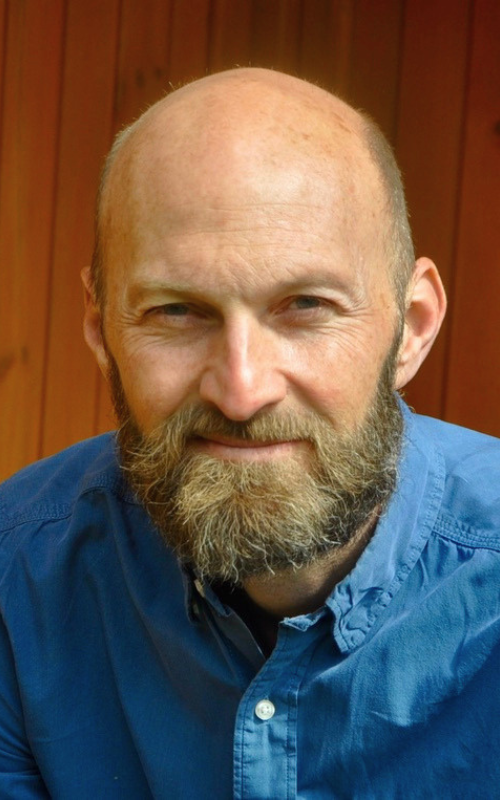
Brian Brock (DPhil, King’s College, London) is Chair of Moral and Practical Theology at the University of Aberdeen, Scotland. He has written scholarly works on the use of the Bible in Christian ethics, the ethics of technological development, the theology of disability and the doctrine of creation. He is founder and managing editor of the academic monograph series T&T Clark Enquires in Theological Ethics, is Managing Editor of the Journal of Disability and Religion and President of the Society for the Study of Christian Ethics. He is also a husband and father of three children, including Adam, who is 21, a delightful human being with Down’s Syndrome and autism. His most recent book is Joining Creation’s Praise: A Theological Ethic of Creatureliness.
00:00 Introduction: Joining Creation’s Praise
04:35 Human Beings Are Creatures
11:57 Human Exceptionalism and Disability
16:00 Dietrich Bonhoeffer: Disability, Moral Responsibility, and Community
21:19 Euthanasia and Historical Context
24:07 Creation, Redemption, and Human Worth
32:22 Understanding Personhood in Modern Ethics
40:59 Reimagining the Good Life Through Creation
MENTIONED IN THIS EPISODE:
Note: This transcript is autogenerated and does contain errors. Please check the corresponding audio before quoting in print.
Amy Julia Becker (00:04)
What if consumer capitalism isn’t the best way to live? What if becoming more efficient, productive, and wealthy doesn’t lead to happiness and to flourishing? I’m Amy Julia Becker, and this is Reimagining the Good Life, a podcast about challenging the assumptions about what makes life good, proclaiming the inherent belovedness of every human being, and envisioning a world of belonging where everyone matters. Today I’m talking with theologian Brian Brock about disability and the good life.
We are using Genesis 1 through 3 as our guide. And I do want to give you a few ⁓ notes as we go into this episode. First of all, I learned new things about Dietrich Bonhoeffer and how a community of adults with disabilities shaped his thinking. I also learned, but only after recording this podcast, that the way to pronounce the community that shaped his thinking is Betel, not Bethel. So if you hear Brian saying Bethel and me saying Bethel.
Well we are talking about the same place and I just did not know how to properly pronounce that place. So sorry about that. ⁓ all right, let’s give a little biography of Brian Brock. He is the theological ethicist and chair of moral and practical theology at the University of Aberdeen, Scotland. His latest book is Joining Creation’s Praise. He’s also a husband and father of three children, including Adam, who is twenty one years old, a delightful human being.
who has Down syndrome and autism. Here is my conversation with Brian Brock. Brian Brock, thank you so much for being here with me on Reimagining the Good Life.
Brian Brock (01:43)
Great to ⁓ to to be here. Thanks for inviting me, Amy Julia. It’s a real pleasure to it’s been a while since we’ve done this.
Amy Julia Becker (01:49)
I know, I know, but I’m well, and honestly, I think there might be a reason it’s been a while. I’m gonna try to hold up your new book. When I got this journey creation’s praise, you might notice it’s like thicker than most books on any of our bookshelves. ⁓ I did not know when I first saw it. I was like, I’m so excited. Brian has a new book, I’ll read it. ⁓ it’s over a thousand pages and and it’s really like
richly dense, you know, kind of like a chocolate cake type of dense, not in like a ⁓ you know, rock that you don’t want to try to consume. ⁓ but it’s really beautiful and thought provoking. but I’m also wanting to ask you a and I should say it’s largely about Genesis one through three. So it’s about, you know, it’s a thousand pages, about three pages of the Bible. And so I would love for you to just ⁓ give us a way into this book by
how you describe like what it’s about and what compelled you to write it. ⁓ and and almost like why was there so much to say?
Brian Brock (02:49)
Yeah. Yeah, happy to. ⁓ I mean the academic answer is that the doctrine of creation does a lot of work in positioning topics in Christian ethics. So I mean I’m a I’m a theological ethicist by disciplinary location. And so I ⁓ I sort of noticed that problem with the literature and I wanted to say something about it. ⁓ but in the context of discussion with you, I did so ⁓ from the beginning. ⁓
as the father of Adam, ⁓ who is ⁓ has Down syndrome and autism is just not a standard issue human being. So ⁓ thinking about what the doctrine of creation helps us to see about how the world is, is also in for me, intertwined at its very roots with questions about how I’m supposed to understand and narrate the life of somebody who, for instance, would typically be referred to as
having it ⁓ having their lives determined by a genetic mutation. That’s it. The term genetic mutation is a way of describing how his body differs from others and it sort of sets that body in relation to many other things. We think about how the world came to be and how different bodies function. And so ⁓ yeah, there was an academic question about how do we bring the materiality of life into Christian ethics, into sort of faithful living.
And along with that was this question of this how do I faithfully parent and live with and respond to a a a body that ⁓ is you know, looks like a mistake of evolution or kind of a ⁓ a broken body.
Amy Julia Becker (04:33)
Well, I’d love for this conversation to at least hint at some of the ways you’ve come to answer that question with answer being maybe too concrete a word. But ⁓ let’s start with the initial sentence in the book. Human beings are creatures, because I think that idea of being a creature is not necessarily one that most of us walk around with, especially with an evolutionary gaze. ⁓ so what does it mean for us to understand ourselves as creatures? ⁓
Are there other options for how we understand ourselves? Why does this matter? Like could you just speak on that to that for a minute?
Brian Brock (05:08)
Yeah, of course. as I thought more about it, I realized that most of the time when Christians use the language of creation, they they’re they have in mind either the God who existed before there was a world, or the what resulted from the creative act of that God. Right. And that the the Genesis account is the story about how that happened and like what the first episodes in the life of the world were. ⁓ but if you
Read that story on its own terms, it’s also it’s saying something slightly different. Yes, it you know, there is a God who preceded creation, and yes, there is a product of the acts of that creator creator, but the message to the the characters in that story is your problem is that you’re not content to be creatures, right? You want to be like God, right? That’s the leitmotif topic that’s introduced right there at the beginning of the story. Our problem is that we don’t want to live like.
creatures in a creaturely way, we want to be like gods. We want to be self legislating and self justifying. That ⁓ diagnosis seemed to me really far deeper than than I had heard it before. And so part of the reason the story takes so long to unspool in the book is that ⁓ if we start again by asking what does it mean to to not aspire to live like gods, that’s that that takes quite a sort of
detailed engagement.
Amy Julia Becker (06:38)
Well, so let’s faithfully welcoming this is a quotation. Faithfully welcoming the differences between creatures is one of the central activities in which Christian faithfulness must be learned. And I I thought maybe you could you mentioned the idea of the doctrine of creation. And for people who are not in theology, ⁓ and who might be like, I might know what that means, but I don’t really like, ⁓ what is the doctrine of creation? But also are creatures like is the cat who is asleep in my lap right now also a creature?
What’s the distinction between the differences between creatures? So could you just speak a little bit more even about like this idea of the doctrine of creation and creaturliness within that?
Brian Brock (07:18)
Sure. ⁓ well the the term doctrine is just a way of talking about clusters of ⁓ ideas that Christians have developed through the centuries to to tie together themes in Scripture. The doctrine of creation is pulling together all of the material in Scripture as sort of worked through in relation to the other doctrines to ⁓ to describe how the world came to be in its materiality and how how it functions and how it relates to.
It’s creator. So yeah, in that in that account, the Christian account of creation, a cat is a creature. Everything that exists is a creature. But they’re not ⁓ they’re not undifferentiated, right? They a rock and a cat and a human being are all creatures. But the one of the main jobs that the story of creation in the Bible does for us is sort of say there there are relevant distinctions between different creatures. They’re not
but that doesn’t mean that one is more valuable than another. They’re just different and you should recognize different distinctions as having different implications in terms of how we should relate to them, right? It’s a different kind of act to break up a boulder to make gravel than it is to kill a cow and break it up into parts to to make hamburgers and other things. ⁓ in ethics, it’s important to have some of those distinctions. Often a lot of the
kind of woodenness of the way Christians talk about Christian ethics has to do with using ⁓ the wrong or oversimplified doctrinal categories to talk about them. And creation is one that has been misused quite flamboyantly. So the f the most famous and inf or infamous use was the the way ⁓ Lutheran theologians in the nineteen thirties used orders of creation logic to to to give religious sanction to blood and soil.
ideologies, you know, nationalist ideologies. It was the doctrine of creation and its misuse that made some of the problems of the German church in the thirties what they were.
Amy Julia Becker (09:25)
Right. Well, that maybe brings us back to what you were talking about earlier in terms of having Adam in your life as a prompt to ask these questions. And I think there are certainly humans in our world, perhaps even Christians, who might say Adam is a different type of creature than you are because of some of his
particular capacities or disabilities or so forth. And I’d love to hear you respond to that. ⁓ and I’m gonna read one other thing that again, you wrote early on in the book. We begin to know ourselves and creation rightly only by throwing ourselves into the nerve wracking business of loving and being loved in return, which again might that idea bring let’s bring love into the conversation when it comes to our creaturliness.
Brian Brock (10:11)
Yeah. let me just say that I think that this point about differences is usefully understood if we compare it to its opposites. And that is difference often provokes everyone, including Christians, to ⁓ develop a hierarchy of better and worse. So some of the reasons that people would think of Adam as different from me is that I’m a normal human and he’s a somehow a sub subnormal or
kind of a undeveloped version of human life, right? And there are various ways that that gets done conceptually. ⁓ Another way that difference is not welcomed is that it’s feared, right? So the the the well-known critique in disability studies ⁓ of projection is really important, right? Like some human lives provoke fears in us about what it would be like if we lost the capacities that they don’t have.
Amy Julia Becker (11:09)
Yes.
Brian Brock (11:10)
So that projection is actually one of the key reasons that disability discrimination works. ⁓ Adam I mean, so one of the things that I learned about being creaturely from Adam is that Adam doesn’t fear being like me. Other people around him fear being like him, but he doesn’t have any complaints about being like he is. and so that it that threw in a very stark relief that learning to
To welcome difference between creatures means getting past fears and also getting past certain modes of trying to justify ourselves as better than all the other creatures. Like we’re the ones God’s interested in because we’re the smart ones is is the kind of crass way to put it. Yes. There’s a lot of theological machinery that gets built around that idea. ⁓
Amy Julia Becker (12:01)
Well, and like evolutionary logic is that way as well, right? I mean, I feel like that comes up in a you know, an atheistic worldview in which, ⁓ humans are more important or have, you know, different rights simply because of intelligence, which obviously can break down w and probably also prompts us to decide we need to start being able to measure intelligence and so that we can somehow put a cutoff on who gets to count as human or not. But also i i you know, gets into animal rights and so forth.
Brian Brock (12:31)
Exactly. Yeah. So that ⁓ there is there’s a lot of boundary questions that go on in these discussions as well. ⁓ by what grounds do we say that Adam is the same as me and Coco the gorilla that can sign and theoretically communicate better than him is is less than him, right? Like that that game is one that’s running all the time in our ways of cataloging different creatures. And these these marginal cases
or what looks to us according to our way of setting up difference as marginal cases are really important places where we can think through what does the advent of Christ in this creaturely realm tell us about which are the distinctions that matter and and which are the ones that that are just us kind of protecting ourselves from from difference, which we sh we really should see as a good thing and not a not a threat.
Amy Julia Becker (13:30)
So how do you answer that question when you look at the, you know, comparisons we do with non human animals, you know, and among humans?
Brian Brock (13:41)
well one of the starting points is that the first creation account in in Genesis one talks about how God makes things distinct. So, you know, land and water, sky and air, night and day, these are not positioned as better and worse, superior and inferior. They’re just different. And then each one is populated, made fertile. And I think ⁓ that if you notice that it actually goes quite a long way to highlighting ⁓
various ⁓ apparatuses for generating what what can be called human exceptionalism. Like we’re we feel compelled to say ⁓ we are the pinnacle of creation. And and with that comes a kind of ⁓ lament for those members of our species who didn’t reach their full potential. Right. And I think the the nub of disability discrimination is right, is right there in that
mapping of how humans relate to the rest of creation because it it positions us to to see to see disability always as a falling short of the of the potential of the human, the glorious human. And of course, coming into proximity with the slightly less glorious reality of animals and even maybe falling below the level of some animals. That slippage has also often characterized the way people have treated
does with disabilities, including, you know, ⁓ having inhumane modes of effectively incarceration because, well, they’re like animals, right? And so that kind of human animal boundary is one of the places where we ask what’s what’s distinctive about the human from a Christian standpoint. And how do we construe that boundary in a way that allows us to ⁓ respect creatures as they’re
as they’re due. The classic question of justice is giving what’s due. These hierarchies parse out what’s due in ways that allow us to ⁓ to to give less respect even some humans, but definitely to many other creatures.
Amy Julia Becker (15:59)
I’m curious to try to kind of fast forward to you mentioned already the German church in the nineteen thirties. and I was really struck by so we’ve got, you know, these passages from thousands of years ago, and those in and of themselves are saying that humans created by God ⁓ have significance.
and have significance for how we live here and now. And then in a later chapter in the book, you write about Bonhoeffer, Dietrich Bonhoeffer, who we might need to introduce our listeners to. ⁓ and you write about his experience in a community that welcomed and centered disabled people, which again, I didn’t know that part of his history. So I’m just wondering if you could start, and I’ll ask a few questions here, but about who Bonhoeffer was and that experience that he had at this community, I think that was named Bethel.
Brian Brock (16:50)
Sure. Yeah. ⁓ Bonhoeffer was a ⁓ German theologian during the run up to the Second World War. He actually was executed right at the end of the war by ⁓ by Hitler. ⁓ but in nineteen thirty three, ten years before, he was part of a group of theologians that came together to try to galvanize the church in Germany against the what they saw as the kind of poison of national socialism.
what are the things Christians need to confess that will help them see the problem that’s coming? so they gathered at this ⁓ a sanatorium, which was a church run healthcare institution in a particularly German way, w that looked after specifically ⁓ epileptics. Okay. And ⁓ it was a pretty big institution and it was run by essentially lay deacons. So, you know, there’s hundreds of
of people in this institution and they would have church together. And at at those services also people would come in from the street and there would be doctors and their families and ⁓ all kinds of carers. And there’s a letter that Bonhoeffer writes to his grandmother saying, I really here for the first time saw the church, by which he means the whole church, not the church that I have recently taken to ⁓ calling the church church with an asterisk.
The church of all the well looking, performatively conforming, high caste people in society, but like the actual church with everybody in it. And that kind of ecclesiological realism totally changed his theology. ⁓ it it it made him think of the church and the gospel in a in a different way, as a gathering of people who ⁓ may have a very different status in
society at large. And I and that experience allowed him to perceive the real abomination of of Hitler’s euthanasia program very early on. And the president of the Beatles sanatorium was put up as the rival to be the Reichsbishop, right? There there was a a lot of fights going on about who was how Hitler was going to kind of corral the church. And one of those was to say, you need to have a single bishop, which had not been the case
before. There’d be one German bishop over the whole church. And some of this resisting group in the church said we should put ⁓ Friedrich von Boderschwing in to that role. And he was the head of this Beatle institution. ⁓ there’s a lot of complexity to the story, but he refused as the euthanasia program developed to register his patients and therefore they were not taken away. ⁓
But if he had played the paperwork game and said ⁓ who was who was there, the trucks would have come and taken them to the gas chambers. Yeah.
Amy Julia Becker (19:57)
You write Bonhoeffer learned from worshiping with the disabled that in his place and time, the options were either Bethel, this community that you just described, or Buchenwald. ⁓ and again, we give some context. I don’t even know if I’m pronouncing it correctly, Buchenwald. And ⁓ like and then and then go deeper, like explain why were those the options. And then I and then I want to do another hundred year jump, like why does this matter for us today? Because I do think it’s pretty important as we think about ⁓ yeah.
Disability in human life.
Brian Brock (20:28)
Yeah. Well, ⁓ the condition for the discussion around what to do with the patients in the Beatles Sanatorium was a discussion around the limits of moral responsibility, right? Like ⁓ what was being disputed was who can we dispense with and who can we not dispense with, and on what grounds. Right. That that’s the debate that they were having as a cultural ⁓ cultural community. So the reason why it’s two options is that
Beadle, where everybody worshipped together and you could see their togetherness, built a kind of solidarity that made it morally repugnant to send away some of their members to be killed. ⁓ Buchenwald represented the cultural form in which well were willing to debate who might have to be thrown overboard. And I think the piece that’s really quite ⁓
quite chilling if you look at the discussions that are going on around euthanasia today is that we we think of it ⁓ in association with the anti-Semitism of the Third Reich, that it was about racial purity. And that was that was there. ⁓ But that wasn’t the given rationale for the euthanasia program, which began with disabled people and moved on to Jews. ⁓ So once you let the distinction between
the human who yes is human but ha has doesn’t have moral worth into the into the discussion, well then that that boundary is going to move and it and the the Nazi case is a is a is an obvious example of that. ⁓ I kind of return to this topic later on, but I quote a scholar, ⁓ a historian of of this period in history, who who pointed out that the Third Reich’s euthanasia program
actually had very similar modes of rationalization to the ones that we can steer still here today. He says this is a scholar named Proctor. ⁓ he says despite occasional posturing of humanitarianism, the essence of the Nazi argument for the destruction of the insane was economic. Euthanasia was defended as a means of cut cutting costs or ridding society of useless eaters. The purpose of the operation was not only to continue the struggle against genetic disease, but to free up hospital beds
and personnel for the coming war, the philosophy was simple. Patients were to be either cured or killed. Right? That’s the that’s the Beetle and Boot Buchenwald ⁓ basic dichotomy. And once you say cure or kill, all kinds of evils follow, right? Those of us who are working in the dis disability discussion know that the kind of cure or kill trope is something that, for instance, autistic people have really highlighted.
If you allow the the cure or kill logic to run, then it’s it’s immediately casting aspersions on those who who can’t be cured of whatever their condition is.
Amy Julia Becker (23:35)
Yeah. So I’m curious within that, what Genesis one through three’s answer is. And and on some level, Bonhoeffer is getting that at that in terms of bringing people together who actually have diverse expressions of humanity and not putting up this logic of cure or kill. ⁓ and maybe that’s all there is to say, but I think there’s probably more in terms of like what is a a different way of being that’s not this ⁓
decisive or ⁓ dichotomous. And I think a lot of it goes back to what you’re saying about status and hierarchy. ⁓ it’s interesting because I think in in creation’s logic, like the logic of cli creation, there’s a tremendous amount of diversity. ⁓ but it’s not a hierarchical diversity. And and so yeah, what how how do you think the the logic of good Christian doctrine of creation speaks into the cure or kill logic?
Brian Brock (24:34)
Yeah. Well, we have to remember when we’re asking a question like that that the creation account, like the story of the end in Revelation, are they’re bracket accounts. and it’s important to think about what what those bracket accounts are doing. they’re doing the same thing in the sense of giving us pictures of redemption and a world without the fall, from which we can gain some ear orientation in a world that
clearly is not like either of them. Okay. So they give us different different features of re reality features, let’s say. ⁓ they’re they don’t collapse into one another. They’re not saying the same thing. Creation story has a distinctive cluster of emphases that the the revelation story doesn’t. And both of those are needed for us to ⁓ to gain some purchase on what’s going on
when we do, for instance, feel ourselves superior to other human beings or other creatures or feel like we ⁓ want to control or dominate other creatures, right? Like for us, it’s really a kind of a work of redemption for God to introduce us into being able to admit particularity without ⁓ you know, fear or hierarchy. And I I mean we it this is as simple as the example I give one example of ⁓ Jesus as
Jesus and Peter are both mocked for their accents as Galileans, right? When they talk, their particularity as country bumpkins was visible. And Matthew, in Matthew 27, we get one of several hints that that that people look down on them for that, right? That’s the hierarchy. So we all have local accents, and ⁓ it’s not always easy to live at peace with our locality, our particularity.
And with other people’s particularity. And in Jesus, ultimately the the the answer of what it looks like to live a faithful life in between creation and redemption is displayed in Christ. And we’re trying to work out ⁓ how what Christ shows us about life that’s lived without threat or hierarchy from from difference.
Amy Julia Becker (26:58)
Yeah, and I see it strikes me that having the not just the brackets, but also let’s call it the center of the the story of Jesus embodied and incarnate. ⁓ all three of those work together, both in terms of kind of what could be or should be as these images from the beginning and the end, and also what really is, ⁓ in the sense of Jesus’s ⁓ being able to enter into a way of being
that he called the kingdom of God. And I’m curious about this idea of the creation story in Genesis one and two, especially kind of shaping our moral imagination for what could be and I wonder whether that gets at some of the ⁓ your work here talking about the difference between the Bible as like a map and as a way a means of wayfinding. ⁓ where again we’re not get given a
point A, point B, point C, and then you’ve arrived. But we are it’s n at the same time, it’s not just kind of ⁓ coens that we may or may not, you know, make sense of in our life. There is there is a way of being that is presented here ⁓ and that’s embodied in the way of Jesus, but also that’s really ⁓ gives us ⁓ yeah, again, I think a moral imagination in those initial chapters of Genesis that get played out in different ways throughout the Bible.
Brian Brock (28:24)
Exactly. Yeah. The one term that’s introduced that makes the connection between creation and Christ is the the language of the image of God. I tend to use that as a verb. We are to image God and we can ⁓ take on the image of the serpent. ⁓ some of the church fathers spoke in those words like it’s the image is not a possession, it’s a mode of action. And the reason I think that is important is
Is that ⁓ again another another kind of link that’s probably useful is what we’re looking for in the time between the beginning and the end is the good works that as it Ephesians two puts it, that were ⁓ that we were created in Christ for good works which God has prepared beforehand for us to do that are to be our way of life. Right. That so ⁓ we are not in Adam and Eve’s position. Yeah. It is not our responsibility,
⁓ without sin to look after the plants in that place. But we do have our own local ⁓ claims f and that comes to us through other creatures. And those are ⁓ irreducibly time time saturated. ⁓ I talk there’s a chapter about ⁓ reflecting on what it would have meant for them to be good gardeners and how gardeners have to wait
for things to take their own time and they have to attend to them in their ⁓ ephemerality, right? ⁓ to take them seriously. The lifespan of the of the plant is different from our life’s plan and the it’s the cycles of its needs are on working on a different rhythm and we can’t force those. We have to we have to listen to those and meet them as they are. And I think there’s quite a lot in
the account that ⁓ the kind of new agrarians have been picking up about our relationship to the soil and other creatures being foregrounded in that story as ⁓ clues about how we are to live as as creatures and not as aspiring gods who basically ⁓ are just going around trying to find the things that are most useful to us and co opting them for our own
kind of stabilize ourselves in a world where we feel insecure, right? The first the icon of that story is the the first act of the fallen humans being to sort of rip a leaf off a tree, which was for feeding the tree and turning it into something to cover themselves, right? Like a total change in its its use as a creaturely thing. Mm-hmm. And that’s the beginning of a of a humanity that ultimately ends in, you know
mining rocks to make nuclear weapons and you know destroying the environment by burning everything necessary to ⁓ advance our agenda. ⁓ and so right, so that there’s an arc there that calls us back to reconsider how detached we are from creatures in their own proper integrity.
Amy Julia Becker (31:48)
Yeah, and I’m thinking also even just about the way that we, you know, use chemicals to try to ⁓ make the growing process happen more quickly and more efficiently and more abundance is not even the word I want to use, but because but there is a degree of like having, you know, acres and acres and acres of the same crop rather than the the diversity because it at least in the short term ⁓ happens more quickly and
easily for our consumption. So I yeah, I think there are huge implications there. I want to actually return just for one more question about kind of the human piece of it, because I realized I meant to ask you about personhood. You write about this. So could you describe what personhood is and also why we might want to interrogate the idea of personhood ⁓ when it comes to a Christian understanding of our humanity and our creaturliness.
Brian Brock (32:43)
Yeah, I think I think that’s really well spotted point that I mean, personhood language is not biblical language. It’s not even really seriously present in Christian theology, you know, for nineteen hundred years, right? It’s a very modern ⁓ vocabulary and it it really gained prominence as we understand it in in kind of relation to bioethics around questions of animal rights and abortion and
Transplant debates. I think it was probably transplant that drove it ⁓ in its earliest iteration, right? So you can’t
Amy Julia Becker (33:20)
Like who deserves a transplant for an organ? Is that
Brian Brock (33:23)
who
how can we take someone’s organs knowing that that’s going to kill them? Okay. The only answer to that is, well, they’re no longer a person. Yeah, they’re a human and yeah, they are alive, but they’re not a person anymore, right? So you need a really fine distinction between a body that is essentially intact except for higher brain function. And the term person was the label used to say, Yeah, I know it really does look very much like a living human.
Amy Julia Becker (33:28)
⁓
Brian Brock (33:52)
human being, but it’s not a person. And therefore we can part this person out and share them with other people to save their lives. And you know, you can understand the reasons why that that distinction was developed, but ⁓ it’s taken on a life of its own, ⁓ as ⁓ ideas often do. And ⁓ I think that important thing
The the problem with the language is that it’s distancing us from human beings. It’s it’s distancing us from all creatures. If we legally call certain ⁓ apes persons, then they are gonna gain legal rights or ⁓ you know, sperm whales. ⁓ right. So the language of person is ⁓ is is intertwined also with our legal framework. And that’s actually in the in the medieval period, that’s where personhood language, right? A legal person is just a
equivalent for a humor a human being. but this this new kind of biomedical distinction ⁓ is is doing different work. It’s not saying who deserves rights. It’s like who no longer has rights, who who appears to, who might, on common sense, look like they’re alive and therefore we owe them more responsibility. They’re they’re really not. ⁓ And I I mean I’m basically making a plea throughout the book for
more suspicion of those kind of distancing mechanisms. ⁓ up to and including the way disting mechanisms are ⁓ often used to train soldiers, ⁓ to to give them some emotional buffer from people they’re killing, right? So the the apparatus has come to be really important for most of the places where we’re doing killing.
Amy Julia Becker (35:46)
And it seems to me that g that idea of like distancing us is part of that is going back to the idea of a hierarchy. That there’s a certain way of being that is important ⁓ and therefore deserves our attention, care and protection. And there’s another way of being in the example you give, the way of the brain function being ⁓ no longer apparent, even if the rest of the body is alive for a human.
and that way of being is not ⁓ significant enough to receive that care and attention and protection. Yeah. And so it is a distancing, but it’s also a hierarchy ⁓ of who is more important than ⁓ who else.
Brian Brock (36:32)
Yeah. And ⁓ I mean a a a a kind of properly nuanced medical ethicist will point out that the issue with the brain dead patient is ⁓ not that they have low intellectual capacity, it’s that they have a a kind of irreversible damage. Uh-huh. And that’s an important distinction, of course. But ⁓ in it’s very hard for the general populace to keep those two things apart and therefore
aspersion is immediately cast on those who you have to have a debate about how high their mental functioning is. ⁓ and it might be lower than your penny or my Adam, but there are lots of people out there who live with conditions that the language of the apparatus of personhood makes people ask the question, is is that really a person? and the same thing is going on very much right now around dementia. Like when does Granny cease to be
granny and just become a kind of shell of granny. Well that the l the the kind of idea of personhood is the is the permission to to ask that question.
Amy Julia Becker (37:42)
Right. This I have one more quotation from you that we can maybe finish this line of thinking and then I have one more question for you. But ⁓ amid a world ruled by the laws of economic efficiency and successful self presentation, we might think of disabled human beings along with any creature we experience as less valuable as fragile message bearers. So I just want to flip this for a minute in terms of thinking about the grandmother with dementia or the child with an intellectual disability that is prevail.
profound, how do we how might we experience instead of experiencing them as ⁓ less valuable or non persons, how instead might we experience them as fragile message bearers?
Brian Brock (38:24)
Well, you know, going back to the story we told about Bonhoeffer and the kind of community, the church gathered together at the Beatle sanatorium, ⁓ I think one of the key things that we learn from the New Testament is that we’re we’re bound together into a body. If we are going to image Christ, we do so within the body of Christ, which is a political unity. ⁓
When people in that community who are when they’re outside of that community, aspersions are cast on them as being somehow less valuable. And First Corinthians twelve is a really important passage for me because Paul says, ⁓ those who seem to be less value have more honor among you. there’s a rattling of all our aspirational hierarchies ⁓ that goes on there, right? That ⁓ God chose the
The weak to make the wisdom of the world foolish. Right. I think it I don’t want to translate what quote unquote we normal people learn from disabled people into the message of their lack. I mean, I really find that really quite problematic. ⁓
other layers of reality than we would normally have attended to. But for me, I know living with Adam has made me realize that most of the conversation that we have in the world is the bandwidth of it is below the level of our explicit language. Like we’re we’re paying attention to the the body comportment, the facial gestures. Those
have a deeply framing effect on what the words that people are saying actually are communicating. And that living with somebody who doesn’t have verbal words forces you to kind of gain that facility in the same way Adam and Eve had to gain facility with the the modes of communication of the plants that they were supposed to care for. And that that that kind of ⁓ interweaving being open to
the richness of the kind of intelligences around us is I think one of the core messages of the creation account. And I think Jesus displays what that looks like.
Amy Julia Becker (40:58)
Well, this might be a way to just follow up on that question, but also kind of bring us to a close. I’m thinking about within the context of this podcast, The Good Life, and thinking about Genesis ⁓ one and two as in some ways giving us an a vision of the good life. And ⁓ so I’m curious with that in mind, how you might encourage listeners to reimagine the good life, ⁓ with your own experience with Adam.
your work on this book. Like, ⁓ what what in contrast to what we might think of as the good life, what is what is it and also how might we live into that?
Brian Brock (41:36)
Yeah.
Well, the I think the title Joining Creation’s Praise was ⁓ is the first gambit in answering that question, which is the psalmists specifically, but I think also the writers of Genesis, they ba they see human beings as the as the anomalies in the created realm. Like if if we weren’t so rapacious, the created realm would happily ⁓ articulate its gratitude.
to God for the richness of its existence. ⁓ so I think one of the one of the witnesses that we get from the beginning of the story to the good life for the Christian is lean into your entwinement with creatures, right? The psalmists are very happy to say to just list the trees of the field and the mountains and the seas and the ⁓ the birds of the the air and the beasts of the field are all praising
God Israel praise praise the Lord, right? That’s a that’s a that’s the kind of punchline of s several of the Psalms. It’s just an injunction to join them. So I would say lean into your entwinement with creature creatures. And that the contrast there is ⁓ kind of dominion theology that says we are here to make a ⁓ a kind of ⁓ disordered and unproductive and uncultivated world fertile.
And that we have to change it to make it good, right? So there’s a there’s a sort of background debate with certain forms of ⁓ kind of neo-Calvinist dominion theologies that I think dominate much of the discussion around creation in North America. ⁓ so leaning into that entwinement with creatures, ⁓ we have to do that as sinners who fear and ⁓ desire to
secure our place in the world by saying that there’s sort of others inferior to us, the pecking generate pecking orders. Yeah. Yeah. and that ⁓ in Jesus we see that we can live without those human attempts to secure our place in the world, to sort of buffer ourselves from insecurity. Yeah. And that that is, you know, we don’t all have to become itinerant preachers.
⁓ but we have been given good works to do in the place where we are, and ⁓ kind of modes of Jesus’s attending to those around him help us to see the important features of how that might look for us.
Amy Julia Becker (44:25)
I love those just exhortations, I guess, to be entwined with the creation, to look to Jesus as a again, just as a way of being in our local ⁓ environment and that ⁓ invitation, honestly, ⁓ to not live according to the pecking order. ⁓ that has been something that I I do feel like having a child with an intellectual disability, I’ve been invited first to see
the pecking order more clearly. ⁓ and the way I participate in it all the time, but also just to be invited to actually ⁓ receive myself and others in a very different way. And that’s been incredibly freeing. So ⁓ yeah, thank you for those words for all these words. really grateful. No, no, not at all. Really grateful. Really grateful for your work and ⁓ for the way you’ve invited us into it today.
Brian Brock (45:13)
Thanks there being so many.
Thanks so much for having me on, Amy Julia. It’s really it’s really great discussion that you’re hosting here. Thank you.
Amy Julia Becker (45:31)
Thanks as always for listening to this episode of Reimagining the Good Life. I hope you’ll be back next week as I talk with Brian Trapp about siblings and disability and limitations and good life. Then with Christian Wyman about faith and doubt and suffering and the love of God. If this conversation resonates with you, please do subscribe to my Reimagining the Good Life Substack newsletter.
we over there do a similar thing as we do right here on this podcast. We challenge assumptions about the good life, proclaim belovedness, and envision and build a world of belonging where everyone matters. You’ll find the link to sign up in the show notes. If you are enjoying this show, please follow, rate, review it. We would love for others to find it. Please feel free to share it and send us questions or ideas anytime using the send us a text link at the end of the show notes.
As always, thank you to Jake Hansen for editing this episode and Amber Beery, my director of content for producing the show, and thank you for being here. Let’s all keep reimagining the good life.
my weekly Substack letter
My newsletter delivered to your inbox that challenges assumptions about the good life, proclaims the inherent belovedness of every human being, and envisions a world of belonging where everyone matters
LET’S REIMAGINE THE GOOD LIFE TOGETHER. SUBSCRIBE TODAY!
Get the Free Resource!
An illustrated guide designed to help you identify and create spaces of welcome and belonging—download today!