“For blind travelers, it’s like reading a book; for sighted ones, it’s more like watching a film.”
I listened to an episode of The Daily over the weekend where Michael Barbaro interviews Andy Isaacson (who, for the purposes of full disclosure and also incidentally, was my high school classmate). Andy is a journalist who has traveled around the world on assignment for National Geographic, the New York Times, and the like. Most recently, he traveled to India for ten days with Traveleyes, a tourism company that arranges trips for blind and visually impaired travelers alongside sighted ones.
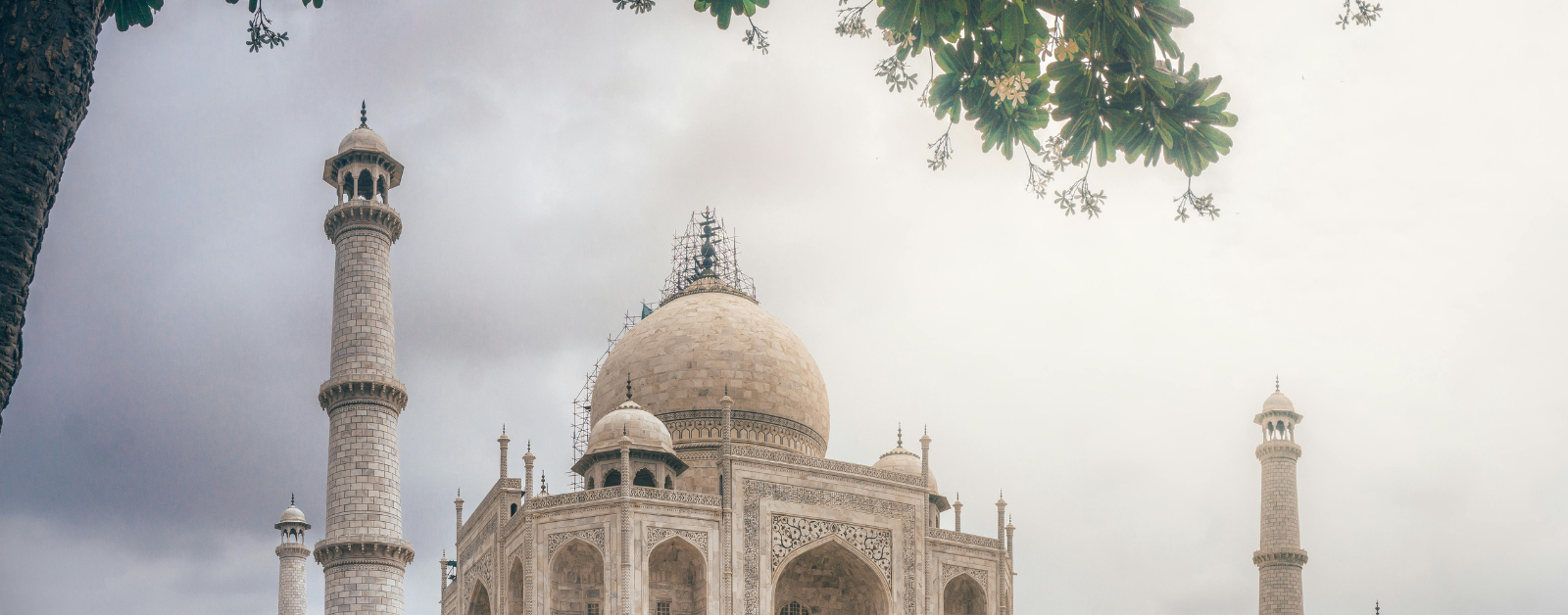
In the essay that accompanied the podcast, Andy writes about the experience of visiting the Taj Mahal. He took it in primarily through his eyes, but his visually impaired companion noticed something he didn’t—the way the architecture brought the hum of people talking into a sort of harmony, with an underlying sound of “Om” resonating within the space.
As Andy writes,
“Sighted people tend to rely on immediate visual cues — architecture, color, landscape — forming quick, vivid impressions, like a movie that lays everything out on the screen. For blind travelers . . . the world reveals itself more slowly, through layers of sound, touch, scent and spatial awareness. It’s a more immersive, interpretive process — like reading a novel, where the story unfolds through detail and imagination.”
Andy’s experience helped me understand how my own ability to see limits my ability to smell and hear and taste and feel. I might even understand my ability in one area as a disability in another. A deficit in one area opens up possibility in another.
Also, Andy received a richer and deeper immersion in the cities and countryside of India because he was asked to pay attention to more than what he could see with his eyes. The women and men with visual impairments contributed to his enriched experience even as they received their own richer understanding through his narration. In other words, neither Andy nor his companions had the ideal body or the ideal experience on their own. It was only by traveling together and relying on one another that the fullness of the place came forth.
I bring all this up because I’ve been thinking a lot about the idea of an ideal human lately. I still default back to a set of modernist assumptions about the ideal human as an individualistic super-human who has unlimited abilities and lives without need. But this story embodied so beautifully a contrasting view of our ideal humanity, humanity as both limited and dependent by design. I am reminded that the only way the ideal human emerges is when we actually rely on one another, with humility about what we have to offer and openness to the gifts others bring into our world.
SUBSCRIBE to my Substack newsletter: amyjuliabecker.substack.com
JOIN the conversation on Instagram: @amyjuliabecker
LISTEN to my podcasts: amyjuliabecker.com/shows/
CONNECT on YouTube: Amy Julia Becker on YouTube