TAKE THE NEXT STEP PODCAST
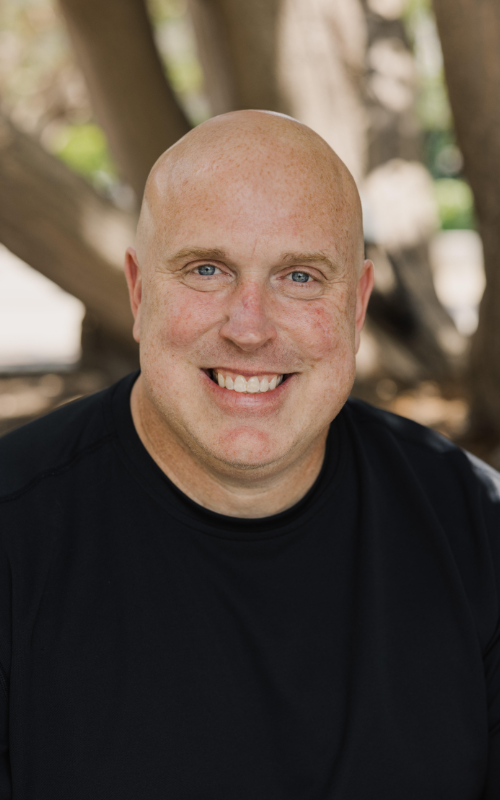
E25—What do you do when the child you imagined isn’t the child you have? Pastor Mike Erre experienced the slow dismantling of achievement-based parenting when his son with Down syndrome was born.
If you’re exhausted by comparisons and milestones, this conversation invites a different way forward: noticing, delighting, and being with your child as they are.
Mike Erre is the lead pastor of Journey Church in Tennessee and speaks on faith, culture, and spiritual formation. He is also the author of several books and cohost of the Voxology podcast. He is a dad to three children, including their youngest son who has Down syndrome.
_
WATCH this conversation on YouTube: Amy Julia Becker on YouTube
SUBSCRIBE to Amy Julia’s Substack: amyjuliabecker.substack.com
JOIN the conversation on Instagram: @amyjuliabecker
LISTEN to more episodes: amyjuliabecker.com/shows/
Note: This transcript is autogenerated and does contain errors. Please check the corresponding audio before quoting in print.
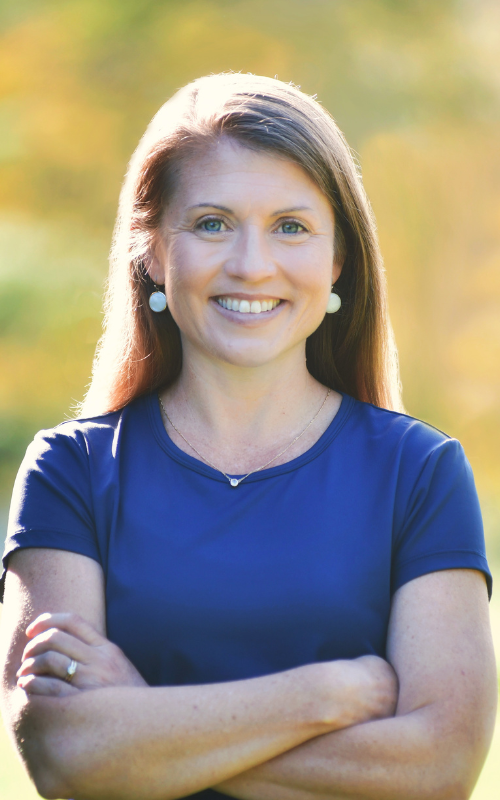
Amy Julia Becker (00:06)
I’m Amy Julia Becker and this is Take the Next Step, a podcast for families experiencing disability. We’ve teamed up with our friends at Hope Heals to bring you weekly conversations with fellow parents, therapists, and disability advocates about practical ways to cultivate a thriving future for the whole family. Here at Take the Next Step, we see your family as a gift to our society and to your local community. Your family matters, your child matters, we need you.
Among Us. If you are the father of a child with a disability, this episode is for you. And honestly, if you’re a mom, it’s for you too, but it’s especially for dads because I am talking with Mike Erre He is the father of three children, including Seth, who is 17 and has Down syndrome. And today we’re talking about how he has learned to love his son well and how having Seth in his life has transformed his experience in this world. Mike is the lead pastor of Journey Church in Tennessee.
He speaks regularly on faith, culture and spiritual formation. He’s also the author of several books and the co-host of the Voxology podcast. And of course, we’re excited that he is here today with his dad hat on and really grateful that we get to learn from him.
Mike, thank you so much for joining me here today. It is so fun to be across the screen with you.
Mike Erre (01:29)
Yes, Amy Julia, thank you for having me on. I have been a fan, a reader, a Substack subscriber for a while now. So I’m very grateful for your work. I didn’t even know that. ⁓ yes. yes. There are many things, many things you don’t know.
Amy Julia Becker (01:45)
Well, I love that we have not had a chance to meet in person We’ve gotten a little time to just catch up right now and I’m apparently you’ve read some things I’ve written and I’ve listened to you on podcast. So it’s really fun to be here together We are both parents of young adults really with yes We both are kind of Hope Heels camp veterans as well So will you just start us off by giving us a little bit of a sense of your story of being a dad and the dad? Yes
Mike Erre (02:10)
Yes,
yes. We found out, so Seth is our third and last child. We found out that Seth either had Trisomy 18 or 21, three months before he was born. And both of those were very scary outcomes for us. I wish we were so godly that we were just so excited. But my wife had an uncle who had Down syndrome who had died when he was very young.
And we’d actually delayed having a third child because my wife was in her upper thirties and we were worried about chromosomal abnormalities. Wow. Yes. And so when we found out Seth had Down syndrome three months before he was born, we were very mixed. There was a lot of sadness. There was a lot of just what’s this going to mean and look like. And as a dad, I, um, I didn’t have the connection obviously that my wife had with him in utero.
And so he appeared on the scene, glorious. ⁓ But it took me a while to see him, him, not just the child I wanted, but the child I had. And ⁓ he was probably six months old. And he and I were just looking at each other’s eyes and he smiled. One of those big like, it was like, okay. I remember the moment. mean, I just remember thinking this is gonna be okay. Because I just didn’t know how,
how I’d be able to connect with him. And I didn’t have that mother-son bond. And so it was a little longer for me to feel that connection.
Amy Julia Becker (03:49)
Will you fast forward us a little bit in terms of what connection looks like for you and Seth now?
Mike Erre (03:54)
my goodness. Well, I’m his primary, ⁓ taker care of, he is, he takes care of me according to him as well. So connection looks like loads of time driving to school and to events. looks like he is a, he is a fish. So we bought him a jacuzzi and so half an hour every day, rain or shine, cold or whatever. He is out there. We are out there for half an hour and he goes step by step through his day.
and tells me everything about his day. And I consider that one of the most like blessed, cause I know there is a big continuum of ability and disability and for him to be able to articulate what’s going on and what he’s thinking and feeling is a great gift. So that is one of the ways that we connect. He loves to go to the dump and break stuff. And so we tear down cardboard and go to the dump and dump it. He just loves that. And then the last thing we do,
is ⁓ if people are watching the video, they’ll know, they’ll not be surprised to know that he and I both love to eat. And so he and I love, love meals together, particularly breakfast. So we have a whole realm of connection now that is just delight. There was when, so I was, I’ve been a pastor for years and years. And I remember two weeks after we found out about Seth, told our church.
And we were talking about the kingdom of God, how it comes in both a now and a not yet form, right? So Christ has come and Christ is coming. Christ has come so the spirit heals and blesses and saves and people still get sick and people still die and sin and death are still in the world. And we just talked about, we talked about our mixed, how do you live in the now and the not yet? We have a son, we haven’t met him yet. We know he has this, ⁓
this issue, but what’s that mean? And I was very mixed in my emotions as I was sharing that. Most of our church handled that great, but there was one particular couple that came up. had a four-year-old little boy who had DS and they walked straight up to me and they said, you can’t hear this yet, but we’re so happy for you. And they just walked away and they were right. As you know, there is.
There is, He has hollowed my life out and disrupted every sense of normal priority, American vision of success, future greatness. He’s disrupted all of that. And He literally is my mentor in the way of Jesus. He teaches me. So connection, it used to be, yeah, I would connect for Him. But now it’s very much a connection for me. I mean, He,
He is the one who has exerted the much greater influence over me in my life.
Amy Julia Becker (06:54)
Will you tell us a little more, you just mentioned success, like your ideas of success, I’m sure there’s more than that, but like, can you give that, maybe hone in on that as an example of how being Seth’s dad has changed the way you think about success, whether that’s for him or for you. And kind of the idea of like thriving or flourishing in life.
Mike Erre (07:10)
⁓
my goodness. Well, one of the biggest things it’s done, and you know this better than I do, is that it changes what you celebrate. Because, you know, when Seth would first go into the pediatrician, they’d say, he’s in the first percentile of X and Y and Z. And you’re just feeling awful. You’d sit in an IEP meeting and you know, you would be, you’d be working on the same task for three school years.
in an IEP meaning and you would just sit in these very long plateaus. And so my definition of success radically changed. We took away all external measurements. don’t compare him to our other children, kids his age, even other kids with Down syndrome. We receive him all as a gift and we celebrate the heck out of everything. So he’s 17. He’s just learning how to do bathroom hygiene.
And we just go crazy. And it was for a while, it was frustrating because it’s like, Oh my goodness, he’s 17 or he’s 16 or he’s 15. But what are those numbers mean? Right? So all of that, the American ideal that really is based in an ancient cultural value system called Hellenism, which holds up the perfect human. And we see this in our, um, in our eating disorders and in our, our workout and our plastic surgery, we just are totally.
trying to optimize being human. And Seth and Penny and many others stand as prophetic witnesses against the measuring of human life in terms of efficiency and effectiveness. And so when people encounter him, I mean, you know this, you can tell immediately. Some people will receive him and they, Seth is a revealer of people, right? He will reveal, I’m sure Penny does too,
Just even watching people watch him, you can tell the people who are in touch with their humanists and just sort of ⁓ willing to recognize the Imago Dei and other people, regardless of how it looks. And then there are people that are really closed off and scared by difference. And ⁓ it’s been joy for us to see one of the, if I may digress just a second, I don’t want to get ⁓ too kind of religious, but there was an interesting,
We were praying for Seth’s healing in utero. I don’t know, I mean, if God can create the universe, he can certainly rearrange chromosomes. So it seemed wise, but there was one night we were praying and I was very upset and very sad. And this young woman was praying and just stopped them over prayer. And she said, you know, ⁓ stop praying for Seth to be healed. Seth is going to be a healer.
And that’s a great Christian thing to say, but there was something to it where what I’ve seen Seth do, there are other kids with DS in the universe who’ve been born because the parents who out of fear might’ve considered not having, ⁓ bringing a child like that. Now, now they see what it could look like and they say, yes. So I just think that the whole realm of connection and
success. I mean, it’s just turned everything upside down. And that’s why he is a mentor in the upside down way of Jesus. He’s a living, breathing beatitude, right? Blessed those who meek and gentle and peacemaking and all the things. And so, so I sit and, marvel at what like humanity looks like without pretense and without pretending. And I, and I, as like you, I just sit and I go, okay, well who’s the one that’s really
really the one with the issues here. It seems like I am far more, you know, the one disadvantaged than anything about Seth.
Amy Julia Becker (11:11)
Yeah, I really love that. feel like the humanity without pretense, one of the things I think about a lot with Penny is just like not operating according to a social hierarchy where some people are better than others, which I think is a related idea and such a good challenge to me as someone who is without even meaning to constantly comparing and judging. Going back to like the early days for you where you were having a hard time,
Mike Erre (11:35)
Yes, me too.
Amy Julia Becker (11:40)
I’m curious, assuming we have some parents who are navigating a child’s diagnosis and are in that place of like, I can’t hear this celebration business. How did you navigate that? What are some things you might say to a dad who’s out there who’s like, yeah, I’m not here yet. What do do?
Mike Erre (11:59)
No, that’s so good. One of the first things is that grief doesn’t mean there’s an absence of faith. Doubt doesn’t mean there’s an absence of faith. Being sad doesn’t mean you don’t love your child. Yeah. There, it is totally normal and appropriate to grieve the son or daughter or family that you thought you were going to have. You may not even have known that you had those expectations. There were some people in our religious circles who were very upset that we were upset.
I remember getting an email from somebody who just said, there are worse things than having a child with Down syndrome. And I would have received that had she had a child with Down syndrome. So, so there are some people who won’t be comfortable with your honesty. But the first thing I would say is absolute, feel the utter and absolute permission before God and others to live the fullness of your, of your feelings that your feelings aren’t final and they’re not always trustworthy.
But holding them back or judging them doesn’t do anything redemptive or healing. Second thing to do is we found people who were further down the road than us in this specific area. So you were one of those from a distance for us, but there are online communities, Facebook groups going to, and that was a mixed bag. remember the first time we lived in California at the time and we went to Disneyland and we had never paid so much attention to how many
kids were there with special needs. And I remember watching the fireworks from that. There’s a special kind of marked off area where all the families go, kids in wheelchairs or whatever. And I remember thinking, man, I don’t know. This was never what I’ve, you know, so, so sometimes seeing down the future can help, but other times it can overwhelm. So you have to be really, really careful. My wife and I were different on that. So to a dad, would say if you’re
Amy Julia Becker (13:44)
the club I signed up to join.
Mike Erre (13:56)
If your spouse is handling this differently and gobbling up all of the information and, reading all the, all the things, and you’re just going, I just can’t do that. That’s totally okay. The other rule that we ended up having, and this was, this was a gift of having two other kids was we just committed to love what they love and love who they love. ⁓ and so whatever Seth, whatever Seth, whatever Seth was into, we just, we just fed it.
Amy Julia Becker (14:07)
Yeah
Mike Erre (14:27)
and no matter what it was, you know, for a while it was Princess Sophia, ⁓ on Disney junior. And we want, we’ve watched every one of those episodes. Now he’s into music. And so he has like three different electric guitars, two acoustics, a cajon. And it’s just loud and noisy all the time in our house. But, ⁓ we just made that.
commitment to connect with whatever. And we would keep trying. mean, there were so many Christmases, I don’t know if this was true for you and Penny, where we would buy him things just to see what would work. Cause he just wasn’t, he wasn’t super, he wasn’t asking for anything.
Amy Julia Becker (15:05)
Money
is the hardest person to buy for. It’s truly. It’s not that she doesn’t enjoy things, but she doesn’t want things in the same way that my other children do.
Mike Erre (15:18)
Yes. Exactly. That’s exactly right. So we would just buy him, ⁓ built big blocks or, or big toys and he just wouldn’t be interested in any of it. But then we bought him a music, musical instrument. And so we just, we just feed that all the time. He’s got his playlists and we do all the things, but that started when he was young and it was just, we were committed to loving what he loved and who he loved. And that helped.
Amy Julia Becker (15:21)
you
Mike Erre (15:46)
And then I think the last thing for me was having a community of people who I could just be super honest with that I didn’t have to be polished in front of. ⁓ People who are mature enough, they didn’t have to have, they didn’t have to understand themselves, but who were just mature enough to hear and receive, man, I’m really struggling with this or man, I’m really struggling with that without judgment. And that could just love me sort of into my future with Seth.
Amy Julia Becker (16:16)
I love those. So many good words of wisdom there. this is, the answer to this may be completely summed up in love, what they love and love who they love. I wrote that down, but I’m also curious in terms of dads who might be looking for ways to connect with their kids. Is there anything beyond that that you would say?
Mike Erre (16:33)
Yes,
yes, absolutely. So, ⁓ we, we pay attention to what he loves at school and what he talks about. And so, choir concerts, band, flag football, anything he would come home mentioning, we’d like, huh, okay, let’s go check this out. And again, it’s hilarious. I mean, his flag football practices consist of him waving to us.
being told to pay attention and very slowly pull flags. And it’s glorious. And he just loves being a part it. So, so we would just try as much as we could to see, to expose him to as much as possible and see sort of what jumped out at him and what he would talk about. And ⁓ that helped us. ⁓ The other thing that was, that was really helpful that not everybody has is we had two older kids who he got to watch. and we,
we just made sure that everything we did included him. ⁓ We didn’t slow down, stop in the same way you, we just kept the family rolling. And as much as we could have the same expectations about politeness and about not being physical and all the things that you would have. And I think that his siblings,
opened him up to some things like throwing balls. We love to sit in our pool and throw tennis balls at each other. Would never have known that had he not seen his brother do it first. So ⁓ the biggest thing I can say is if you will give yourself permission to feel however you’re feeling, and then just begin to watch what’s interesting and try things. We wasted so much money and it’s not waste at all, but you know what I mean. Like we just bought so many things to see what would
what would catch him and the things that did haven’t gone away in 17 years, you know? Cause when he’s in, he’s all the way in forever. And so, so it’s, it’s turned out to be to the place now where it’s no longer, I mean, it’s the light and it didn’t start there as we’ve talked about it. There, there were times it was work. There were times there was so much sadness. are still times when we grieve how he’s treated by some people.
⁓ But in terms of my connection with him, all that it took to get us here has been utterly worth it.
Amy Julia Becker (19:01)
Hmm. I love that. And it kind of leads into what may end up being kind of the last question I’d like to think about, which is thinking about a world of belonging and what that might look like for Seth. ⁓ And then specifically, if there’s any role you think dads can play in building that kind of role, world, and obviously it’s not something you would do alone, but like, yeah, what does the world of belonging look like for Seth and what role can dads play in that?
Mike Erre (19:25)
Now listen, oh, Amy Julia, what a wonderful, wonderful question. So there is something, and I don’t know, I don’t even know how best to say this, but there was something about seeing a dad delight in his child when his child isn’t hitting a thousand on the baseball diamond or super productive in their grades. There’s something about seeing a dad
enjoy their kid just because he or she is their kid without any performance attached. So I think we have a public role to show off our kids. I, when we go anywhere, Seth is front and center. We don’t apologize for him. We don’t say, Hey, we, it’s like, we show this guy off. the other thing we do is we separate inclusion from belonging.
And we’re thrilled that he’s included, but that’s not belonging. Belonging is when you delight in the person and it’s reciprocal. And so we’ve refused to settle at inclusion. We fight for belonging. That means we’ve had to cut some people out and we brought other people in. It means that the faith communities we’re looking for aren’t the faith communities that have, yes, of course we love the kids with special needs and here’s a room for them over here.
⁓ I’m all for the kind of churches where, nope, they’re in the middle and they’re making noise and they’re moving around and they’re doing all the things that you would just treat, you would treat and welcome them the same way you treat and welcome anybody. Our faith, particular faith community allows Seth to close our 11 o’clock service. He closes it by reciting the Shema, which is this ancient Jewish prayer and the church.
It is the reason why we have several families who have just come. That was the reason they came was because they saw him do that. But what it does for Seth is Seth isn’t, he’s not a part of some group elsewhere. Like this is his whole community. And so I think as men, I think we have a role to delight in our kids and play and to do that very publicly and very graciously, even when people are looking at it funny.
looking at us funny or looking at our child in interesting ways. There’s just some beautiful non-compliant joy that rises up in me that’s just like, you have no idea what you’re missing out on. You just have no idea. So go ahead and look and go ahead. That’s fine. He and I are having the best time ever. We also listen to loud music when we drive. And so you rarely will ever encounter us in an intersection, ⁓ without both of us rocking out pretty dramatically back and forth.
And then, I just think there’s the inclusion versus belonging difference that ⁓ you pour fire wherever you see belonging. And hallelujah for inclusion. And I love that we’ve come so far in that. I don’t want to dismantle that. But when you use that word belonging, I know you’re talking about something much different than just including. yep, there’s something about what Seth and Penny do to faith communities out in public.
⁓ on buses or airplanes, there’s just something that is needed. ⁓ if, if, you know, one of the conversations we have every now and again is, you know, what would Seth be like without Down syndrome? And ⁓ we’re, I don’t know. I can’t imagine him without it. he’s like, I.
I feel like maybe in the new creation, we all get extra chromosomes. know, maybe that’s the way that’s, that’s what we’re missing. I know those are the cheesy Christian things to say, but I genuinely believe that.
Amy Julia Becker (23:16)
Do you think there’s something to it, especially when we talk about things like ⁓ not being delighted in things without wanting things? I mean, there are these qualities that we sometimes are able to talk about our kids having and being like,
Yeah, when I read something like love is patient, love is kind, love keeps no record of wrongs, I’m like, who do I know like that other than Jesus? That’s it. It’s like probably one of my friends with Down syndrome, you know? And similarly, when I think about the fruit of the spirit, know, love, peace, you know, okay, who do I know who actually lives that out more, you know, not perfectly. I don’t want to make Penny into an angel, but.
⁓ I am grateful to know some people who ⁓ are living in a way of love and peace that I often am only aspiring to.
Mike Erre (24:08)
Amen. Well said. Yeah. that’s very well said.
Amy Julia Becker (24:11)
Well, thank you, Mike. Gosh, I could talk to you forever. I’m not going to do that because I know that our listeners are parents of children with disabilities. And we know what that means as far as how much time is in their life. So for those of you who are listening right now, I am going to, I wrote down a few things, Mike, while you were talking that are least for me, they are takeaways. So they might be for a listener too. ⁓ So one was just to change what you celebrate. I loved that just as an encouragement to really look for.
moments to celebrate and to not think that they have to be the same as what you might be celebrating with a typical child. also wrote down takeaway external measurements. It doesn’t mean that there’s no sense of growth and change in your family, but that you’re not basing it in this comparative way on other people. love that. Find people farther down the road and that can happen as we were saying, like through a podcast and it can happen through a book and it hopefully will also happen in real life.
And then, my gosh, love what they love and love who they love. Like that should be the big takeaway for all of us. I love the way you put that. ⁓ And then I think the last thing you were also talking about is just that sense of showing off our kids in public and refusing to settle for inclusion. So these are all just, you know, for any mom or dad who’s listening, just maybe one or two of those can be something that you put in your pocket as you go from this conversation, ⁓ because I know that they are.
All of those are meaningful to me and I’m sure they are to many other parents who are listening right now. Is there anything more you want to say as we kind of come to
Mike Erre (25:42)
the end? No, I just, well, yes. ⁓ so much more. I, first of all, I just want to say thank you. Thank you, Amy Julie, for making space for these conversations. ⁓ I think that there, there are, ⁓ what, what, what Seth and Penny and other kids, ⁓ do is a direct reflection of what God is like in the world.
God comes through sacrifice, service, hiddenness, weakness. And so I just think, I think even our understanding of, of Jesus gets turned upside down a bit when, ⁓ we’re around these kids. And so, ⁓ I guess I would just encourage people who feel like having a child with special needs is at odds with, with belief in God or, know, understanding like God’s purposes in all things.
I don’t know, I think there’s some really cool stuff to explore and really great resources to do it.
Amy Julia Becker (26:48)
Well, that might be what we talk about the next time we have you on this podcast, because there’s much more to say, but we’re not going to say it now. So thank you again for being here. a treat.
Mike Erre (26:56)
Absolutely.
Amy Julia Becker (27:01)
Thanks so much for joining me here at Take the Next Step. This show is produced in partnership with our friends at Hope Heals, a nonprofit that creates sacred spaces of belonging and belovedness for families affected by disabilities to experience sustaining hope in the context of inter-ability communities.
Friends, I’m here to tell you this is the final episode in this season of Take the Next Step. So if you have missed any of these conversations, now is the time to go back and find them or perhaps to listen again. It’s also a great time to share with other people. And I will be back with my other podcast, which is called Reimagining the Good Life, beginning on May 19th. So that is a podcast about reimagining the good life through the lens of disability faith.
and culture. Over there I interview guests in longer conversations that are not quite as practical as the ones here at Take the Next Step. Those conversations are intended to challenge assumptions about what makes life good, proclaim the inherent belovedness of every human being, and help us envision and build a world of belonging where everyone matters.
So if you want more conversations with Amy Julia Becker, please go over to Reimagining the Good Life and follow that show and you’ll get great conversations starting in a couple of weeks.
We’ll be back with Take the Next Step in the fall. Meanwhile, as always, great for you to share this conversation, send questions or suggestions my way as we plan for next season. You can tap the Send Us a Text link at the end of the show notes or email me directly at amyjuliabeckerwriter at gmail.com.
And as we really come to an end, I want to thank Jake Hansen for editing this podcast, Amber Beery, my assistant, for doing everything else to make sure it happens. And I want to thank you for listening. I hope you leave this time with encouragement to start with delight, connect to community, and take the next small step toward a good future for your family.
Take the Next Step is produced in partnership with Hope Heals Camp. Hope Heals creates sacred spaces of belonging and belovedness for families affected by disabilities to experience sustaining hope in the context of inclusive, intentional, inter-ability communities. Find out more about our resources, gatherings, and inter-ability communities at hopeheals.com. Follow on Instagram: @hopeheals and @hopeheals.camp.
my weekly Substack letter
My newsletter delivered to your inbox that challenges assumptions about the good life, proclaims the inherent belovedness of every human being, and envisions a world of belonging where everyone matters
LET’S REIMAGINE THE GOOD LIFE TOGETHER. SUBSCRIBE TODAY!
Get the Free Resource!
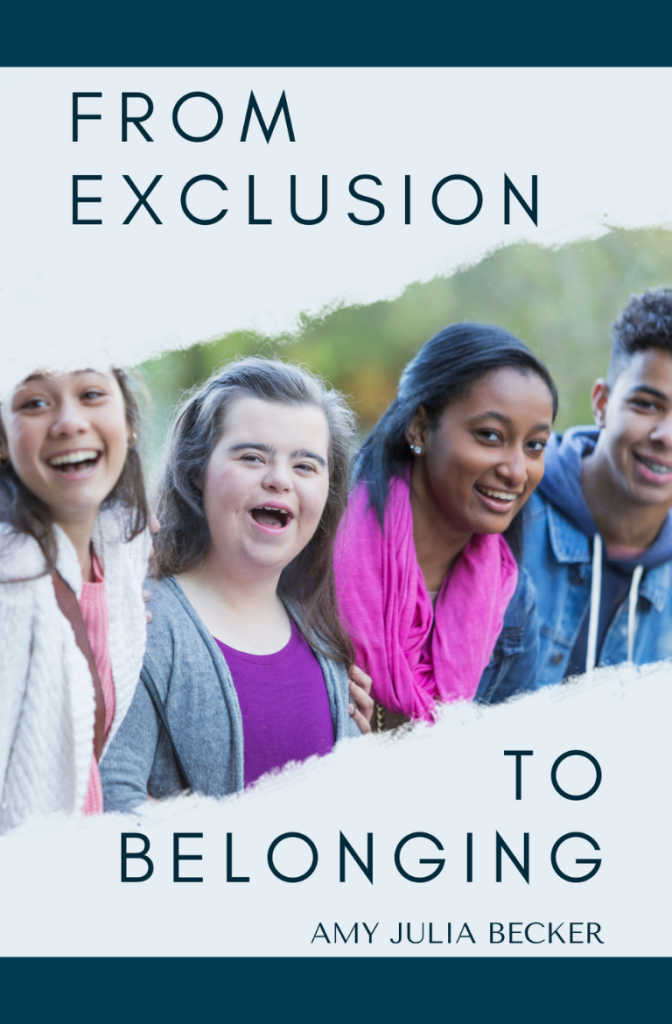
An illustrated guide designed to help you identify and create spaces of welcome and belonging—download today!